
Choosing an SEO agency is an important decision for any business that wants to attract customers through Google and other search engines. You invest money every month, share access to your website and trust the agency to improve your online visibility. In return, you expect better search rankings, relevant website traffic, more enquiries and opportunities to grow your business.
But what happens when those results do not come?
Perhaps your website has been receiving the same amount of organic traffic for months. Your important service pages are not ranking, your agency keeps sending reports without explaining the actual progress, or you are paying for SEO activities without knowing what has been completed.
In some cases, the agency may be working, but the strategy is not suitable for your business. In other situations, the problem may be poor execution, a lack of technical knowledge or an agency that does not take responsibility for its work.
The difficult part is knowing when to wait, when to ask for improvements and when to move on.
SEO takes time, and changing an agency does not automatically improve your rankings. However, continuing with an agency that repeatedly makes mistakes, avoids communication or cannot explain its strategy can waste your marketing budget and delay business growth.
This guide explains 10 warning signs that indicate it may be time to change your SEO agency, what each problem means, how to check whether it is happening on your website and what you should do before making a final decision.
Why Choosing the Right SEO Agency Matters
SEO is not simply about adding keywords to website pages or publishing blogs every week. It involves several activities that work together to help search engines understand your website and help potential customers find the right information.
A proper SEO strategy may include:
-
Understanding your business, services and target customers.
-
Researching the search terms your potential customers use.
-
Improving website structure and technical performance.
-
Optimising important service and product pages.
-
Creating useful and original website content.
-
Improving internal links between related pages.
-
Building relevant authority and earning quality backlinks.
-
Monitoring organic traffic, rankings and conversions.
-
Identifying problems through Google Search Console and analytics.
-
Improving pages based on actual performance.
An agency should understand how these activities support your business goals.
For example, a medical equipment manufacturer may want enquiries from hospitals, distributors and healthcare suppliers. Ranking for general medical information keywords may increase website traffic, but it may not attract the right buyers.
Similarly, a company providing factory licence services needs visitors who are looking for licensing requirements, applications, documentation and professional assistance. General traffic that has no interest in these services may not generate business.
The purpose of SEO should not be limited to increasing website traffic. It should help your business become visible to the right audience and create opportunities for enquiries and sales.
Let's look at the warning signs you should not ignore.
1. Your Website Is Not Showing Any Meaningful SEO Progress

You have been paying for SEO services for several months, but your website is not improving for important search terms. Your main service pages are still difficult to find on Google, organic clicks are not growing and the number of relevant enquiries remains low.
This does not automatically mean the agency is doing a poor job. SEO results depend on competition, website history, technical condition, content quality, search demand and many other factors.
However, your agency should be able to explain what has been done and whether the website is moving in the right direction.
What Does a Lack of SEO Progress Look Like?
Look for patterns such as:
-
Your important commercial keywords are not improving.
-
Organic clicks remain flat or decline over an extended period.
-
Important service pages receive very little search visibility.
-
New pages are not getting indexed as expected.
-
The website is attracting visitors for unrelated search terms.
-
Competitors are becoming more visible for searches relevant to your services.
-
Organic enquiries are not improving despite ongoing work.
Do not judge performance using only one keyword or one month's traffic. Search rankings change regularly, and some fluctuations are normal.
Instead, compare performance across a suitable period and examine whether the agency's work is producing improvements in the areas that matter.
How to Check Your SEO Progress
You can review your website's performance using Google Search Console and Google Analytics 4.
Google Search Console: Check total clicks, impressions, average position and search queries. Compare the latest three months with the previous three months, while considering seasonality and changes in search demand.
Google Analytics 4: Review organic sessions, landing pages, engagement and tracked conversions. Check whether visitors arriving through organic search are taking useful actions.
Keyword tracking: Monitor important commercial keywords, but do not treat a single ranking position as the complete measure of SEO success.
For example, suppose your website provides company registration services. Ranking for a general keyword such as "what is a company" may bring visitors who are only looking for information. Ranking for a relevant service keyword such as "private limited company registration consultant" may have greater commercial value.
The agency should understand this difference.
What Should Your SEO Agency Be Doing?
It should regularly review the website, identify opportunities, improve important pages and explain any performance changes.
If traffic is not improving, the agency should investigate whether the problem relates to technical SEO, keyword selection, search demand, content quality, competition or the website's ability to convert visitors.
When to consider changing: If your agency repeatedly fails to explain the lack of progress, cannot show meaningful completed work or keeps using the same strategy without addressing problems, it may be time to review other options.
2. Your SEO Agency Sends Reports but Cannot Explain the Results

Monthly SEO reports are useful, but only when they explain what is happening with your website.
Some agencies send reports filled with keyword rankings, backlinks, impressions, traffic graphs and completed activities. However, when you ask what these numbers mean for your business, you receive unclear answers.
This creates a problem because you cannot judge whether your monthly investment is producing value.
Why SEO Reports Can Be Misleading
Consider this example.
Your agency reports that:
-
200 new keywords have started ranking.
-
50 backlinks have been created.
-
Website impressions have increased by 40%.
-
20 blogs have been published.
At first glance, these numbers may look impressive.
But there are important questions:
-
Are the new keywords relevant to your services?
-
Are the backlinks from genuine, relevant websites?
-
Are impressions generating clicks?
-
Are the published blogs attracting the right audience?
-
Are visitors contacting your business?
-
Which activities have improved your website's performance?
A report should explain the difference between activity and actual progress.
Publishing 20 blogs is an activity. Getting relevant organic visitors to important service pages is a performance outcome. Generating qualified enquiries is a business outcome.
These are related, but they are not the same.
What a Useful SEO Report Should Include
|
Reporting area |
What you should understand |
|---|---|
|
Organic traffic |
How many visitors are coming from search engines? |
|
Search Console data |
Which queries generate clicks and impressions? |
|
Keyword performance |
Are important business-related keywords improving? |
|
Landing pages |
Which pages attract organic visitors? |
|
Technical SEO |
What issues were identified and fixed? |
|
Content performance |
Which pages are gaining visibility and why? |
|
Backlinks |
What links were acquired and how relevant are they? |
|
Conversions |
How many calls, forms or other enquiries were recorded? |
|
Next month's plan |
What will be improved next and why? |
Your agency should also explain significant changes, including traffic drops, ranking losses, indexing problems and unexpected campaign results.
Questions to Ask Your SEO Agency
-
Which pages performed best this month?
-
Which pages need improvement?
-
Are we attracting visitors for our main services?
-
What work has been completed since the last report?
-
Which issues are still pending?
-
How many organic enquiries have been tracked?
-
What is the priority for next month?
When to consider changing: If your agency sends reports every month but cannot explain the numbers, refuses to share supporting data or avoids discussing performance problems, this is a serious warning sign.
3. Your Agency Does Not Understand Your Business or Target Customers

An SEO strategy should begin with understanding your business, not simply collecting keywords.
Your agency needs to know what you sell, who buys it, what problems your customers face and which services are most important to your revenue.
Without this understanding, the agency may focus on keywords that look attractive in SEO tools but have little value for your business.
Example: The Wrong Keyword Strategy
Imagine you run a company that provides factory licence registration and regulatory compliance services.
Your main objective is to receive enquiries from factory owners who need professional assistance with licences, registrations and approvals.
However, your SEO agency focuses mainly on general keywords such as:
-
What is a factory?
-
Types of industries in India.
-
Meaning of manufacturing.
-
History of industrial development.
-
What is business management?
These topics may have some informational value, but they do not necessarily attract people who need your services.
A better content strategy would identify relevant customer problems and search requirements, such as:
-
Which licences are required to start a factory?
-
What documents are needed for factory licence registration?
-
How do you apply for a factory licence?
-
What approvals are required before starting manufacturing?
-
Which registrations should a manufacturing business complete?
The exact keywords and pages should be selected after reviewing search demand, competition, your existing website and the services you actually provide.
What Your SEO Agency Should Understand
Before planning your SEO work, an agency should understand:
Your services: Which services are most important to your business? Are there specific services you want to promote?
Your customers: Are you targeting individuals, businesses, manufacturers, distributors, corporate buyers or local customers?
Your market: Which locations, industries or customer groups do you want to reach?
Your competition: Which businesses are competing for the same customers in search results?
Your sales process: Do customers submit a form, request a quotation, call your team or book a consultation?
Your business priorities: Are you looking for more enquiries, product sales, distributor applications, appointments or brand awareness?
Why This Matters for SEO
A website can receive thousands of visitors without generating useful enquiries.
If your agency does not understand the difference between informational, commercial and transactional search intent, it may spend your budget attracting the wrong audience.
When to consider changing: If your agency repeatedly suggests irrelevant keywords, publishes unrelated content or cannot explain how its SEO strategy supports your services and customers, you may need a team with a better understanding of your business.
4. Your SEO Agency Publishes Blogs Without a Proper Content Strategy

Some agencies measure their performance by the number of articles published every month.
You may receive 10, 15 or even 20 blogs, but the content may not address your customers' real questions or support your important service pages.
This is a common problem when an agency focuses on publishing targets instead of content quality.
Warning Signs of a Poor SEO Content Strategy
Look for these issues:
-
Blogs are written around keywords without understanding search intent.
-
Multiple articles target almost identical keywords.
-
Content repeats information already available on your website.
-
Articles contain generic explanations with little practical value.
-
Important service pages receive very little attention.
-
Content is published without proper keyword mapping.
-
Internal links are missing or added without relevance.
-
Articles contain unsupported statistics or outdated information.
-
Content is not reviewed for accuracy before publishing.
Keyword Cannibalisation: A Problem You Should Not Ignore
Keyword cannibalisation can occur when multiple pages on your website compete for the same or very similar search intent.
For example, a company providing food licence services might publish separate blogs titled:
-
How to Apply for a Food Licence Online
-
Food Licence Registration Process
-
Steps to Get a Food Licence
-
Online Food Licence Application Guide
If these pages target almost the same query and provide nearly identical information, they may compete with each other rather than creating useful coverage.
The solution is not always deleting pages. The agency should review their purpose, rankings, content and search intent before deciding whether to consolidate, redirect or differentiate them.
What a Good SEO Content Strategy Should Include
A proper strategy should identify:
-
Which service pages need improvement.
-
Which keywords should be targeted by each page.
-
Which customer questions are not yet answered.
-
Which blog topics support your main services.
-
Which existing pages should be updated.
-
Which topics should be combined to avoid overlap.
-
How articles will link naturally to relevant service pages.
-
How content performance will be measured.
AI-Generated Content Is Not Automatically Bad
Using AI tools for research assistance, outlines or drafting does not automatically make content unsuitable for Google.
The real concern is whether the published content is accurate, original, useful and created to help readers.
If your agency generates articles in bulk without fact-checking, subject knowledge or meaningful editing, the content may offer little value.
A useful article should answer the reader's question clearly, explain practical steps and provide information that helps them make a decision.
When to consider changing: If your agency keeps publishing articles simply to meet a monthly target, ignores content quality and cannot explain how its content supports your services, the strategy needs serious improvement.
5. Your Agency Ignores Technical SEO Problems
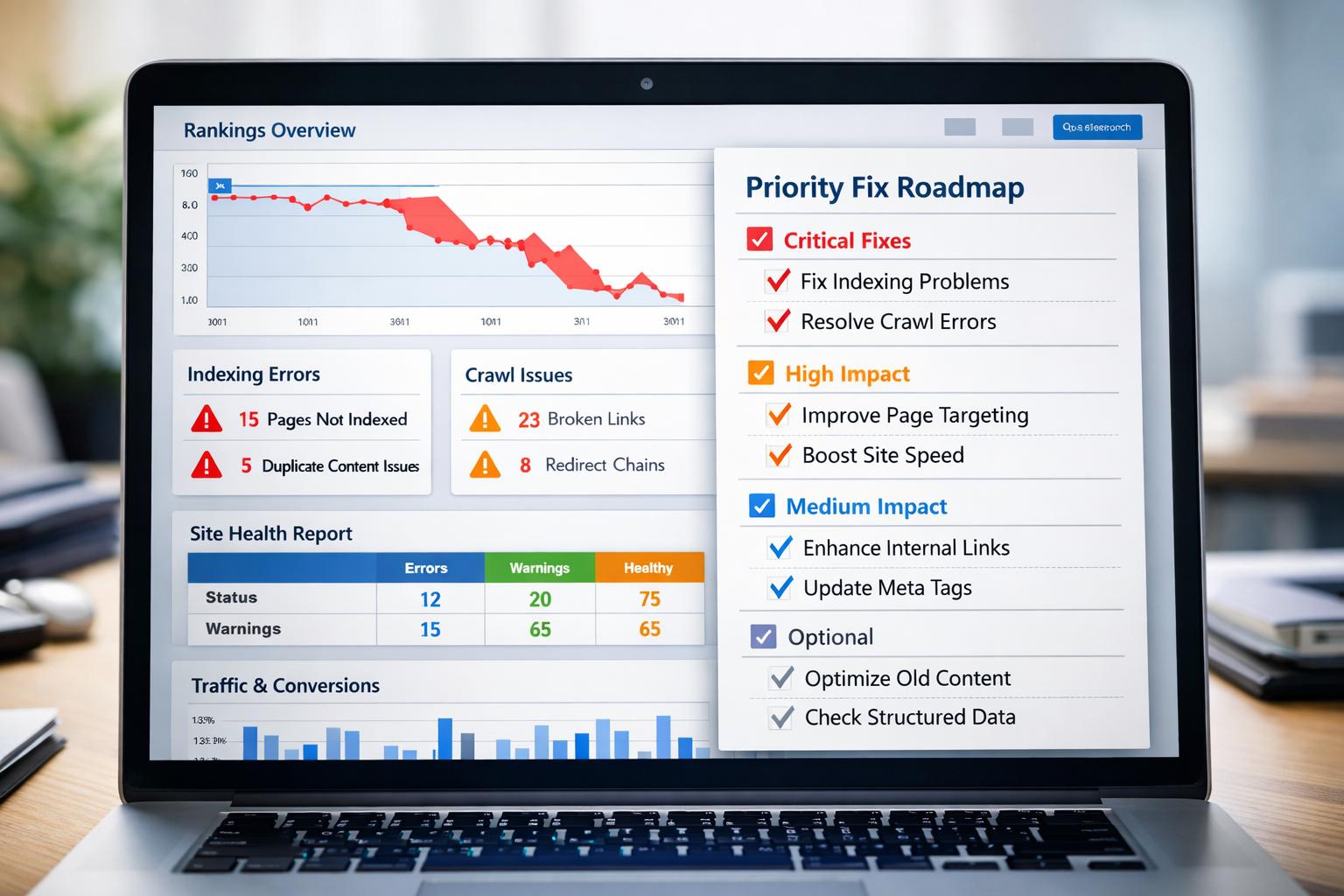
Even if your content is useful, technical problems can make it difficult for search engines to discover the right pages or understand your website structure.
A good SEO agency should not focus only on keywords and backlinks while ignoring the technical condition of your website.
Technical SEO Problems That Need Attention
Indexing issues: Important service pages may not appear in Google's index because of incorrect noindex settings, crawl problems or other technical restrictions.
Broken links: Internal links may point to pages that no longer exist, creating a poor user experience and wasting crawl opportunities.
Incorrect redirects: Old URLs may redirect to irrelevant pages or create unnecessary redirect chains.
Duplicate pages: Similar URLs, incorrect canonical tags or parameter-based pages may create duplication and indexing confusion.
Slow page performance: Large images, unnecessary scripts, poor server response or inefficient code may affect loading performance.
Mobile usability problems: Pages may be difficult to use on mobile devices because of small text, overlapping elements or poorly designed forms.
Poor website structure: Important service pages may be buried too deep in the navigation or have very few relevant internal links.
XML sitemap problems: The sitemap may include URLs that should not be indexed or exclude important pages.
Ask for a Technical SEO Audit
A useful technical audit should not simply provide a list of errors from an SEO tool.
It should explain:
-
What the issue is.
-
Which URLs are affected.
-
Why it matters.
-
How serious the problem is.
-
What action is required.
-
Who will implement the fix.
-
Whether the issue has been resolved.
For example, an SEO tool may identify 100 broken links. Your agency should investigate whether they affect important service pages, internal navigation or outdated content before deciding the right solution.
Check Whether Technical Work Is Actually Completed
Request evidence of important fixes. Depending on the issue, this could include updated URLs, website changes, Search Console validation or a follow-up crawl.
Do not assume that every warning shown by an SEO tool is a serious ranking issue. Technical recommendations should be prioritised according to their actual impact.
When to consider changing: If your agency repeatedly ignores important technical problems, cannot identify the cause of indexing issues or makes changes without understanding their consequences, you should reconsider whether it has the technical expertise your website needs.
6. Your Agency Builds Low-Quality or Irrelevant Backlinks
Backlinks are links from other websites pointing to your website. They can help search engines discover pages and understand how other websites reference your content.
However, not every backlink is useful.
Some agencies try to show quick SEO progress by creating large numbers of links from unrelated directories, low-quality blogs, link farms or websites created mainly for selling backlinks.
The report may show hundreds of new links, but the number alone does not tell you whether the links are relevant or trustworthy.
Warning Signs of Poor Link Building
Be cautious if your agency:
-
Promises hundreds of backlinks every month without explaining their sources.
-
Builds links from websites unrelated to your industry.
-
Uses the same keyword-rich anchor text repeatedly.
-
Creates links from suspicious websites with little genuine content.
-
Purchases links without discussing the risks.
-
Cannot provide a list of acquired backlinks.
-
Uses automated link-building methods.
-
Reports only the total number of backlinks instead of discussing their quality.
What Makes a Backlink Worth Reviewing?
There is no single metric that guarantees a backlink is valuable.
Consider the overall context:
Website relevance: Does the linking website cover topics connected to your industry or audience?
Editorial quality: Does the website publish genuine, useful content or mainly exist to sell links?
Placement: Is the link included naturally within relevant content?
Traffic and audience: Does the website appear to have a real audience and useful content?
Link patterns: Are there suspicious patterns involving repeated anchors, unrelated domains or large numbers of artificial links?
A high domain authority score alone does not guarantee a quality backlink.
Ask Your Agency for a Backlink Report
Request the source URL, destination URL, anchor text and acquisition details for recently built links.
You can also review your website's link profile through Google Search Console and other backlink analysis tools.
If you identify suspicious links, do not immediately remove or disavow everything. First investigate their source and pattern. Google's systems can often ignore many low-quality links automatically. The disavow tool is intended for specific situations, not routine backlink maintenance.
When to consider changing: If your agency uses manipulative link-building methods, refuses to share backlink details or cannot explain where links are coming from, take the situation seriously.
7. Your Agency Makes Changes Without Consulting You

However, changes to important website elements should be handled carefully.
Your agency should understand the purpose of the change and communicate when it could affect your business, website structure or customer experience.
Examples of Changes That Can Create Problems
-
Changing important service page URLs without setting up redirects.
-
Removing pages that already attract relevant organic traffic.
-
Rewriting service content without checking technical or business accuracy.
-
Changing navigation and internal links without reviewing the website structure.
-
Publishing content that makes incorrect claims about your services.
-
Adding unnecessary plugins or scripts.
-
Changing website layouts in ways that make enquiry forms difficult to use.
-
Making large-scale changes without recording what was changed.
For example, imagine your website has a service page that ranks well for an important commercial keyword and receives regular enquiries.
Your agency changes its URL without implementing an appropriate redirect. Visitors following old links may encounter errors, and search engines may need to process the URL change.
This is an avoidable risk.
What a Responsible Agency Should Do
Before making significant changes, the agency should:
-
Identify the problem or opportunity.
-
Explain the proposed change.
-
Check how the change may affect existing rankings and visitors.
-
Take a backup where appropriate.
-
Implement the change carefully.
-
Test the updated page.
-
Monitor its performance afterwards.
Not every small SEO adjustment requires formal approval. However, major changes involving URLs, website structure, important service information or design should be communicated clearly.
When to consider changing: If your agency repeatedly makes major changes without informing you, creates website problems or refuses to explain what was modified, you should review the relationship.
8. Your Agency Does Not Communicate Properly
Poor communication can also hide problems. If the agency does not share updates, you may not know whether technical fixes are pending, content is delayed or important issues remain unresolved.
Common Communication Problems
-
Emails and messages are not answered on time.
-
Your account manager changes frequently without proper handover.
-
You do not receive updates about completed activities.
-
Meetings are repeatedly postponed.
-
The agency does not inform you about website problems.
-
You receive reports without an explanation.
-
Your questions are answered with technical language that is difficult to understand.
-
You are contacted mainly when payment is due.
What Good SEO Communication Looks Like
A professional working relationship should include:
A clear point of contact: You should know whom to contact about campaigns, reports, technical issues and approvals.
Regular updates: The agency should share important progress and pending tasks without waiting for you to ask.
Easy explanations: Technical issues should be explained in language that business owners can understand.
Honest discussions: If performance drops or a campaign does not work as expected, the agency should explain the problem.
Action points: Meetings should end with clear responsibilities and timelines.
Realistic expectations: The agency should explain what can be improved and what depends on factors outside its control.
How to Address Communication Problems
Before ending the contract, explain what communication you expect.
For example, request a monthly review meeting, a written progress report and a single contact person responsible for your account.
Give the agency a reasonable opportunity to improve this process.
When to consider changing: If communication remains poor after you have clearly raised the issue, it may be difficult to build a productive long-term relationship with that agency.
9. Your SEO Agency Makes Unrealistic Promises

If an SEO agency promises guaranteed first-page rankings, a fixed number of leads every month or instant organic traffic growth without analysing your website, be careful.
SEO is influenced by several factors that no agency can completely control.
These include:
-
Search engine algorithms and systems.
-
Competition in your industry.
-
Website history and current technical condition.
-
Content quality and relevance.
-
Search demand and user behaviour.
-
Your products, services and pricing.
-
Website authority and reputation.
-
Market conditions and seasonal changes.
An experienced agency should be confident about its process, not make promises about outcomes it cannot control.
Examples of Promises You Should Question
"We guarantee number one rankings on Google."
No agency can guarantee a particular organic ranking on Google for a competitive keyword.
"You will receive 500 backlinks every month."
A high backlink count does not guarantee quality, relevance or improved search performance.
"We can rank your website within 15 days."
Some specific technical or indexing improvements can happen quickly, but meaningful SEO growth usually requires more work and time.
"We guarantee 100 leads every month."
Lead volume depends on search demand, competition, targeting, website conversion rates and the quality of your offer.
"You do not need to worry about anything; just pay us."
A good agency should involve you in important decisions and understand the business information required to execute its strategy.
What Should You Expect Instead?
A trustworthy agency should provide:
-
A realistic website assessment.
-
An explanation of the current SEO position.
-
A clear strategy and priority list.
-
A practical work schedule.
-
Performance indicators.
-
Regular reporting.
-
Honest communication about limitations and risks.
It is reasonable to expect accountability for the work the agency agrees to complete. It is not reasonable to expect complete control over Google's ranking decisions.
When to consider changing: If your agency repeatedly makes unrealistic promises, uses guarantees to avoid difficult discussions or hides behind excuses when results do not arrive, look for a more transparent partner.
10. Your SEO Agency Is Not Helping Your Business Generate Relevant Enquiries

This is one of the most important warning signs, especially if your main reason for investing in SEO is to attract new customers.
Your agency may be increasing impressions, publishing blogs and improving rankings. But if the website is not attracting relevant enquiries, you need to understand why.
SEO should help the right people find the right pages and take the next step when they are ready.
Why Your Website May Receive Traffic but Not Enquiries
There are several possible reasons.
Wrong audience: Your website may rank for keywords that attract visitors who are not interested in your services.
Weak service pages: Visitors may not understand what you offer, whom you serve or how your service solves their problem.
Unclear pricing or process: Potential customers may leave because they cannot understand the application process, service scope or next steps.
Poor calls to action: Your pages may not clearly explain how visitors can request a quotation, book a consultation or contact your team.
Complicated enquiry forms: Too many fields or technical problems can discourage visitors from submitting a form.
Lack of trust: Visitors may hesitate if your website does not explain your experience, process, credentials, contact information or previous work.
Poor mobile experience: A form that is difficult to use on a mobile phone can result in lost enquiries.
What Your SEO Agency Should Review
Your agency should examine the complete journey from search result to enquiry.
|
Area |
What needs to be checked |
|---|---|
|
Search keywords |
Are visitors searching for services you actually provide? |
|
Landing pages |
Do pages answer the visitor's search query? |
|
Service information |
Are the benefits, process and requirements clear? |
|
Calls to action |
Can visitors easily understand what to do next? |
|
Contact forms |
Are forms working and easy to complete? |
|
Mobile experience |
Can visitors browse and enquire comfortably? |
|
Conversion tracking |
Are calls, forms and other actions recorded correctly? |
|
Lead quality |
Are enquiries coming from relevant potential customers? |
Example: SEO for a Service-Based Business
Suppose you provide company registration and compliance services.
Your website receives 5,000 organic visitors every month, but only a few people submit enquiries.
The agency should not immediately suggest publishing more blogs.
It should first check:
-
Which pages are attracting those 5,000 visitors?
-
Are the visitors looking for company registration services?
-
Are important service pages ranking?
-
Is the contact form working properly?
-
Is the application process explained clearly?
-
Are there enough trust signals?
-
Is enquiry tracking configured correctly?
The problem may be traffic quality, page experience, conversion tracking or a combination of these factors.
More traffic will not automatically solve a conversion problem.
When to consider changing: If your agency focuses only on rankings and traffic while ignoring lead quality, service page performance and conversion problems, its strategy may not match your business objectives.
What Should You Do Before Changing Your SEO Agency?
Recognising these warning signs does not mean you should immediately terminate your contract.
Some problems can be resolved through better communication, a revised strategy or improved execution.
Before making a final decision, follow these steps.
Step 1: Review Your Original SEO Agreement
Read your proposal, contract and agreed deliverables.
Check:
-
Monthly SEO activities.
-
Number and type of deliverables.
-
Reporting commitments.
-
Website development responsibilities.
-
Content creation arrangements.
-
Link-building activities.
-
Payment terms.
-
Contract duration.
-
Notice period and termination conditions.
This will help you understand whether the agency is failing to deliver agreed services or whether expectations were not clearly defined.
Step 2: Collect Your SEO Performance Data
Download or retain access to important reports and accounts.
You should have access to:
-
Google Analytics 4.
-
Google Search Console.
-
Google Tag Manager.
-
Google Business Profile, if applicable.
-
Google Ads, if managed by the agency.
-
Keyword tracking reports.
-
Backlink reports.
-
Technical SEO audit reports.
Make sure your business has appropriate administrator access wherever possible.
Step 3: Ask for a Complete Work Report
Request a record of what the agency has completed during the engagement.
This should include technical changes, published content, on-page optimisation, backlink activities, keyword mapping and outstanding work.
You should also request details of important issues that have not yet been resolved.
Step 4: Discuss the Problems Directly
Arrange a meeting and explain the specific issues.
Avoid saying only that you are unhappy with the results.
Instead, give examples:
-
Our main service pages are not receiving organic clicks.
-
The reports do not explain business performance.
-
Several technical issues remain unresolved.
-
The content being published does not match our services.
-
We are not receiving updates about completed work.
Ask the agency to provide a revised action plan.
Step 5: Set a Reasonable Review Period
If the agency agrees to improve, define what needs to change and when you will review it.
For example, you may agree on:
-
Better monthly reporting.
-
Completion of priority technical fixes.
-
A revised keyword strategy.
-
Improvements to important service pages.
-
Proper conversion tracking.
-
Regular communication.
The review period should be suitable for the work involved. A technical fix can be checked relatively quickly, while SEO ranking improvements may require longer.
Step 6: Decide Whether to Continue or Move On
At the end of the review, consider whether the agency has:
-
Addressed the problems you raised.
-
Completed the agreed work.
-
Explained the performance data.
-
Improved communication.
-
Demonstrated a suitable strategy.
-
Taken responsibility for its decisions.
If the same problems continue, changing agencies may be the more sensible option.
How to Change Your SEO Agency Without Damaging Your Website
Changing an SEO agency is not simply a matter of cancelling one contract and hiring another.
A poorly managed handover can lead to lost access, missing information, broken redirects, website changes and unnecessary SEO problems.
Plan the transition carefully.
1. Keep Your Website and Domain Under Your Control
Your business should own its domain name and have access to its hosting account and website administration panel.
Request the relevant credentials and confirm that you can access the website independently.
Do not allow important digital assets to remain accessible only through your previous agency.
2. Secure Google Search Console and Analytics
Make sure your business has the necessary access to Google Search Console and Google Analytics 4.
These accounts contain valuable information about website traffic, search performance, indexing and conversions.
A new agency should be able to review existing data rather than starting with incomplete information.
3. Collect Existing SEO Work
Ask for copies of:
-
SEO audit reports.
-
Keyword research documents.
-
Content calendars.
-
Published article details.
-
On-page optimisation records.
-
Backlink reports.
-
Technical implementation records.
-
Redirect lists.
-
Monthly performance reports.
This helps the new agency understand what has already been completed.
4. Avoid Unnecessary URL Changes
Do not change URLs simply because a new agency prefers a different structure.
Existing pages may have search visibility, backlinks and established user access.
If a URL genuinely needs to change, the agency should prepare appropriate redirects and monitor the transition.
5. Review Existing Content Before Removing It
Some pages may be underperforming but still contain useful information or attract relevant visitors.
Review their search performance, backlinks, indexing and purpose before deleting or combining them.
6. Give the New Agency Time to Understand Your Website
A responsible new agency should first examine the website's current condition.
It should identify existing strengths, weaknesses and outstanding issues before recommending major changes.
Starting everything again without reviewing previous work can waste time and money.
How to Identify a Reliable SEO Agency for Your Business
Once you decide to change agencies, the next challenge is choosing the right replacement.
Do not select a company only because it offers the cheapest monthly package or promises fast rankings.
Look for an agency that understands your business and can explain how it plans to improve your online presence.
Check Its SEO Experience
Ask about its experience with websites and businesses similar to yours.
Relevant experience can help an agency understand your industry, competition, customers and search behaviour.
However, do not rely only on years of experience. Ask about actual work and the role the agency played in delivering it.
Ask for a Website Audit Before Signing
A useful initial audit should identify important issues and opportunities.
It may cover:
-
Technical website health.
-
Search visibility.
-
Existing keyword performance.
-
Service page quality.
-
Website structure.
-
Internal linking.
-
Content gaps.
-
Competitor visibility.
-
Conversion tracking.
The audit should explain the business importance of its findings rather than simply presenting a long list of tool-generated errors.
Understand the Monthly Deliverables
Ask exactly what the agency will complete each month.
For example, an SEO proposal might include technical SEO improvements, service page optimisation, content planning, internal linking, performance analysis and reporting.
The right scope depends on the website and your business goals.
Check Its Reporting Process
Ask to see a sample report.
Check whether it includes search performance, relevant traffic, completed work, important issues and next steps.
A report should be easy to understand and supported by actual data.
Make Sure You Retain Account Ownership
Your business should remain in control of its website, domain and important digital marketing accounts.
The agency should receive the access it needs to complete its work without making your business dependent on its personal accounts.
Ask How It Handles Poor Performance
No agency can promise that every campaign will succeed.
What matters is how it responds when performance does not meet expectations.
Ask how it identifies problems, prioritises improvements and communicates changes to clients.
An agency that can discuss risks honestly may be a better long-term partner than one that promises guaranteed results.
Should You Change Your SEO Agency or Give It More Time?
This decision depends on the nature of the problem.
Not every disappointing result is a reason to change agencies. At the same time, you should not continue paying for services that are repeatedly delivered poorly.
Use this comparison to evaluate your situation.
|
Situation |
Recommended action |
|---|---|
|
Rankings fluctuate for a short period |
Review trends and investigate the cause |
|
Organic traffic is flat but important work is progressing |
Discuss priorities and performance expectations |
|
Reports are unclear |
Request better reporting and explanations |
|
Communication is occasionally delayed |
Set clear communication expectations |
|
Important technical issues remain unresolved |
Ask for a prioritised technical action plan |
|
Content is irrelevant to your services |
Request a revised keyword and content strategy |
|
Agency refuses to provide account access |
Treat it as a serious concern and secure ownership |
|
Repeated manipulative SEO practices |
Consider ending the engagement after reviewing risks |
|
Agreed work is repeatedly not delivered |
Review the contract and consider changing |
|
No clear strategy after repeated discussions |
Evaluate alternative agencies |
The important thing is to make a decision based on evidence, not frustration alone.
How SEOspade Can Help If You Are Considering Changing Your SEO Agency
If you are unhappy with your current SEO agency, you may not need to rebuild your entire website or start your marketing from zero.
The first step is to understand what has already been done, identify the problems and decide which activities need attention.
At SEOspade, the focus is on building SEO and digital marketing strategies around the actual needs of a business.
Rather than recommending the same package to every company, the work should begin with an understanding of your website, services, target customers and business objectives.
Depending on your requirements, SEOspade can help with the following:
SEO Audit and Strategy
Review your existing website, identify technical and content-related issues, assess keyword opportunities and prepare a practical plan for improving organic search visibility.
Technical SEO
Identify problems related to crawling, indexing, website structure, redirects, internal links and page performance. Prioritise improvements based on their importance to the website.
On-Page SEO
Improve important service pages through better headings, page titles, descriptions, content structure, keyword targeting and relevant internal links.
SEO Content Strategy
Develop content around your services, customer questions and search intent. The objective is to create useful pages that attract relevant visitors rather than publishing articles simply to meet a monthly target.
Website Design and Development
Improve website structure, navigation, mobile experience, service presentation and enquiry journeys so potential customers can understand your business and contact you more easily.
Social Media and PPC Marketing
Support your wider digital marketing activities through social media marketing and paid advertising where these channels fit your business goals.
Performance Monitoring
Track organic search performance, relevant website traffic, important landing pages and available conversion data. Use the findings to identify what needs improvement.
If you are considering moving away from your current agency, you can visit SEOspade to discuss your website and SEO requirements.
The first priority should be understanding your existing situation and recommending the work your business actually needs.
Final Thoughts
Your SEO agency should help your business build a stronger presence in search engines, attract relevant visitors and create opportunities for growth.
If your website is not improving, reports are unclear, technical problems are ignored or the agency does not understand your business, do not overlook these warning signs.
Start by reviewing the actual work, asking direct questions and giving the agency a reasonable opportunity to address the problems.
If the same issues continue, it may be time to find a different SEO partner.
Most importantly, do not change agencies simply because another company promises faster rankings or more traffic. Choose a team that understands your business, works transparently, follows sound SEO practices and can explain how its work supports your long-term goals.
Your SEO investment should be built around meaningful progress, not just monthly reports and a list of completed activities.