Your digital marketing agency has just shared its monthly performance report.
The first few slides look encouraging.
Website traffic has increased by 35%. Google Search Console shows more impressions and clicks. Several keywords have moved to better positions. Your blog articles are attracting visitors, and your website is appearing for more searches than before.
Your agency calls it a successful month.
But when you speak with your sales team, the situation looks very different.
The number of customer enquiries has barely changed. Your contact form is not receiving more submissions. Your phone is not ringing more often. Your sales team is still waiting for qualified leads.
You may even be spending more on SEO, content marketing or advertising than you were six months ago.
This creates a frustrating question for any business owner:
If more people are visiting our website, why are we not getting more customers?
It is a reasonable question.
Businesses do not usually invest in digital marketing simply to make a traffic graph move upwards. They want more people to discover their products or services, understand what they offer, trust the company and eventually make an enquiry or purchase.
Traffic is an important part of that process, but it is only one part.
A website can attract thousands of visitors without generating meaningful business opportunities. Another website may attract a much smaller audience and still produce more qualified enquiries.
The difference often comes down to who is visiting, what they are looking for, which pages they land on and what happens after they arrive.
Sometimes the agency is targeting the wrong keywords. Sometimes the website is attracting people who are only looking for information. Sometimes the service pages are unclear, the enquiry forms are broken or the business is not giving visitors enough reason to get in touch.
In other cases, the website may be generating enquiries, but tracking systems are failing to record them. Or the sales team may not be responding quickly enough to convert interested prospects into customers.
That means rising traffic with stagnant leads is not automatically proof that your digital marketing agency is failing.
However, it is a strong reason to investigate whether the agency's strategy is properly connected to your business goals.
This guide explains why website traffic can increase without producing more leads, how to identify the actual cause, what information to request from your marketing agency and what changes can help turn relevant visitors into genuine business enquiries.
It also includes practical examples for B2B manufacturers, professional services, local businesses, healthcare companies, software providers and other businesses that depend on website enquiries.
1. First, Understand Why More Traffic Does Not Automatically Mean More Leads

A website visitor and a potential customer are not necessarily the same thing.
Someone may visit your website because they want to learn something, compare products, find a job, download information or research a topic.
That person may have no intention of contacting your business.
For example, imagine a company that manufactures industrial machinery.
Its website publishes an article titled "What Is Industrial Automation?"
The article begins ranking on Google and attracts 10,000 visitors every month.
Many of those visitors may be students, researchers, engineers or people looking for general explanations.
The company may receive valuable exposure, but relatively few visitors may be looking to purchase industrial machinery.
Now consider another page titled "Industrial Automation Solutions for Manufacturing Plants."
It receives only 400 visitors per month.
However, those visitors may include factory owners, operations managers, procurement teams and businesses evaluating automation solutions.
The second page could generate more qualified enquiries despite receiving much less traffic.
The difference between traffic and commercial demand
Website traffic measures visits or users, depending on the reporting system.
Commercial demand concerns people who have a relevant problem, requirement or purchasing interest.
These are related, but they are not interchangeable.
A business should understand whether its website attracts people who are likely to become customers.
Four questions every business owner should ask
-
Are the right people visiting our website?
-
Are those visitors reaching the right pages?
-
Does the website give them enough information and confidence to contact us?
-
Can we accurately measure what happens after they make an enquiry?
If any one of these areas is weak, traffic growth may not produce meaningful lead growth.
2. Check Whether Your Traffic Growth Is Actually Coming from Potential Customers

The first investigation should focus on the quality and relevance of your website traffic.
Your agency may report that traffic increased by 50%, but that percentage alone does not explain who arrived or why.
Review the pages attracting new visitors
Ask your agency to show the landing pages responsible for the traffic increase.
A landing page is the first page someone visits during a session.
For example, your report may show:
| Landing page | Previous monthly organic sessions | Current monthly organic sessions |
|---|---|---|
| What Is Digital Marketing? | 2,000 | 5,000 |
|
Services |
600 | 650 |
| Website Development Services | 450 | 470 |
| Contact Us | 120 | 125 |
| Other pages | 1,830 | 2,255 |
| Total | 5,000 | 8,500 |
Illustrative figures.
Total organic sessions increased by 70%.
However, most of the growth came from a general informational article.
The company's main service pages experienced very little improvement.
This does not mean the article is useless. It may help people discover the brand and return later.
But it does mean the agency should not present the traffic increase as proof that the website is attracting substantially more ready-to-buy customers.
Separate traffic by page purpose
A useful analysis groups pages into:
Commercial pages: Service pages, product pages, category pages and other pages intended to support purchasing decisions.
Informational pages: Blogs, guides, explanations and educational resources.
Brand pages: About, company profile, team and other credibility-related pages.
Conversion pages: Contact, quotation, consultation, demo or other enquiry-related pages.
Compare traffic and conversions for these groups.
What your agency should explain
Your agency should identify which types of pages are growing, whether those pages match your business objectives and how the strategy will attract more commercially relevant visitors.
If the agency cannot distinguish between informational traffic and commercial traffic, its performance reporting may be incomplete.
3. Your SEO Agency May Be Targeting Keywords That Bring Visitors but Not Buyers

Keyword research is one of the most important parts of an SEO strategy.
However, not every keyword with high search volume is valuable to your business.
A keyword may attract thousands of monthly searches and still produce very few potential customers.
Example: Website development company
Imagine a website development company wants enquiries from business owners who need professional websites.
Compare these searches:
| Search keyword | Likely intent | Commercial relevance |
|---|---|---|
| What is HTML? | Learning | Low for direct website development enquiries |
| How to create a website | Learning or DIY | Mixed |
| Website development cost for small business | Researching a purchase | Potentially high |
| Website development company in Delhi | Finding a provider | High |
| Hire website developers for business | Finding a provider | High |
The first keyword may have considerable search demand, but many visitors will not need an agency.
The final two searches are more directly connected to the company's services.
Why agencies sometimes prioritise the wrong keywords
Possible reasons include focusing too heavily on search volume, selecting easy-to-rank informational topics, failing to understand the target customer or measuring success mainly through keyword counts.
A large list of ranking keywords can look impressive, even when many searches are unrelated to actual buying decisions.
What should you ask your agency?
Ask for the main keyword groups being targeted and the intended landing page for each group.
The agency should explain:
-
Who is likely to search for the keyword.
-
What the searcher wants to achieve.
-
Which product or service it relates to.
-
Whether the visitor is likely to need your business.
-
Which page should satisfy that search.
-
What action the visitor might reasonably take next.
Do not eliminate all informational keywords
Informational content can support business growth.
A useful guide may introduce your company to potential customers early in their research.
The problem occurs when the agency treats informational traffic growth as the primary measure of lead-generation success.
A balanced strategy should reflect your business model, sales cycle and customer needs.
4. Your Website May Be Ranking for the Wrong Geographic Locations
For many businesses, location matters.
A company serving customers in Delhi may receive visitors from countries or regions where it does not provide services.
A manufacturer selling only in India may attract international traffic from people who cannot purchase its products.
A local clinic may receive informational visits from across the country but need appointment enquiries from its immediate service area.
Example
Suppose your website receives 12,000 monthly organic sessions.
Your agency reports a 40% increase.
But further analysis shows:
-
5,000 sessions come from locations outside your service market.
-
3,000 come from broad informational searches.
-
2,500 come from existing brand searches.
-
Only 1,500 come from potentially relevant non-branded searches in your target market.
These categories may overlap, so they should not be treated as an exact mutually exclusive breakdown without proper analysis.
The example illustrates why a single total traffic figure can be misleading.
What to investigate
Review traffic by country and region, where reporting is sufficiently reliable.
Compare that information with your target markets.
Then check whether relevant service pages attract visitors from those locations.
What should the agency do?
The agency may need to improve geographically relevant content, refine keyword targeting, strengthen suitable local pages or adjust advertising targeting.
However, it should not create dozens of near-identical location pages merely to capture city keywords.
Each location page should reflect a genuine customer need and provide useful, distinct information.
5. Your Blog May Be Growing While Your Service Pages Are Being Ignored

This is a common problem on websites that invest heavily in content marketing.
The agency publishes new articles every month.
The articles begin ranking, and organic traffic increases.
But the company's main service pages remain weak.
Why this happens
Informational topics may be easier to rank for than competitive commercial searches.
The agency may focus on publishing content because it is easy to report as a completed deliverable.
Meanwhile, the website's most important pages receive little attention.
Example: Legal services website
A legal services business may publish articles explaining company registration, trademark registration and regulatory compliance.
These articles can attract useful readers.
But if the actual service pages are unclear, outdated or difficult to find, interested visitors may never contact the company.
What should a professional agency do?
The agency should evaluate both informational and commercial pages.
Important service pages should explain eligibility, process, requirements, relevant costs, limitations and how the company can assist.
Supporting articles should answer related questions and link naturally to the relevant service pages.
A practical internal linking example
An article about the documents required for company registration could link to a detailed company registration service page when the reader wants professional assistance.
The link should be useful and relevant.
Adding excessive links or repetitive anchor text does not make a weak content strategy effective.
What to ask your agency
"How much of our organic traffic growth comes from blogs, and what progress have we made on our most important service and product pages?"
The answer can reveal whether the SEO strategy is aligned with commercial priorities.
6. Your Website May Not Clearly Explain What Your Business Offers

Sometimes the traffic is relevant, but visitors leave because the website does not answer their questions.
Consider a business owner searching for a professional service.
They open a website and see:
"We provide innovative, scalable and result-oriented solutions for modern businesses."
That sentence sounds professional, but it does not explain much.
What service does the company provide? Who is it for? What problem does it solve? What does the customer need to do next?
A potential customer should not have to guess.
What a strong service page should explain
A useful service page generally answers:
-
What is the service?
-
Who is it intended for?
-
Which customer problems does it address?
-
What is included?
-
How does the process work?
-
What information must the customer provide?
-
What affects pricing or project cost?
-
How long might the process take, where a responsible estimate is possible?
-
What makes the provider credible?
-
How can the visitor request further information?
Example: SEO services page
Instead of simply saying "We offer the best SEO services," a useful page should explain the types of websites supported, how the initial assessment works, what technical and content activities may be included, how performance is measured and what responsibilities belong to the client.
The page should also explain how to discuss a potential engagement.
What should your agency review?
Ask the agency to assess the clarity, completeness and usefulness of your main commercial pages.
A page can be technically optimised for search engines while still being unhelpful to potential customers.
7. Your Website May Be Attracting the Right Visitors but Offering No Clear Next Step
Imagine a potential customer has read your service page and is interested.
What should they do next?
Should they call your company, submit a form, request a quotation, schedule a consultation or download a brochure?
If the website does not make the next step clear, interested visitors may leave without contacting you.
What is a call to action?
A call to action, or CTA, tells visitors what they can do next.
Examples include:
-
Request a quotation.
-
Discuss your project requirements.
-
Book a consultation.
-
Speak with our team.
-
Enquire about distributor opportunities.
-
Request product specifications.
-
Schedule a product demonstration.
The appropriate CTA depends on the business and the visitor's needs.
Match the CTA to the page
A visitor reading about industrial equipment may want specifications or a quotation.
A visitor researching SEO services may want a website review or consultation.
A visitor comparing software solutions may want a demonstration.
A generic "Contact Us" button is not always the most informative option.
Where should CTAs appear?
Important pages should make contact options easy to find.
A CTA may appear near the main service explanation, after relevant details or at another natural decision point.
Avoid overwhelming visitors with repeated buttons that interrupt reading.
What should your agency investigate?
Review whether visitors can easily identify the next step and whether the CTA reflects their likely intent.
The agency should also test whether buttons, links and forms actually work.
8. Your Contact Form Could Be the Reason You Are Losing Leads
A website can attract relevant visitors, explain its services well and still lose enquiries because its forms are difficult or unreliable.
This is one of the simplest problems to overlook.
Common contact form problems
Too many mandatory fields: Visitors may abandon a form that asks for unnecessary information.
Technical errors: The form may fail to submit or display unclear errors.
Poor mobile usability: Fields may be difficult to complete on smaller screens.
Unclear confirmation: Visitors may not know whether their enquiry was received.
Slow loading: The form or page may respond poorly.
Email delivery problems: A successful submission may not reach the intended inbox.
Spam filtering: Genuine enquiries may be incorrectly classified.
No follow-up process: Enquiries may arrive but remain unanswered.
How to test your contact form
Open the website on desktop and mobile.
Complete the form using realistic test information.
Check whether the submission succeeds, whether confirmation appears and whether the enquiry reaches the correct system.
If you use a CRM, verify that the record is created correctly.
Test important forms after major website updates.
How many fields should a form contain?
There is no universal ideal number.
A simple consultation form may need only a name, contact method and brief requirement.
A complex B2B quotation form may reasonably need product specifications, quantities or project details.
Ask only for information that helps the customer take the next step or enables an appropriate response.
9. Mobile Website Problems May Be Reducing Your Enquiries
A substantial share of website visitors may use mobile devices, depending on your audience and industry.
If your website is difficult to use on a phone, interested visitors may leave before contacting you.
Problems to look for
-
Important buttons are difficult to tap.
-
Navigation menus do not work properly.
-
Contact forms extend beyond the screen.
-
Text is too small or poorly spaced.
-
Pop-ups cover important content.
-
Pages load slowly on mobile connections.
-
Phone numbers are not easy to use.
-
Important information is hidden or missing.
-
Images or scripts interfere with the page.
Example
A potential customer visits a legal services website from a mobile search.
They read about the registration process and decide to enquire.
However, the form requires horizontal scrolling, and the submit button is partially hidden.
The visitor leaves.
The SEO campaign may have attracted the right person, but the website failed at the final step.
What should your agency do?
Review important landing pages on real devices or appropriate testing environments.
Prioritise problems affecting the enquiry journey.
If development work is outside the agency's scope, it should provide clear recommendations to the responsible developer.
10. Slow Website Performance Can Create Unnecessary Friction
Website speed is another factor worth investigating.
A slow website can frustrate visitors, especially when they are using mobile connections or comparing several providers.
However, do not assume that every conversion problem is caused by page speed.
What should be reviewed?
The agency should assess important page performance, particularly on commercial landing pages.
Relevant factors may include large images, unnecessary scripts, layout shifts and delayed interaction.
What should happen next?
Technical recommendations should be prioritised according to their likely impact.
For example, improving a slow quotation page may deserve more attention than making a minor performance adjustment to a rarely visited informational page.
Avoid treating a speed score as the final objective
A perfect performance score does not guarantee leads.
The purpose of improving performance is to make the website more usable and reliable.
11. Visitors May Not Trust Your Business Enough to Contact You
A visitor may need your service and understand your offer but still hesitate to enquire.
Why?
Because the website has not established sufficient credibility.
This is especially important for expensive services, technical products, healthcare-related businesses and B2B purchases.
What builds trust?
Relevant credibility information may include:
Clear company identity: Explain who operates the business and where it is based.
Accurate contact details: Provide appropriate ways to reach the company.
Relevant experience: Describe genuine expertise and capabilities.
Product or service details: Help visitors understand what they are buying.
Certifications or approvals: Display accurate, current information where applicable.
Authentic project examples: Explain real work completed, with permission where necessary.
Customer feedback: Use genuine testimonials or reviews when available and appropriately authorised.
Transparent processes: Explain what happens after a customer makes an enquiry.
Useful policies: Provide relevant privacy, terms and other information.
Avoid manufactured credibility
Do not create fake testimonials, invent customer numbers or display logos without permission.
Trust signals should be truthful and verifiable.
Example: B2B manufacturing website
A procurement manager may want to know whether the manufacturer can supply the required product specifications, quantities and documentation.
A generic marketing slogan may not answer those questions.
Detailed product information, relevant capabilities and a clear enquiry process can make the website more useful.
12. Your Pricing Information May Be Creating Confusion
Some visitors leave because they cannot understand whether a service fits their budget.
This does not mean every business must publish fixed prices.
Many B2B services require customised quotations.
However, a website should provide enough information for customers to understand how pricing works.
What can you explain without publishing exact prices?
You may describe:
-
What affects project cost.
-
What is included in the service.
-
Which requirements influence the quotation.
-
Whether the service is customised.
-
What information is needed for an estimate.
-
Whether there are setup, maintenance or recurring costs.
-
How the quotation process works.
Example: Website development
A useful page might explain that project cost depends on page count, design complexity, integrations, content requirements and functionality.
It could also explain what a prospective customer should prepare before requesting a quotation.
This helps visitors understand the service and may improve the quality of enquiries.
What should your agency investigate?
Ask whether visitors are leaving because important commercial information is missing.
Use customer questions, sales feedback and appropriate website research to identify information gaps.
13. Your Agency May Be Measuring the Wrong Conversions
One of the most important questions is whether your reports accurately represent real enquiries.
A digital marketing dashboard may show 200 conversions.
But what exactly does "conversion" mean?
It might include:
-
Contact form submissions.
-
Phone call clicks.
-
WhatsApp button clicks.
-
Brochure downloads.
-
Newsletter registrations.
-
Appointment bookings.
-
Other configured website events.
These actions are not all equivalent.
A click on a phone number does not prove that a successful call took place.
A brochure download does not necessarily represent a qualified sales enquiry.
Define your primary conversions
For a lead-generation website, primary conversions might include genuine enquiry form submissions, qualified calls, consultation requests or demo bookings.
Secondary actions may include brochure downloads, pricing page visits or other engagement signals.
What should you ask your agency?
"Which events are counted as conversions, and how many represent actual customer enquiries?"
The agency should be able to explain the definitions and data sources.
Check for duplicate conversion tracking
Sometimes a single form submission triggers multiple events.
This can make conversion reports look stronger than actual business results.
Review a sample of real enquiries against analytics records.
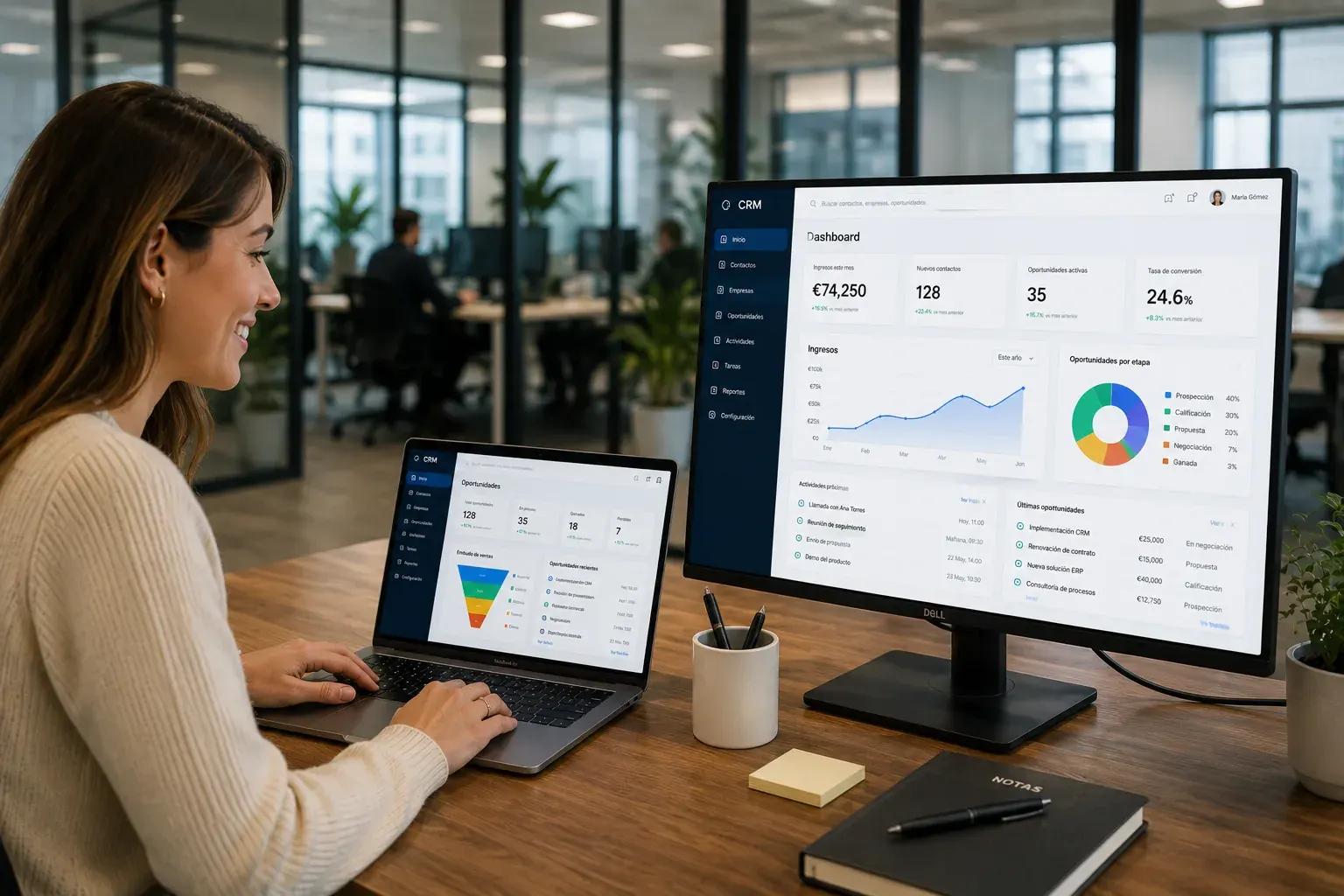
14. Your Google Analytics and CRM May Not Be Connected Properly
A website can generate enquiries that are not correctly attributed to marketing channels.
This creates confusion between the agency and the sales team.
For example, Google Analytics may report organic conversions, while the CRM records enquiries without source information.
The sales team may then struggle to identify which customers came from Google.
What should be reviewed?
Check whether relevant forms, calls and other enquiry sources are recorded reliably.
Where appropriate, capture useful attribution information and pass it to the CRM in a privacy-conscious manner.
Understand attribution limitations
A customer may discover your business through Google, return later through a direct visit and eventually contact you after seeing a social media post.
Different attribution systems may assign credit differently.
There may not be a single perfectly accurate answer.
What should a professional agency do?
It should explain what can be measured reliably, identify important gaps and avoid presenting uncertain attribution as fact.
Where appropriate, the agency can coordinate with your developer or CRM team to improve tracking.
15. Your Sales Team May Be Losing Leads After They Arrive
Not every lead-generation problem begins with marketing.
Sometimes the website attracts suitable customers, but the business fails to respond effectively.
Common sales process problems
-
Enquiries are not assigned to a responsible person.
-
Customers wait too long for a response.
-
The sales team does not understand the service being advertised.
-
Quotations are delayed.
-
Follow-up is inconsistent.
-
Lead records are incomplete.
-
Potential customers receive generic responses.
-
No one tracks why opportunities are lost.
Example
A company receives 40 qualified enquiries in a month.
The sales team responds promptly to 15.
The remaining enquiries are contacted several days later or not contacted at all.
Even if the marketing agency improves lead generation, the business may struggle to increase customers without fixing the follow-up process.
What should you do?
Review the full enquiry journey.
Measure when enquiries arrive, when someone responds, whether the customer receives useful information and what happens next.
Work together
The marketing agency and sales team should share relevant feedback.
The agency needs to know which leads are useful.
The sales team needs to understand which campaigns and pages are generating interest.
Neither team should be evaluated entirely in isolation.
16. Your Agency May Be Optimising for Traffic Instead of Qualified Leads
This is often a strategy problem rather than a technical problem.
If the agency's main target is organic traffic growth, it may prioritise activities that increase visits.
If the business's main objective is qualified enquiries, the strategy should also consider customer intent, commercial landing pages and conversion performance.
Why KPIs influence behaviour
A campaign measured only by impressions may prioritise broad visibility.
A campaign measured only by traffic may prioritise high-volume keywords.
A campaign measured only by lead count may attract low-quality enquiries.
A better measurement framework considers several related indicators.
Suggested KPI structure
| KPI category | Example metrics |
|---|---|
| Search visibility | Relevant impressions, clicks and commercial keyword trends |
| Traffic quality | Visits to important service and product pages |
| Website conversion | Genuine enquiries and relevant conversion rates |
| Lead quality | Qualified leads and sales opportunities |
| Commercial performance | Customer acquisition costs and attributable sales outcomes |
| Execution | Completed improvements and unresolved issues |
What should you agree with the agency?
Define the primary business objective and supporting measures.
For a B2B lead-generation website, qualified enquiries may be a primary KPI, while commercial search visibility and landing page performance are supporting indicators.
This does not mean the agency can guarantee a fixed number of leads.
It means the strategy should be evaluated against the outcome the business actually values.
17. Your Website May Have a Conversion Rate Problem
Conversion rate is a useful measure for understanding whether website visitors complete a desired action.
For a simple lead-generation analysis:
Lead conversion rate = recorded enquiries ÷ relevant website sessions × 100
The definition must remain consistent across reporting periods.
Example
Suppose a website has the following results:
| Metric | Previous month | Current month |
|---|---|---|
| Organic sessions | 5,000 | 10,000 |
| Organic enquiries | 50 | 55 |
| Enquiry conversion rate | 1.00% | 0.55% |
Traffic doubled.
Enquiries increased by only 10%.
The recorded enquiry conversion rate declined from 1% to 0.55%.
This does not automatically mean the website became worse.
The new traffic may be coming from informational searches with lower immediate purchasing intent.
Alternatively, a website problem may have reduced conversions.
Investigate before drawing conclusions
Break the data down by landing page, device, location and relevant traffic segment.
Check whether the increase came from pages that are intended to generate immediate enquiries.
Avoid relying on universal conversion benchmarks
A conversion rate that is reasonable for one industry may be poor for another.
A high-value B2B service with a long sales cycle may behave differently from a local repair service.
Compare your website with its own historical performance and realistic business objectives.
18. Different Landing Pages May Need Different Conversion Strategies
Not every page should be expected to generate an immediate enquiry.
A visitor reading an educational article may be researching a problem.
A visitor reading a detailed service page may be comparing providers.
A visitor on a quotation page may be ready to contact the business.
Informational pages
These pages should answer the reader's question clearly.
Where relevant, they can introduce related services or provide a useful next step.
Commercial service pages
These pages should explain the service, target customers, process, credibility and enquiry options.
Product pages
These pages may need specifications, applications, technical information, availability details or quotation options.
Comparison pages
These pages should help visitors understand differences and make informed choices.
Contact pages
These pages should make it easy to communicate with the company and understand what happens after submission.
What should your agency do?
Evaluate each page according to its purpose rather than applying the same conversion expectation to every URL.
19. Your Website May Be Missing Important Customer Questions
Visitors often leave because they cannot find the information needed to make a decision.
Your sales team can help identify these gaps.
Ask what customers regularly want to know before requesting a quotation or agreeing to a meeting.
Common customer questions
-
Is this service suitable for my business?
-
Does the company work with businesses of my size?
-
What is included?
-
How does the process work?
-
How much might it cost?
-
How long does it take?
-
What documents or information are required?
-
What support is available after purchase?
-
Does the company serve my location?
-
How do I compare this option with alternatives?
Turn sales questions into website improvements
If prospects repeatedly ask the same questions, those answers may belong on relevant service pages.
This can help visitors understand the offering before contacting the company.
It can also help sales teams receive better-informed enquiries.
Avoid adding irrelevant FAQs
A long FAQ section is not automatically useful.
Include questions that reflect genuine customer concerns and fit the page's purpose.
20. Your Website May Be Attracting Customers at the Wrong Stage of Their Buying Journey
Some customers are ready to buy immediately.
Others need weeks or months to evaluate their options.
This is particularly important in B2B industries.
Example: Industrial machinery purchase
A factory owner may first research a production problem.
Later, the procurement team may compare machinery types.
Then the business may request specifications, quotations and demonstrations.
The final purchase may involve several decision-makers.
What this means for SEO
Informational content can support early research.
Detailed product and service pages can support evaluation.
Quotation pages and contact options can support enquiries.
Do not expect every visitor to convert immediately
Some visitors may return later or contact the company through another channel.
The agency should understand the buying process and avoid judging all content by immediate form submissions.
What can help?
Useful product information, relevant case examples, clear contact options and appropriate follow-up processes can support customers at different stages.
The right approach depends on the business and available resources.
21. Your Website's Offer May Not Be Competitive Enough
Sometimes visitors understand the service and trust the business but still choose another provider.
Marketing cannot fully compensate for an unsuitable offer.
Possible reasons
Your pricing may be outside the customer's budget.
Your service may not include features buyers expect.
Your delivery timeline may be longer than alternatives.
Your website may not explain the value that justifies a higher price.
Your business may be targeting customers who are not a good fit.
What should you investigate?
Review customer objections and lost sales opportunities.
Ask why prospects did not proceed.
Do not assume that every lost enquiry is caused by poor marketing.
Example
A software development company may attract relevant enquiries but lose prospects because it does not explain its project management process, maintenance arrangements or relevant technical capabilities.
Improving that information may help buyers evaluate the company more confidently.
22. Competitors May Be Providing a Better Website Experience
Your website does not operate in isolation.
A potential customer may compare several providers before contacting anyone.
Even if your SEO agency successfully brings visitors to your website, competitors may offer clearer information or a more useful enquiry experience.
What should you compare?
Review relevant competitor pages for:
-
Service clarity.
-
Product information.
-
Website usability.
-
Mobile experience.
-
Pricing explanations.
-
Credibility information.
-
Contact options.
-
Customer questions answered.
-
Quality of supporting resources.
Do not copy competitors
The goal is to understand customer expectations.
Your business should explain its genuine strengths and provide useful information that reflects its own services.
What should your agency report?
It should identify meaningful gaps and recommend improvements based on customer needs rather than superficial design preferences.
23. How to Audit the Complete Visitor-to-Lead Journey
A practical way to identify the problem is to review the full journey from search to enquiry.
Stage 1: Search
What did the visitor search for?
Does the query indicate a relevant business need?
Stage 2: Search result
Does the page title accurately describe what the visitor will find?
Is the result relevant to the search?
Stage 3: Landing page
Does the page answer the visitor's question?
Does it explain the product or service clearly?
Stage 4: Evaluation
Can the visitor understand whether your company is suitable?
Is enough credible information available?
Stage 5: Enquiry
Is the next step clear?
Do forms, calls and other contact methods work?
Stage 6: Tracking
Is the enquiry recorded correctly?
Can the business identify the source with reasonable confidence?
Stage 7: Sales follow-up
Does someone respond appropriately?
Is the enquiry qualified and followed up?
Stage 8: Commercial outcome
Does the enquiry become an opportunity or customer?
If not, what was the reason?
Visitor-to-lead audit table
| Journey stage | Possible problem | Recommended investigation |
|---|---|---|
| Search | Wrong keywords | Review search queries and intent |
| Landing page | Irrelevant content | Compare page with visitor needs |
| Evaluation | Missing information | Review customer questions and objections |
| Trust | Insufficient credibility | Check genuine business information |
| Enquiry | Broken or difficult forms | Test forms and contact options |
| Tracking | Missing conversions | Compare analytics with actual enquiries |
| Sales | Slow response | Review CRM and follow-up records |
| Closing | Weak offer or poor fit | Analyse lost opportunities |
This approach helps identify the actual bottleneck rather than assuming the solution is always more traffic.
24. Use a Simple Lead Generation Funnel to Identify Where Visitors Are Being Lost
A funnel can help organise the investigation.
Consider a hypothetical website receiving 10,000 organic sessions per month.
Of those sessions:
-
2,000 reach commercially important pages.
-
300 visitors begin an enquiry form.
-
120 successfully submit it.
-
45 enquiries meet the company's qualification criteria.
-
10 become sales opportunities.
-
3 become customers.
These figures are illustrative and do not represent a standard conversion benchmark.
What can the business learn?
If few visitors reach commercial pages, review traffic relevance and navigation.
If many people start forms but few submit them, investigate form usability and technical problems.
If many enquiries are irrelevant, review targeting and qualification.
If qualified leads rarely become opportunities, investigate follow-up, pricing and customer fit.
Do not assume every funnel step is perfectly measurable
Some visitors use phone calls, email or other channels.
Others may return on a different device.
Use the funnel as a decision-making tool, not as a claim that every customer journey can be tracked exactly.
25. A Practical Example: Traffic Doubles but Enquiries Stay Almost the Same
Consider a hypothetical B2B service company.
Its SEO agency reports strong organic traffic growth over six months.
Performance before and after
| Metric | Starting period | Latest comparable period |
|---|---|---|
| Organic sessions | 8,000 | 16,000 |
| Organic enquiries | 80 | 88 |
| Qualified enquiries | 32 | 34 |
| Organic enquiry conversion rate | 1.00% | 0.55% |
The agency highlights 100% traffic growth.
The business sees only a small improvement in enquiries.
What does the audit discover?
Most new visits are coming from broad informational articles.
The company's primary service pages have received limited optimisation.
Several commercial pages do not explain pricing factors or project requirements.
The contact form asks for information that is unnecessary at the first enquiry stage.
The sales team also reports that many enquiries come from people outside the target customer group.
What should happen next?
The company and agency could agree to prioritise commercially relevant pages, improve service information, test the enquiry journey, refine content targeting and monitor qualified leads.
What results should be expected?
The business should not assume these changes will guarantee a particular conversion increase.
Instead, it should establish a baseline and evaluate whether the improvements produce better visitor engagement, more genuine enquiries and stronger lead quality over time.
26. How to Review Your SEO Agency When Traffic Is Growing but Leads Are Not
Before blaming the agency, request a structured performance review.
Ask for evidence rather than general explanations.
Questions to ask your agency
-
Which pages are responsible for our traffic growth?
-
What percentage of the growth comes from informational versus commercial pages?
-
Are we gaining relevant non-branded search visibility?
-
Which keywords are bringing potential buyers?
-
Which important service pages have been improved?
-
Are visitors reaching our contact or quotation pages?
-
Have all important forms and contact methods been tested?
-
Are our conversions configured correctly?
-
How many recorded conversions represent genuine enquiries?
-
What does our sales team say about lead quality?
-
Are mobile visitors experiencing problems?
-
What customer questions are missing from our service pages?
-
Which competitors provide a better experience?
-
What are the three most important changes you recommend?
-
How will we measure whether those changes work?
What a useful agency response looks like
A useful response identifies the problem, presents supporting evidence, recommends specific actions and explains how progress will be measured.
For example:
"Organic sessions increased mainly because three informational articles gained visibility. Commercial service page traffic remained relatively stable. We recommend improving the two highest-priority service pages, reviewing their enquiry journeys and refining our next content topics towards more relevant buyer searches."
That explanation is more useful than simply saying:
"SEO takes time."
SEO does take time, but the agency should still investigate why business outcomes are not improving.
27. A 30-Day Action Plan to Investigate and Improve Lead Generation
You do not need to redesign the entire website immediately.
Start with the most important problems.
Week 1: Verify data and identify the bottleneck
Review Google Search Console, Google Analytics 4 and actual enquiry records.
Identify the pages responsible for traffic growth.
Check whether conversions are measured correctly.
Speak with the sales team about lead quality.
Expected output: A clear list of verified problems, suspected causes and missing data.
Week 2: Review commercial landing pages
Select the most important service or product pages.
Evaluate content clarity, customer questions, mobile usability, trust information and contact options.
Test forms and relevant enquiry methods.
Expected output: A prioritised improvement list for commercially important pages.
Week 3: Implement the highest-priority improvements
Depending on the findings, improve page information, correct broken forms, refine calls to action, fix important technical problems or adjust targeting.
Avoid changing every element simultaneously without a reason.
Expected output: Documented changes and reliable tracking of relevant actions.
Week 4: Evaluate early evidence
Review whether the changes work technically and whether early visitor or enquiry signals have changed.
Share results with the sales team.
Prepare the next set of priorities.
Expected output: An evidence-based plan for the next 30–60 days.
A 30-day period may be enough to identify and correct important problems, but it may not be sufficient to measure the full effect of SEO changes.
28. A 90-Day Recovery Plan for Businesses with High Traffic but Low Leads
Once the immediate problems have been identified, the business can develop a more structured improvement plan.
Days 1–30: Diagnose and correct urgent issues
Prioritise tracking accuracy, broken enquiry paths, traffic relevance and the most important commercial landing pages.
Days 31–60: Improve content and conversion journeys
Review service page completeness, internal linking, customer questions and suitable calls to action.
Use real customer feedback to guide improvements.
Days 61–90: Evaluate and refine
Compare relevant landing page performance, qualified enquiries and sales feedback with the baseline.
Investigate which changes appear promising and which problems remain.
What should your agency report?
The agency should explain completed changes, evidence of impact, unresolved issues and future priorities.
For businesses with long sales cycles, qualified opportunities may be more informative than immediate revenue.
29. What Should Different Types of Businesses Prioritise?
The reasons for low lead generation can differ significantly by industry.
B2B manufacturing companies
Prioritise relevant product and category pages, specifications, applications, procurement information, distributor enquiries and clear quotation processes.
A manufacturer may receive high traffic from educational articles while institutional buyers struggle to find technical product information.
Healthcare and medical device companies
Focus on accurate product information, intended audiences, relevant technical details and appropriate enquiry routes.
Claims and product information should be accurate and comply with applicable requirements.
Legal and compliance service providers
Make service eligibility, documentation, application procedures, official fees where applicable and professional assistance clear.
Avoid outdated legal information and unsupported guarantees.
Website development and IT service companies
Explain capabilities, technologies, project requirements, delivery process, support arrangements and relevant experience.
Visitors should understand whether the company can handle their type of project.
Real estate businesses
Provide accurate property information, location details, relevant availability information and clear enquiry options.
Avoid misleading listings or unsupported claims.
Local service businesses
Review local search relevance, service areas, mobile contact options, business information and response times.
SaaS businesses
Evaluate product clarity, use cases, demo journeys, trial processes and whether visitors understand the software's suitability.
eCommerce businesses
Review product discovery, category relevance, product information, checkout usability, delivery information and purchase conversion performance.
Not every business needs the same conversion strategy.
30. When Should You Consider Changing Your Digital Marketing Agency?
Rising traffic with stagnant leads does not automatically justify replacing the agency.
First, investigate the problem.
A responsible agency should be willing to review traffic quality, commercial landing pages, tracking, lead quality and website conversion issues.
Reasons to continue
You may choose to continue when the agency understands the problem, provides evidence, communicates clearly and implements an appropriate improvement plan.
Reasons to reconsider the relationship
You may need to evaluate alternatives if the agency repeatedly ignores business outcomes, refuses to review lead quality, cannot explain its targeting strategy, fails to address agreed problems or consistently avoids accountability.
Do not switch without preserving useful work
If you decide to change agencies, retain appropriate access to your website, analytics, Search Console, content and other important assets.
Avoid unnecessary website changes that could disrupt existing organic visibility.
31. How SEOspade Can Help Businesses Turn Relevant Website Traffic into Enquiries
When a website receives more visitors but enquiries remain low, the solution is not always to publish more blogs or target additional keywords.
The first step is to understand where the problem exists.
At SEOspade, our services include SEO, website design and development, content writing, paid advertising, social media management and digital PR.
For businesses facing a traffic-to-lead gap, relevant areas of support may include:
SEO performance assessment: Reviewing the pages and search queries attracting visitors.
Commercial keyword analysis: Identifying whether the website is visible for searches connected to genuine customer needs.
Service page optimisation: Improving the clarity, completeness and relevance of important commercial pages.
Website usability review: Identifying problems affecting navigation, mobile experience and enquiry journeys.
Technical SEO: Reviewing important indexing, crawlability and website implementation issues.
Content strategy: Aligning informational content with useful customer questions and relevant services.
Conversion tracking review: Evaluating whether genuine enquiries are being recorded accurately.
Lead generation planning: Helping identify priorities based on target customers and business objectives.
The appropriate approach depends on the website, available data, industry and scope of work.
The objective should be to attract relevant visitors, help them make informed decisions and make it easier for suitable customers to contact the business.
32. Website Traffic but No Leads: Business Owner's Audit Checklist
Use this checklist when reviewing your agency's performance.
Traffic quality
-
We know which pages generated the traffic increase.
-
We have reviewed commercially relevant search queries.
-
We understand branded and non-branded traffic trends.
-
We have checked geographic relevance.
-
We know whether informational or commercial pages are growing.
Website content
-
Important service pages explain our offering clearly.
-
Product and service information is accurate.
-
Common customer questions are answered.
-
Important pages have useful internal links.
-
Content does not target irrelevant search demand.
-
Calls to action match visitor needs.
Website usability
-
Contact forms work on desktop and mobile.
-
Contact information is easy to find.
-
Important pages are usable on mobile devices.
-
Major performance problems have been reviewed.
-
Visitors can understand the next step.
Trust and commercial information
-
Our company identity is clear.
-
Relevant credentials and capabilities are explained.
-
Customer examples or testimonials are genuine.
-
Pricing factors are explained where useful.
-
The enquiry process is understandable.
Tracking and sales
-
Important conversion events are configured correctly.
-
Genuine enquiries are distinguished from button clicks.
-
Duplicate conversions have been investigated.
-
CRM records are reviewed.
-
Lead quality is classified consistently.
-
Sales response times are monitored.
-
Lost opportunities are analysed.
Agency accountability
-
Our agency understands our ideal customers.
-
Commercial landing pages are part of the strategy.
-
The agency reports relevant business outcomes.
-
Conversion problems are investigated.
-
Completed improvements are documented.
- We have a prioritised action plan.
Conclusion: More Website Visitors Are Only Valuable When They Support Your Business Goals
Seeing website traffic grow can be encouraging.
It may indicate that your website is becoming more visible in search results, that your content is reaching a wider audience or that your marketing campaigns are attracting attention.
But if your business depends on customer enquiries, traffic growth should not be the end of the conversation.
You need to understand who is visiting, why they are arriving, what they see on your website and what prevents them from taking the next step.
Sometimes the problem is keyword targeting. Sometimes important service pages are being ignored. Sometimes the website lacks useful information or credibility. Sometimes forms or tracking systems are broken.
And sometimes the real problem begins after the enquiry reaches your sales team.
A professional digital marketing agency should be willing to investigate these possibilities and explain what the evidence shows.
The right response is not always more content, more backlinks, more advertising or a complete website redesign.
It is to identify the most important bottleneck and address it systematically.
Your business does not need website traffic for the sake of traffic. It needs relevant visibility, useful customer interactions and a reliable path from interest to enquiry.
If your website traffic is increasing but your business is not receiving enough qualified enquiries, SEOspade offers SEO, website development, content and digital marketing services that can support a more focused review of your online customer acquisition process.