Every CEO faces the same fundamental challenge: deciding where to invest limited business resources to achieve sustainable growth.
Some investments are easy to understand.
Purchasing new machinery can increase production capacity. Hiring salespeople can expand customer outreach. Opening another office can help a company enter a new market.
Digital marketing, however, is often treated differently.
Many businesses consider SEO, website development, content marketing and paid advertising as monthly expenses rather than investments in customer acquisition and long-term business development.
The conversation frequently begins with questions such as:
-
How much will SEO cost every month?
-
Why should we continue spending on marketing?
-
Can we reduce our digital marketing budget?
-
Why are we paying an agency when results are not immediate?
-
Can we generate customers without investing in our website?
These are reasonable financial questions.
However, focusing only on monthly marketing expenditure can prevent business leaders from evaluating the commercial value that marketing activities may create.
A well-planned digital marketing strategy can help businesses reach potential customers, improve their online presence, generate qualified enquiries, support sales teams and build customer acquisition capabilities.
But this does not mean every digital marketing expense automatically becomes a profitable investment.
Digital marketing becomes a business growth investment when it is connected to clear commercial objectives, supported by disciplined execution and evaluated using meaningful business outcomes.
For CEOs, the important question is not simply how much the company spends on digital marketing.
It is whether that expenditure is helping the business develop a more effective and financially sustainable customer acquisition system.
This guide explains how CEOs can evaluate digital marketing strategically, allocate budgets, understand returns and build a marketing approach that supports long-term business growth.
1. Why Many CEOs Still View Digital Marketing as an Expense

In traditional financial management, marketing expenditure is generally recognised as an operating expense.
That accounting treatment is appropriate in many circumstances.
However, the management decision about whether marketing is strategically valuable is a separate question.
A business may spend ₹50,000 per month on SEO and see only the monthly invoice.
Another business may evaluate the same expenditure by considering the search visibility, customer enquiries, sales opportunities and future customer acquisition benefits it helps create.
The second approach does not guarantee better results.
It simply evaluates marketing within a broader commercial framework.
Common reasons marketing is treated as a cost
Results are not always immediate. SEO and content marketing may require sustained implementation before meaningful outcomes become visible.
Attribution is imperfect. A customer may interact with several channels before making a purchase.
Agencies sometimes report the wrong metrics. Keyword rankings and impressions do not automatically explain business value.
Marketing and sales operate separately. CEOs may struggle to connect campaigns with actual customer acquisition.
Budgets are approved without clear objectives. Spending becomes difficult to justify when the intended result was never defined.
What CEOs should change
Instead of approving marketing activities solely because competitors are doing them, define the commercial problem the investment is intended to address.
For example:
"Our company depends heavily on referrals. We want to establish an additional source of qualified enquiries through Google."
That objective provides a clearer basis for investment decisions.
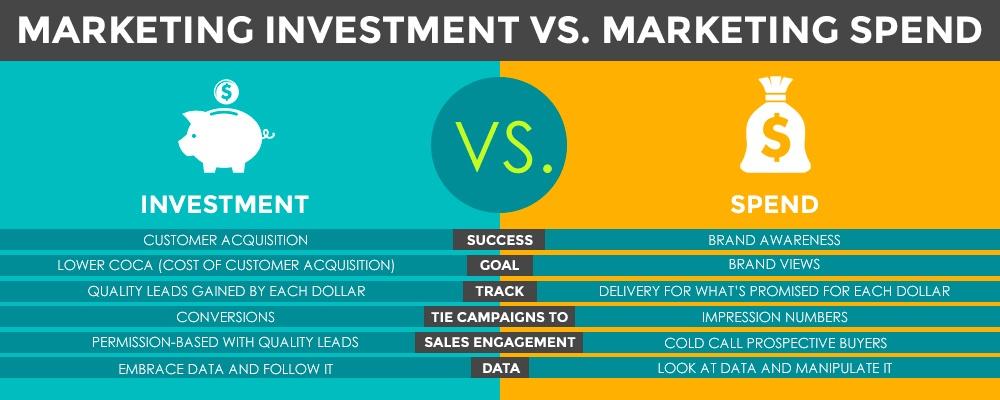
2. The Difference Between Marketing Expenditure and Marketing Investment
Every marketing investment involves expenditure.
But not every marketing expenditure delivers meaningful business value.
Consider two companies
| Factor | Company A: Expense-focused | Company B: Investment-focused |
|---|---|---|
| Main question | How cheaply can we get marketing? | What commercial problem should marketing solve? |
| Planning | Monthly task allocation | Business-aligned strategy |
| Measurement | Rankings, posts and impressions | Relevant traffic, leads, customers and economics |
| Budget decisions | Primarily based on fees | Based on cost, risk and expected value |
| Agency relationship | Task execution | Strategy and accountable execution |
| Review process | Monthly activity reports | Performance and commercial reviews |
| Long-term focus | Minimise expenditure | Improve sustainable customer acquisition |
Company B is not necessarily spending more money.
It is using a more structured approach to deciding where marketing resources should go.
The CEO's responsibility
Treat digital marketing as an investment decision that must compete with other uses of company capital.
Evaluate expected benefits, uncertainty, implementation requirements and opportunity costs.
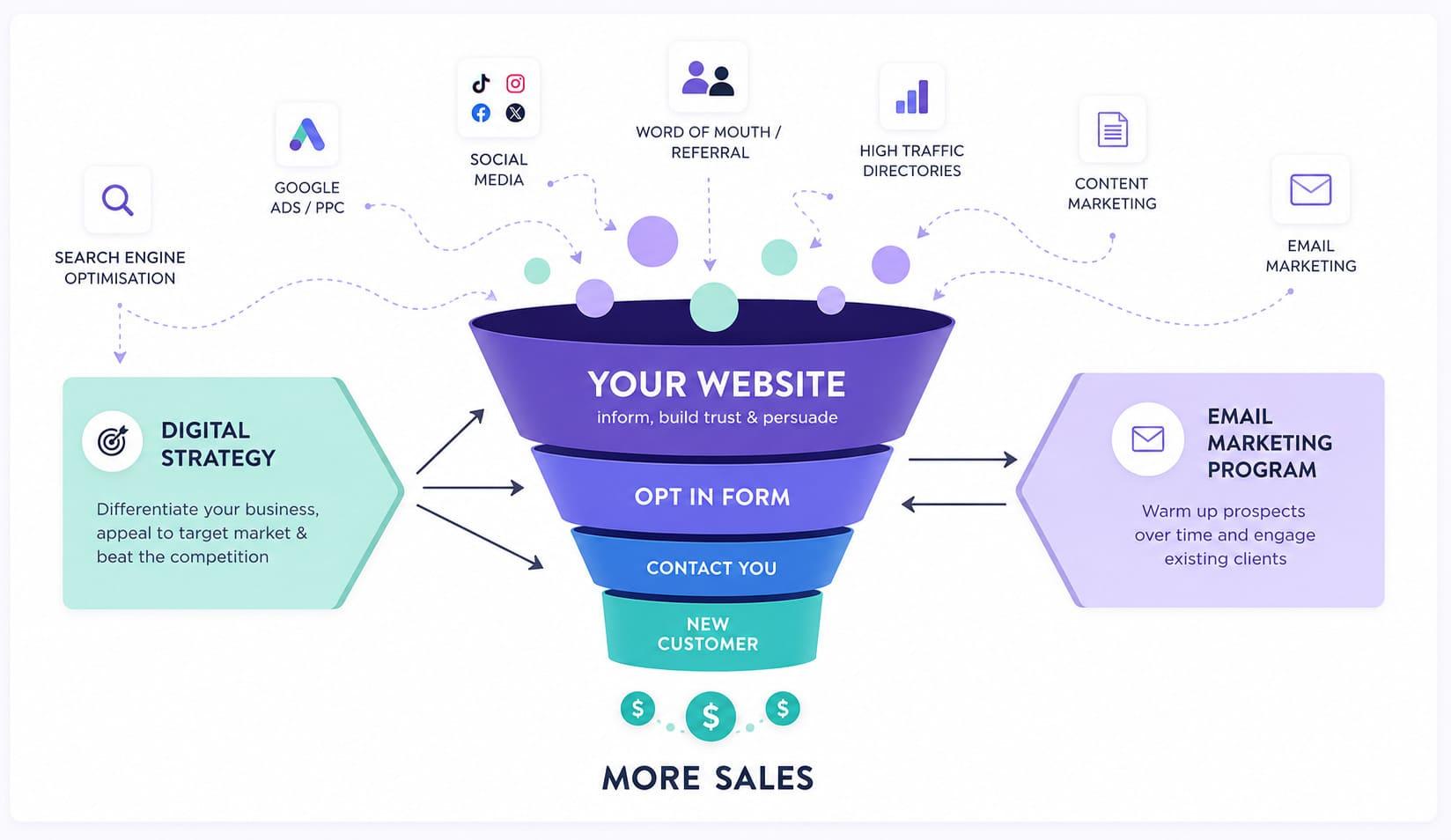
3. Digital Marketing Can Help Build a Repeatable Customer Acquisition System
One of the biggest challenges for growing businesses is inconsistent customer acquisition.
A company may depend on existing relationships, referrals or direct sales outreach.
These channels can be valuable.
However, relying on only one or two sources can create commercial vulnerability.
Example: A B2B service company
A consulting company receives most of its customers through referrals.
Business is strong when referrals are frequent.
But when referrals decline, the sales pipeline becomes unpredictable.
A digital marketing strategy could help the company become discoverable when potential customers search for relevant services.
What a customer acquisition system may include
-
Search visibility for relevant customer needs.
-
Useful service and product pages.
-
Educational content that supports buying decisions.
-
Appropriate paid advertising.
-
Clear enquiry and contact processes.
-
CRM tracking.
-
Sales qualification and follow-up.
-
Performance measurement.
Why this matters to CEOs
A repeatable system can make customer acquisition easier to manage, measure and improve.
However, repeatability requires ongoing work and cannot be guaranteed simply by launching a website or campaign.
4. Your Website Should Be Viewed as a Business Asset, Not Just an Online Brochure
Many companies invest heavily in offices, equipment and staff but give limited attention to their websites.
Their websites may contain outdated information, unclear service descriptions or difficult enquiry processes.
This can affect the experience of potential customers who research the business online.
What a commercially useful website should do
Explain what the business offers.
Identify the customers it serves.
Provide accurate product or service information.
Answer important purchasing questions.
Demonstrate relevant credibility.
Make enquiries straightforward.
Support mobile users.
Provide useful information to search engines.
Example: Manufacturing business
A manufacturer may have strong production capabilities.
However, if its website lacks technical product specifications, industry applications and quotation options, potential buyers may struggle to evaluate the company.
The investment perspective
Website development should not be judged only by appearance.
CEOs should consider whether the website helps customers understand, evaluate and contact the business.
5. SEO Can Support Long-Term Search Visibility and Customer Discovery
Search engine optimisation helps websites become more accessible and relevant to people searching for information, products and services.
Unlike paid advertising, organic search does not charge the website owner for each click.
However, SEO still requires investment in expertise, content, development and maintenance.
What SEO may contribute
Visibility for relevant commercial searches.
Improved discovery of products and services.
Useful educational content.
Better technical website foundations.
Support for customers researching suppliers.
An additional source of website visitors and enquiries.
Example
A company offering industrial equipment may target searches relating to its product categories, technical specifications and supplier selection.
If relevant pages become visible, potential customers may discover the business while researching purchasing options.
What CEOs must understand
SEO does not guarantee rankings or enquiries.
Search performance depends on competition, website quality, customer demand and search engine systems.
The investment should be evaluated using realistic objectives and evidence.
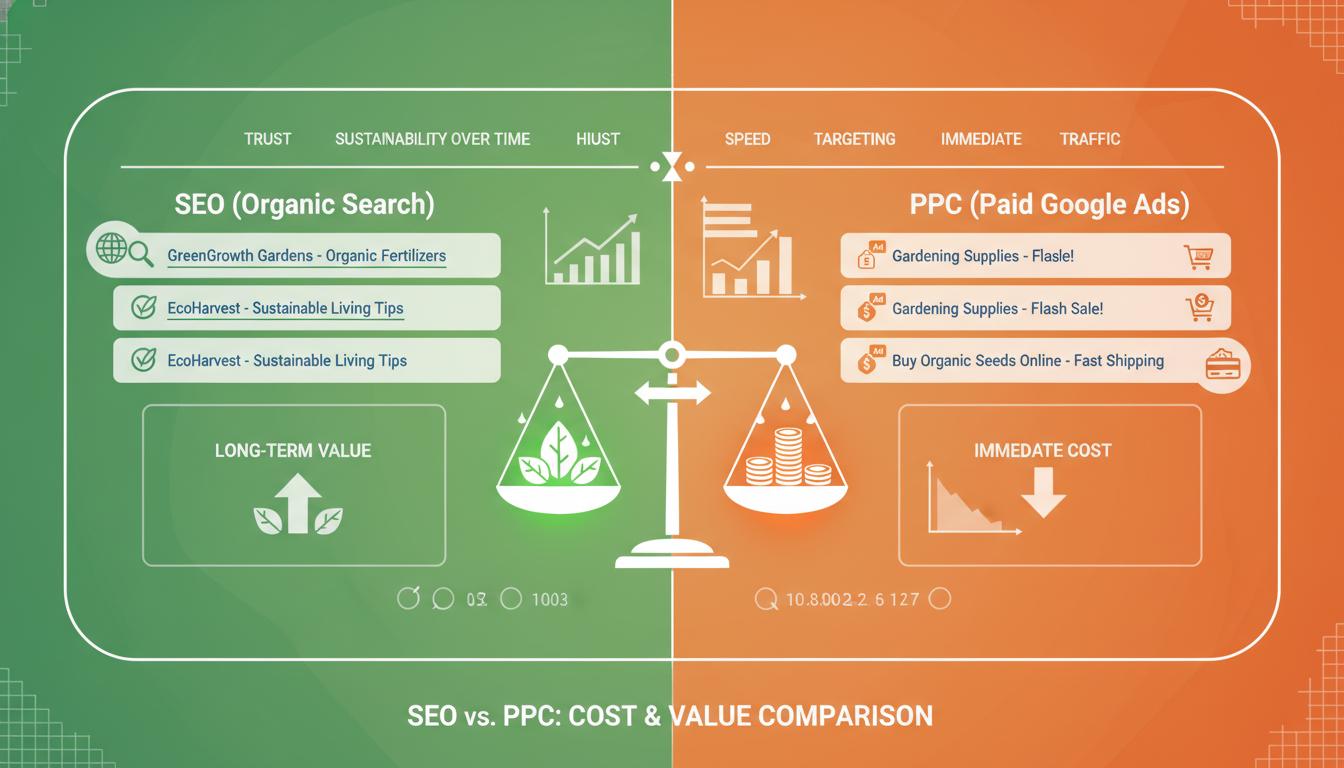
6. Paid Advertising and SEO Serve Different Investment Purposes

CEOs sometimes compare SEO and paid advertising as if they were interchangeable.
Both can support customer acquisition, but they operate differently.
| Factor | SEO | Paid advertising |
|---|---|---|
| Main mechanism | Organic search visibility | Paid placement |
| Traffic cost | No per-click charge for organic listings | Charges depend on campaign model |
| Time to visibility | Often gradual | Can begin after campaign approval and launch |
| Ongoing investment | Content, technical work and maintenance | Media spend and campaign management |
| Control | Limited control over rankings | Greater control over targeting and budgets |
| Main risk | Uncertain visibility and timing | Spending without profitable conversions |
| Long-term value | Useful pages may continue attracting visitors | Traffic usually depends on active spend |
Why a combined approach may help
Paid advertising may support demand capture while SEO work develops.
SEO may help the business reach relevant searches without paying for each organic click.
However, the appropriate mix depends on the company's economics, competition, budget and sales process.
7. CEOs Should Evaluate Digital Marketing Using Business Metrics
A CEO does not need to review every keyword movement or advertising setting.
The leadership team needs metrics that help explain commercial performance.
Important metrics
Qualified leads: Enquiries meeting the company's customer suitability criteria.
Customer acquisition cost (CAC): Relevant sales and marketing acquisition costs divided by acquired customers.
Lead-to-customer conversion rate: The proportion of leads that become customers.
Customer lifetime value (LTV): The estimated economic value of a customer relationship, calculated using an appropriate methodology.
Marketing-attributed revenue: Revenue associated with marketing activities under a defined attribution model.
Contribution margin: Revenue remaining after relevant variable costs.
Payback period: The time needed to recover acquisition expenditure through customer contribution.
What CEOs should avoid
Judging performance only through impressions, followers, ranking counts or total website visits.
These may be useful supporting metrics, but they do not establish profitability.
8. How to Calculate the Financial Return of Digital Marketing

Consider a hypothetical business investing in digital marketing.
Monthly example
| Metric | Amount |
|---|---|
| Agency fees | ₹60,000 |
| Advertising expenditure | ₹40,000 |
| Total marketing expenditure | ₹1,00,000 |
| Genuine enquiries | 100 |
| Qualified leads | 40 |
| New customers | 8 |
| Revenue from those customers | ₹4,00,000 |
| Contribution margin | 40% |
| Customer contribution | ₹1,60,000 |
Illustrative example, not an actual SEOspade client result.
Step 1: Calculate marketing expenditure per qualified lead
₹1,00,000 ÷ 40 = ₹2,500
Step 2: Calculate marketing expenditure per acquired customer
₹1,00,000 ÷ 8 = ₹12,500
This is not necessarily the company's full CAC because other relevant sales and acquisition costs may be excluded.
Step 3: Compare contribution with marketing expenditure
Customer contribution: ₹1,60,000
Marketing expenditure: ₹1,00,000
Illustrative contribution remaining after marketing expenditure: ₹60,000.
This example assumes all eight customers and their revenue are appropriately attributable to the measured marketing investment.
It also excludes other fixed costs and does not represent net profit.
What CEOs should learn
The correct financial question is not simply whether revenue exceeds agency fees.
It is whether the company is acquiring suitable customers at an economically sustainable cost.
9. Marketing Investments Should Be Connected to Customer Lifetime Value

Some companies evaluate marketing only against the first transaction.
This may be too narrow for businesses with recurring revenue or repeat purchases.
Example: B2B service company
A customer signs an initial contract worth ₹50,000.
The company may later provide additional services or renew the agreement.
The value of the relationship could extend beyond the first purchase.
However, future revenue should not be assumed.
What should CEOs evaluate?
Customer retention.
Repeat purchase patterns.
Gross or contribution margins.
Service delivery costs.
Customer acquisition costs.
Sales cycle duration.
Why it matters
A business with strong customer retention may be able to support different acquisition economics from a business that primarily makes one-time, low-margin sales.
Use actual historical data and conservative assumptions when estimating customer lifetime value.
10. Digital Marketing Can Reduce Dependence on a Single Acquisition Channel
Businesses often become vulnerable when customer acquisition depends heavily on one source.
Examples include referrals, one advertising platform, a single marketplace or one large distributor.
Digital marketing can help develop additional routes through which customers discover the business.
Potential channels
Organic search.
Paid search.
Relevant social media platforms.
Email marketing.
Content marketing.
Digital PR.
Direct website enquiries.
Important qualification
Diversification does not eliminate risk.
Each channel has its own costs, limitations and dependencies.
CEOs should evaluate whether additional channels provide genuine incremental value rather than simply increasing complexity.
11. Digital Marketing Can Help Businesses Enter New Markets
Expanding into another city, state or country requires customer understanding.
Digital marketing may help a company test demand before making larger physical investments.
Example
A professional services company operating in Delhi wants to explore opportunities in Hyderabad.
Before opening an office, the business may research search demand, customer requirements, competition and suitable advertising opportunities.
What CEOs should evaluate
Whether the company can serve the market.
Local customer needs.
Competitive intensity.
Regulatory requirements.
Delivery capacity.
Acquisition costs.
Avoid creating unnecessary location pages
Publishing many nearly identical city pages without meaningful local relevance is not a reliable growth strategy.
Pages should provide useful information appropriate to the markets the business genuinely serves.
12. Content Marketing Can Support Customer Education and Sales
Content marketing is often misunderstood as simply publishing blog articles.
For businesses with complex offerings, useful content can help customers understand problems, compare options and make informed decisions.
Examples of useful content
Service explanations.
Product specifications.
Implementation guides.
Comparison articles.
Frequently asked questions.
Industry-specific resources.
Case studies based on verified outcomes.
Example: Software development company
A potential customer may want to understand the cost, timeline and process involved in developing enterprise software.
Useful content can help answer these questions before a sales conversation.
The investment value
Content may support discovery, customer education and sales efficiency.
However, content production should be prioritised according to customer needs and commercial relevance.
Publishing volume alone is not a measure of value.
13. Digital Marketing Can Strengthen Brand Credibility
Potential customers often research businesses before contacting them.
They may review the website, services, case studies, company information and online presence.
A clear and accurate digital presence can support customer confidence.
What matters?
Consistent business information.
Professional website presentation.
Accurate service descriptions.
Relevant examples of work.
Transparent contact details.
Genuine customer testimonials.
Useful educational resources.
What CEOs should avoid
Manufactured testimonials.
Unverified performance claims.
Misleading awards.
Exaggerated guarantees.
Credibility is strengthened through evidence and consistency, not artificial claims.
14. Digital Marketing Investment Requires Sales and Marketing Alignment
A company may generate enquiries without converting them into customers.
This does not always mean the marketing strategy is failing.
The problem may occur later in the customer journey.
Example
A campaign generates 50 suitable enquiries.
The sales team responds slowly to many of them.
Potential customers move to competitors.
What should CEOs establish?
A clear definition of qualified leads.
Lead ownership.
Response procedures.
CRM tracking.
Follow-up responsibilities.
Feedback between sales and marketing.
Why this matters
Marketing and sales should be evaluated as connected parts of customer acquisition.
Improving only one side may not resolve the overall business problem.
15. CEOs Should Not Approve Marketing Budgets Without a Strategy
A budget is not a strategy.
Spending ₹1 lakh per month does not automatically create more business value than spending ₹50,000.
The outcome depends on how resources are allocated and implemented.
Questions before approving a budget
What business objective are we addressing?
Who are the intended customers?
Which channels are appropriate?
What work will be delivered?
What additional resources are required?
How will performance be measured?
What are the main risks?
When will we review the investment?
Budget allocation example
A business may need to prioritise technical website improvements before increasing content production.
Another may need stronger service pages before expanding paid campaigns.
The right allocation depends on the actual problems.
16. Why Cheap Digital Marketing Can Become Expensive
Selecting an agency based only on the lowest monthly fee can create hidden costs.
Possible risks
Poor-quality content.
Unnecessary website changes.
Irrelevant keyword targeting.
Unreliable reporting.
Weak campaign management.
Incomplete technical implementation.
Repeated rework.
But higher fees do not guarantee better results
CEOs should evaluate expertise, scope, transparency, delivery quality and commercial relevance.
A lower-cost provider may be appropriate for a limited project.
A more complex engagement may require greater investment.
The objective is to select the right capabilities at a commercially reasonable cost.
17. Digital Marketing Requires a Realistic Investment Horizon
Different marketing activities operate on different timelines.
A website improvement may produce immediate usability benefits.
A paid campaign may begin generating data shortly after launch.
SEO may require sustained work before important search visibility changes occur.
What CEOs should request
A phased implementation plan.
Clear deliverables.
Realistic assumptions.
Appropriate performance indicators.
Review milestones.
Avoid universal guarantees
No agency can reliably guarantee that every SEO campaign will produce a particular ranking or revenue outcome within a fixed period.
The evaluation horizon should reflect the channel, business model and competitive environment.
18. The CEO's Role Is Strategic Oversight, Not Daily Campaign Management
CEOs do not need to manage keyword research, ad bidding or content formatting.
Their role is to ensure marketing resources support business priorities.
CEO-level responsibilities
Set growth objectives.
Approve suitable budgets.
Define commercial priorities.
Ensure marketing and sales coordination.
Review financial performance.
Address organisational blockers.
Evaluate strategic risks.
What should be delegated?
Technical SEO implementation.
Campaign optimisation.
Content production.
Routine analytics.
Website maintenance.
Operational reporting.
The CEO should remain informed without becoming a bottleneck for everyday marketing decisions.
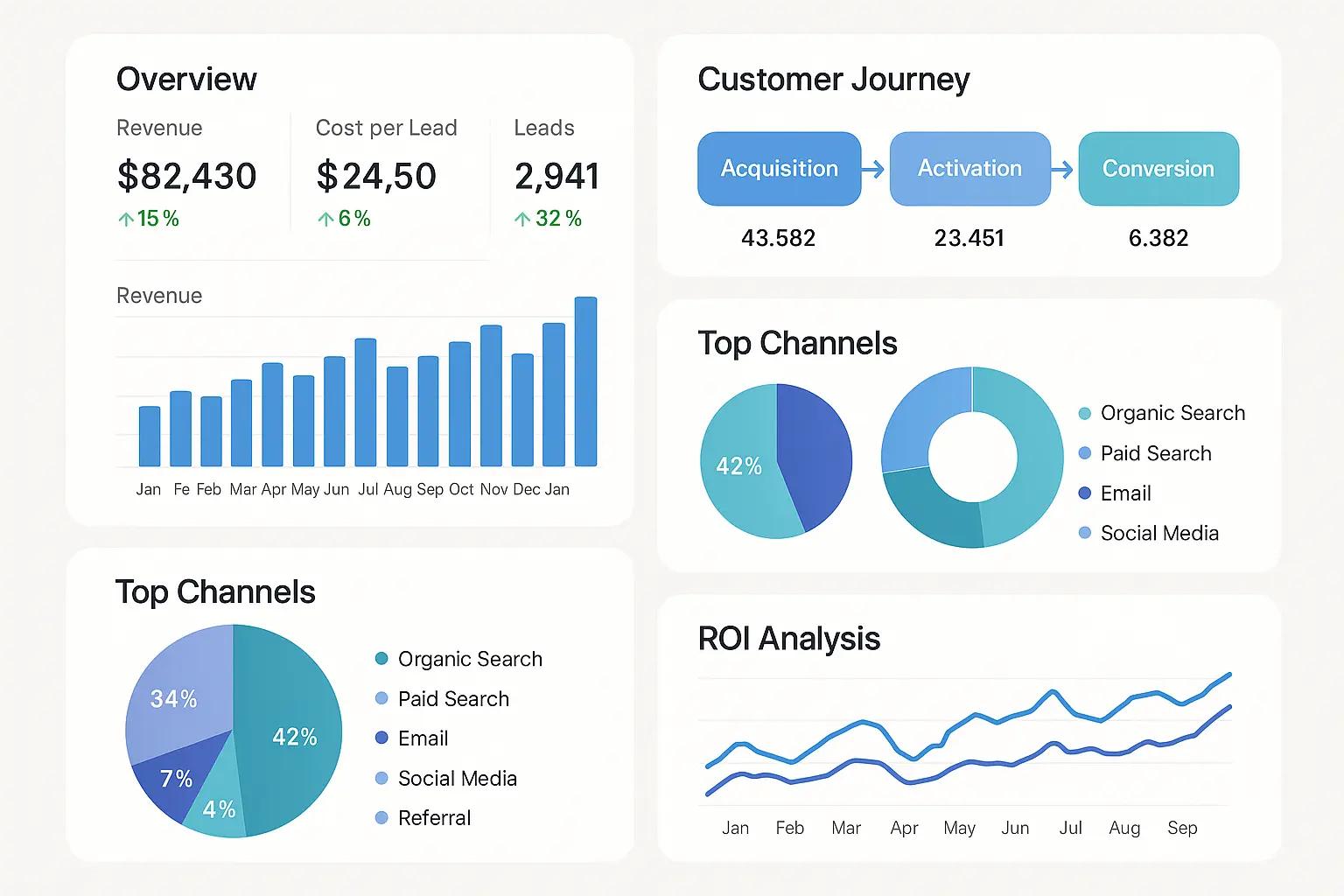
19. Build a CEO-Level Digital Marketing Dashboard
A useful executive dashboard should be simple enough to support decisions.
Suggested monthly dashboard
| Metric | Why it matters |
|---|---|
| Marketing expenditure | Tracks investment |
| Qualified leads | Measures relevant demand |
| Sales opportunities | Shows pipeline contribution |
| Acquired customers | Tracks acquisition outcomes |
| Acquisition cost | Evaluates spending efficiency |
| Attributed revenue | Connects marketing with sales |
| Contribution margin | Adds profitability context |
| Commercial organic visibility | Monitors relevant search presence |
| Conversion performance | Identifies customer journey issues |
The dashboard should use consistent definitions and explain attribution limitations.
20. When Should a CEO Increase Digital Marketing Investment?
Increasing expenditure should be based on evidence rather than enthusiasm.
Conditions that may support expansion
Relevant customer demand exists.
Current campaigns show promising acquisition economics.
The business can serve additional customers.
Tracking is sufficiently reliable.
The sales team can handle additional enquiries.
The company has financial capacity.
Example
A paid campaign consistently generates suitable enquiries at an acceptable acquisition cost.
The company has capacity to serve more customers.
A controlled budget increase may be reasonable.
Important consideration
Performance may change as spending increases.
The cost of reaching additional customers may be higher than the cost of reaching the initial audience.
Scale gradually and monitor results.
21. When Should a CEO Reduce or Reallocate Marketing Expenditure?
Treating marketing as an investment does not mean maintaining spending indefinitely.
Sometimes reducing or reallocating the budget is the correct decision.
Reasons to review expenditure
Customer acquisition costs are unsustainable.
Lead quality remains poor.
Campaigns are not aligned with business priorities.
Tracking problems prevent reliable evaluation.
The company cannot fulfil additional demand.
Better opportunities exist elsewhere.
What should happen?
Identify the problem.
Review available evidence.
Compare alternatives.
Adjust the strategy.
Set a suitable review period.
Do not continue an ineffective activity solely because money has already been spent.
22. How CEOs Can Evaluate a Digital Marketing Agency
An agency should be assessed on both execution and commercial relevance.
Questions to ask
Does the agency understand our business?
Is there a documented strategy?
Are agreed activities completed?
Are important recommendations implemented?
Is reporting accurate?
Are we attracting relevant customers?
Does the agency communicate problems clearly?
Can it explain its priorities?
Does it adapt when business needs change?
What matters most?
An agency should be able to connect its work to the company's objectives without claiming control over outcomes it cannot guarantee.
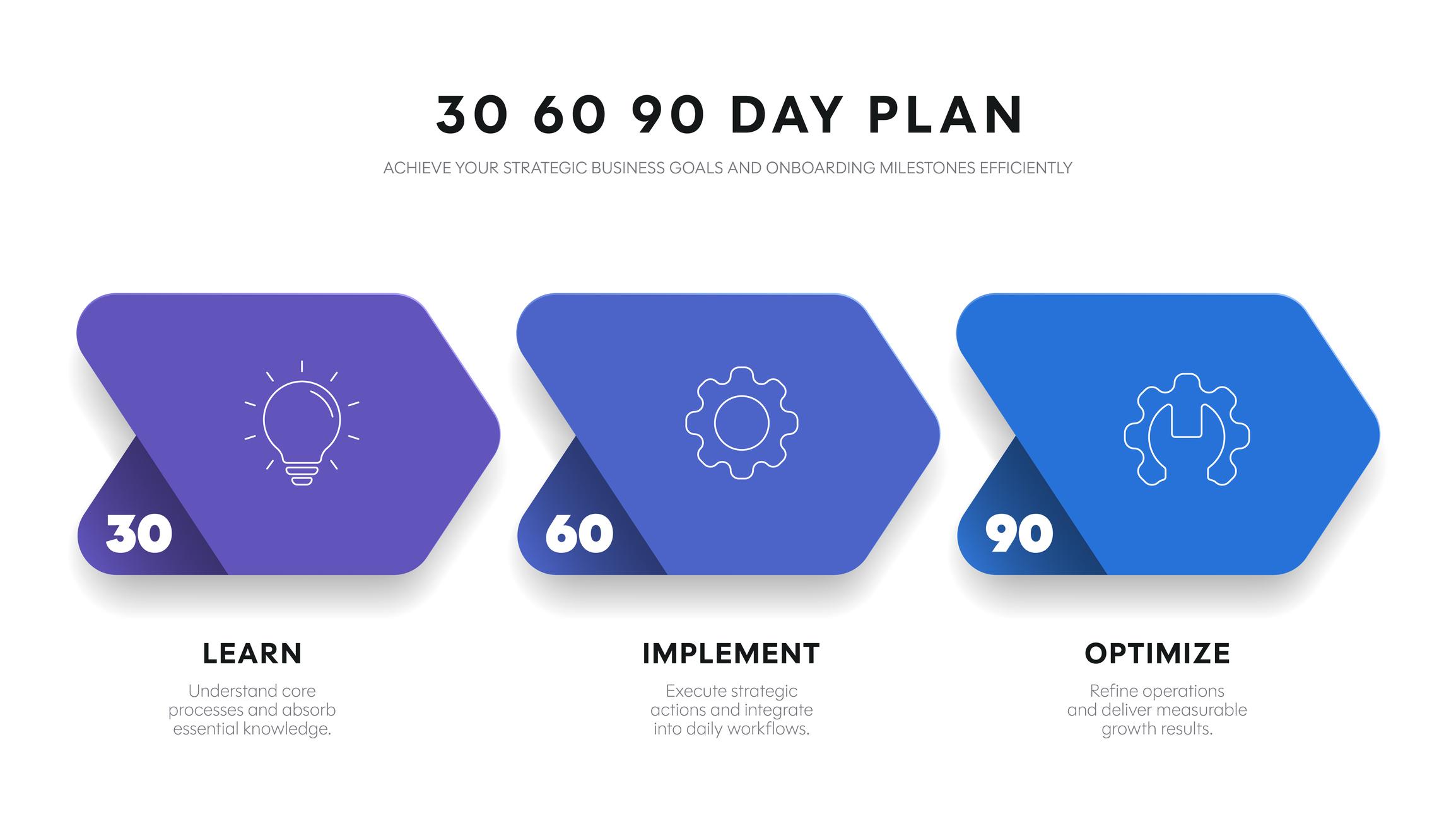
23. A 90-Day Framework for CEOs Investing in Digital Marketing
A structured initial period can help establish a foundation for longer-term growth.
Days 1–30: Understand and establish the baseline
Review the website.
Define target customers.
Evaluate existing marketing channels.
Identify important technical problems.
Verify conversion tracking.
Establish commercial priorities.
Outcome: A documented baseline and prioritised plan.
Days 31–60: Implement high-priority improvements
Improve important service pages.
Address selected technical issues.
Develop relevant content.
Launch or refine appropriate campaigns.
Improve enquiry tracking.
Coordinate with sales.
Outcome: Key improvements implemented and initial performance data collected.
Days 61–90: Evaluate and refine
Review completed work.
Analyse early results.
Assess lead quality.
Identify unresolved issues.
Refine priorities.
Develop the next phase.
Outcome: A clearer understanding of performance and future investment requirements.
Important note
Ninety days can establish processes, implement improvements and generate useful evidence.
It may not be enough to evaluate the full return of long-term SEO initiatives or businesses with lengthy sales cycles.
24. Common Digital Marketing Investment Mistakes CEOs Should Avoid
Mistake 1: Selecting agencies only by price
Evaluate capabilities, scope and commercial relevance.
Mistake 2: Expecting immediate SEO revenue
Use realistic timelines and review implementation progress.
Mistake 3: Measuring only traffic
Consider qualified enquiries and other appropriate business outcomes.
Mistake 4: Ignoring the website
Relevant traffic may not convert if the website fails to support customer decisions.
Mistake 5: Separating sales from marketing
Create a feedback process between teams.
Mistake 6: Changing strategy too frequently
Allow sufficient time for meaningful evaluation while remaining responsive to evidence.
Mistake 7: Continuing ineffective campaigns without review
Use performance data to make informed allocation decisions.
Mistake 8: Treating every channel equally
Prioritise channels based on customer behaviour, economics and business objectives.
Mistake 9: Ignoring customer retention
Customer acquisition value depends partly on the profitability and duration of customer relationships.
Mistake 10: Delegating marketing without accountability
Establish clear responsibilities, reporting and review processes.
25. How SEOspade Supports Business-Focused Digital Marketing
For businesses considering digital marketing as part of their growth strategy, the first step is understanding which activities are relevant to their objectives.
At SEOspade, our services include:
Search Engine Optimisation: Improving relevant organic search visibility through technical, on-page and content-focused work.
Website Design and Development: Building and improving websites that communicate business offerings and support useful customer journeys.
Content Writing: Developing relevant service content and educational resources.
Paid Marketing: Managing agreed advertising campaigns and reviewing their performance.
Social Media Management: Supporting brand communication and audience engagement.
Digital PR and Guest Posting: Supporting relevant online visibility and outreach activities.
Lead Generation Planning: Connecting appropriate marketing activities with customer acquisition objectives.
The right combination depends on the company's market, website condition, resources and commercial priorities.
Digital marketing should not be presented as a guaranteed source of revenue.
It should be planned, implemented and measured as part of the business's broader growth strategy.
Conclusion: Digital Marketing Should Earn Its Place in the Growth Strategy
Digital marketing should not be treated as an unavoidable monthly payment or a guaranteed shortcut to revenue.
It should be evaluated as a business decision.
For CEOs, the objective is to understand whether the company is building useful customer acquisition capabilities, reaching suitable audiences and improving the economics of growth.
That requires clear goals, appropriate investment, coordinated execution and transparent measurement.
A business does not need to spend on every marketing channel.
It needs to identify the channels and activities most relevant to its customers and commercial priorities.
The question CEOs should ask is not simply, "How much are we spending on digital marketing?" It is, "What business capability and measurable value are we building with that investment?"
If your business wants to evaluate how SEO, website development, content and paid marketing fit into its growth strategy, explore SEOspade's digital marketing services.