For many successful businesses, growth begins with referrals.
A satisfied customer recommends your company to another business. An existing client introduces you to someone in their professional network. A former colleague connects you with a potential customer.
Over time, these recommendations help you build a reputation, establish relationships and generate revenue.
For companies in their early stages, referrals can be an extremely valuable source of business.
But as a company grows, its customer acquisition requirements begin to change.
You hire additional employees. Your operating expenses increase. You introduce new services, invest in infrastructure and establish more ambitious revenue targets.
Suddenly, the number of customers your business needs is greater than the number of customers your existing network consistently provides.
Some months bring several excellent recommendations. Other months bring very few.
Your sales team has the capacity to manage more customers, but it does not have enough qualified opportunities.
Your company delivers excellent products or services, yet potential customers outside your existing network may not even know that your business exists.
This is where dependence on referrals begins to create limitations.
The problem is not that referrals are ineffective. The problem is that referrals alone may not provide the predictable, measurable and scalable customer acquisition capabilities that a growing company requires.
Growing companies need to complement their referral networks with additional customer acquisition channels that they can actively develop, monitor and improve.
This guide explains why businesses reach that stage, how to recognise excessive referral dependence and how digital marketing can help establish a more diversified approach to acquiring new customers.
1. Why Referrals Work So Well for Businesses

Before discussing the limitations of referral-based growth, it is important to recognise why referrals are valuable.
When an existing customer recommends your company, they transfer some of the trust they have developed through their own experience.
The referred customer may approach your business with greater confidence than someone who has never heard of your company.
Benefits of referral-based customer acquisition
-
Recommendations from trusted individuals.
-
Stronger initial customer confidence.
-
Potentially shorter sales conversations.
-
Lower direct marketing expenditure.
-
Access to customers with relevant requirements.
-
Opportunities to strengthen professional relationships.
-
Greater awareness through customer satisfaction.
-
Potential for repeat business and additional recommendations.
For professional services, legal consulting, manufacturing, healthcare equipment, real estate and B2B companies, referrals can be particularly valuable.
Customers in these industries often evaluate suppliers carefully before making important purchasing decisions.
A recommendation from a trusted person can support that evaluation.
However, the effectiveness of referrals does not mean they should remain the company's only source of new business.
2. The Difference Between Referral-Based Growth and Scalable Customer Acquisition

There is an important difference between receiving new customers and developing a system that systematically generates customer acquisition opportunities.
Referral-based growth often depends on recommendations initiated by existing customers, partners or professional contacts.
A scalable customer acquisition strategy involves developing additional processes through which the business can actively reach relevant customers.
| Factor | Referral-dependent business | Diversified customer acquisition |
|---|---|---|
| Lead source | Existing customers and networks | Referrals, search, advertising, outreach and partnerships |
| Lead volume | May fluctuate unexpectedly | Can be monitored and influenced across channels |
| Market reach | Often concentrated within existing networks | Potential to reach unfamiliar customer segments |
| Performance measurement | Sometimes informal | Structured attribution and qualification |
| Growth planning | Dependent on available recommendations | Supported by demand and pipeline data |
| Brand discovery | Primarily relationship-driven | Supported by multiple discovery channels |
| Expansion potential | May be constrained by network reach | Can support broader market exploration |
| Investment decisions | Limited acquisition data | Greater opportunity for evidence-based decisions |
A diversified business does not necessarily abandon referral-based acquisition.
Instead, it creates additional routes through which relevant customers can discover and contact the company.
3. Why Referral Dependence Becomes a Problem as Companies Grow
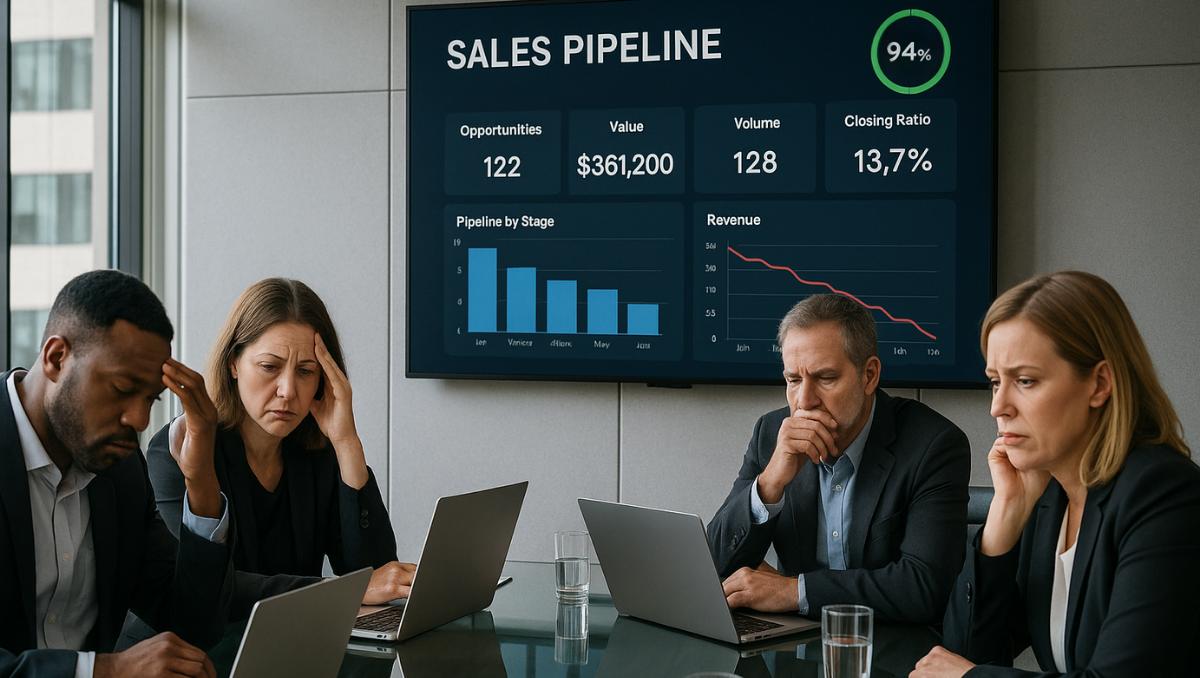
During the early stages of a business, receiving three or four customers through referrals every month may be sufficient.
However, a larger organisation may require significantly more business opportunities to support its operating structure.
Consider a hypothetical consulting company
| Business metric | Early stage | Growth stage |
|---|---|---|
| Employees | 5 | 20 |
| Monthly operating expenses | ₹2,00,000 | ₹8,00,000 |
| New monthly customer requirement | 4 | 15 |
| Average referral-generated customers | 4 | 6 |
| Additional customers required | 0 | 9 |
These figures are illustrative.
The company's referral network has improved over time, but its customer requirements have grown faster.
Without additional acquisition channels, the company may struggle to generate enough opportunities to support its expanded operations.
The underlying challenge
Business expenses can increase according to a planned schedule.
Referral-generated revenue does not necessarily increase according to that same schedule.
This mismatch creates uncertainty that founders must address before making significant growth commitments.
4. Seven Signs Your Company Is Too Dependent on Referrals
Many companies recognise excessive referral dependence only when new business begins slowing down.
The following signals can help identify the problem earlier.
Sign 1: Monthly enquiries fluctuate significantly
Your company receives several recommendations one month and almost none the following month.
This makes sales forecasting difficult.
Sign 2: Your sales team is regularly underutilised
You have employees capable of managing additional customers, but there are not enough suitable opportunities in the pipeline.
Sign 3: Most customers come from a small group of contacts
A few clients, partners or professional relationships are responsible for a large proportion of new business.
Changes in those relationships could affect acquisition performance.
Sign 4: Customers rarely discover your company independently
Most new customers already know someone connected to your business.
Very few find you through Google, your website or other independent channels.
Sign 5: Competitors are more visible online
Potential customers searching for your products or services regularly encounter competing businesses instead of yours.
Sign 6: Expanding into new markets feels difficult
Your company has the capability to serve additional cities or industries, but your existing referral network has limited reach in those markets.
Sign 7: Revenue planning depends on expected introductions
Your projected sales rely heavily on recommendations that have not yet been received.
This creates uncertainty around future business opportunities.
If several of these conditions apply to your company, it may be time to strengthen additional customer acquisition channels.
5. Referrals Alone Cannot Provide Complete Control Over Your Sales Pipeline
A sales pipeline represents potential business opportunities at different stages of the purchasing process.
Growing companies need to understand how many opportunities are entering that pipeline, where they originate and how likely they are to convert.
Referrals can contribute to this process, but businesses cannot always determine when recommendations will occur.
Common questions founders struggle to answer
How many genuine enquiries will we receive next month?
How many opportunities are currently available to the sales team?
Which services are attracting the most demand?
Can we generate additional business if referrals decline?
What happens if one of our major referral partners stops recommending us?
Can we increase customer acquisition when operational capacity expands?
A business with diversified acquisition channels may have more information available to support these decisions.
For example, it can evaluate organic search performance, advertising expenditure, website enquiries and outbound campaign responses.
This does not make future demand completely predictable.
However, it provides more opportunities to understand and influence the customer acquisition process.
6. Your Existing Network Represents Only Part of Your Potential Market
A business may have an excellent reputation within its existing customer network while remaining relatively unknown outside that network.
This creates an important growth limitation.
Example: Industrial equipment manufacturer
A manufacturer has supplied industrial equipment to companies in Delhi NCR for several years.
Its customers regularly recommend the company to other manufacturers in their professional circles.
However, the business wants to expand into Gujarat, Maharashtra and southern India.
Potential buyers in these regions may never encounter its existing referral network.
Those buyers may discover suppliers through:
-
Google searches.
-
Industry publications.
-
Product directories.
-
Professional networks.
-
Trade exhibitions.
-
Digital advertisements.
-
Direct supplier research.
If the manufacturer has limited visibility across these channels, potential customers may never consider its products.
The business may possess the required manufacturing capabilities but lack the customer discovery infrastructure necessary to communicate those capabilities.
Why this matters
Referrals can help businesses strengthen existing networks.
Digital marketing and structured acquisition channels can help businesses explore demand beyond those networks.
7. Competitors Are Reaching Customers Before You Receive a Referral
Consider a potential customer searching online for a service your business provides.
They do not necessarily know your company's name.
They may search for:
-
Industrial equipment suppliers.
-
Corporate compliance consultants.
-
Commercial solar installation companies.
-
Bulk corporate gifting suppliers.
-
Healthcare equipment manufacturers.
-
Website development companies for manufacturing businesses.
If competitors appear prominently for these searches, customers may visit their websites, compare offerings and submit enquiries.
Your company may provide an equally suitable or superior service, but the customer has not discovered it.
This creates an opportunity cost.
You are not necessarily losing customers because of poor service quality.
You may be missing opportunities because your company is not present when purchasing decisions begin.
An important perspective
Online visibility does not guarantee that customers will select a competitor.
However, businesses that are absent during the discovery process may have fewer opportunities to participate in the customer's evaluation.
8. Modern B2B Customers Often Conduct Independent Research
Many B2B purchasing decisions involve several stages.
A potential customer may receive a recommendation, search for the recommended company, compare service providers, review product information and discuss alternatives with colleagues.
Referrals and digital discovery frequently work together.
A possible B2B purchasing journey
| Stage | Customer activity |
|---|---|
| Requirement identified | Recognises a business problem or purchasing need |
| Initial research | Searches online or asks professional contacts |
| Supplier discovery | Identifies potential companies |
| Evaluation | Reviews websites, capabilities and case studies |
| Internal discussion | Consults management, procurement or technical teams |
| Enquiry | Requests information, a quotation or consultation |
| Commercial assessment | Compares proposals and delivery capabilities |
| Purchase decision | Selects an appropriate supplier |
Businesses need to support customers throughout this journey.
A professional website, useful content and accessible company information can influence how effectively potential customers evaluate a business.
Even referred customers may hesitate if they cannot find credible online information about the recommended company.
9. A Strong Digital Presence Can Improve the Value of Existing Referrals
Digital marketing should not be viewed as a replacement for word-of-mouth recommendations.
It can support them.
Consider this situation
An existing customer recommends your consulting business to another company.
The prospective customer searches for your business online.
They find:
-
An outdated website.
-
Limited service information.
-
No relevant case studies.
-
Inconsistent contact details.
-
Unclear information about the company's experience.
The recommendation has generated interest, but the digital experience does not adequately support the customer's confidence.
Now consider an alternative experience.
The customer finds a professionally managed website containing detailed service explanations, relevant expertise, genuine testimonials and clear contact information.
The online presence reinforces the original recommendation.
The commercial benefit
A stronger digital presence can help businesses make better use of demand generated through existing customer relationships.
It supports independent discovery while also strengthening the evaluation experience for referred prospects.
10. How to Measure Your Company's Referral Dependence
Before investing in additional marketing activities, understand your current acquisition mix.
Step 1: Record customer acquisition sources
For each new customer, record how they discovered your company and which marketing or sales interactions contributed to the decision.
Step 2: Separate acquisition channels
Potential categories include:
-
Existing customer referrals.
-
Professional partner referrals.
-
Organic Google search.
-
Outbound sales.
-
Email outreach.
-
Events and exhibitions.
-
Industry directories.
-
Unknown or unattributed sources.
Step 3: Calculate referral dependence
Referral dependence can be estimated using the following formula:
Referral dependence = New customers attributed primarily to referrals ÷ Total new customers × 100
Illustrative example
| Acquisition source | New customers | Share |
|---|---|---|
| Customer referrals | 24 | 60% |
| Partner referrals | 6 | 15% |
| Organic search | 4 | 10% |
| Paid advertising | 3 | 7.5% |
| Outbound sales | 2 | 5% |
| Other sources | 1 | 2.5% |
| Total | 40 | 100% |
In this example, customer and partner referrals account for 75% of newly acquired customers.
This does not automatically mean the business has an unhealthy acquisition strategy.
However, management should evaluate whether that concentration creates risks relative to its growth objectives.
Important consideration
Some customers interact with multiple channels.
Use a consistent attribution method and record uncertainty rather than assigning every customer to a channel without evidence.
11. Understand the Financial Risk of Referral Concentration
Customer acquisition concentration should be evaluated alongside customer concentration, revenue stability and operating expenses.
Hypothetical monthly business performance
A company receives the following new customer revenue:
| Acquisition source | New customer revenue |
|---|---|
| Referrals | ₹8,00,000 |
| All other channels | ₹2,00,000 |
| Total | ₹10,00,000 |
Referral-generated business represents 80% of new customer revenue.
If referral-generated revenue declines by 40% and other channels remain unchanged:
| Acquisition source | Revised revenue |
|---|---|
| Referrals | ₹4,80,000 |
| Other channels | ₹2,00,000 |
| Total | ₹6,80,000 |
The company's measured new customer revenue would decline by ₹3,20,000, or 32%.
This is a hypothetical sensitivity analysis, not a prediction.
Existing customer revenue, recurring contracts and other commercial factors may affect the company's total financial position.
Why this matters to founders
Understanding channel concentration can help management identify potential revenue vulnerabilities and decide whether building additional acquisition channels is commercially justified.
12. Develop a Customer Acquisition Portfolio Instead of Depending on One Channel
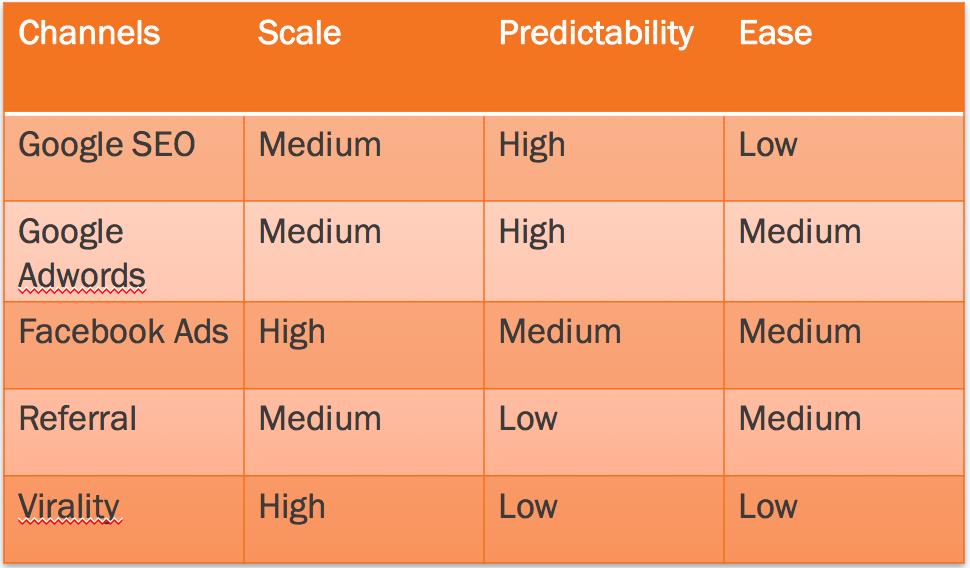
Successful acquisition strategies often involve several complementary channels.
However, diversification does not mean investing in every available marketing platform.
The objective is to establish a suitable mix based on customer behaviour, acquisition economics and operational capacity.
Potential customer acquisition channels
| Channel | Primary role |
|---|---|
| Referrals | Relationship-based customer acquisition |
| Organic search | Discovery through relevant customer searches |
| Paid search | Targeted demand capture |
| LinkedIn outreach | Professional and B2B prospecting |
| Email outreach | Relevant direct business communication |
| Content marketing | Education and customer decision support |
| Social media | Brand awareness and communication |
| Digital PR | Relevant exposure and credibility |
| Partnerships | Access to complementary business networks |
| Customer retention | Repeat purchases and expansion opportunities |
How should companies select their channels?
Start with the channels most closely aligned with the intended audience.
A B2B equipment manufacturer may prioritise SEO, industry partnerships and direct outreach.
A consumer lifestyle brand may place greater emphasis on visual marketing and eCommerce campaigns.
A professional consulting company may benefit from search visibility, educational content and professional networking.
Channel selection should reflect actual customer requirements rather than current marketing trends alone.
13. How SEO Can Help Companies Acquire Customers Outside Their Existing Network
Search engine optimisation helps businesses develop visibility for relevant customer searches.
When potential customers search for products, services or solutions, useful and accessible website pages may appear in organic search results.
Unlike referrals, search-based discovery does not require an existing relationship with the company.
Example: Factory licensing consultancy
Potential customers may search for:
-
Factory licence registration services.
-
Factory licence renewal assistance.
-
Consent to operate application support.
-
Factory licence application objections.
-
Industrial pollution compliance consultants.
A consultancy with relevant service pages and useful problem-solving content may have opportunities to reach these customers while they are researching their requirements.
What an effective SEO foundation includes
Technical website improvements.
Commercial keyword research.
Relevant service and product pages.
Useful educational content.
Internal linking.
Clear website architecture.
Accurate business information.
Appropriate local or international targeting.
Legitimate brand exposure.
Why SEO is relevant to growing companies
SEO can help expand customer discovery beyond the company's immediate relationships.
However, organic visibility takes time to develop, and search rankings, traffic and lead volumes are not guaranteed.
Companies should evaluate SEO based on relevant visibility, qualified enquiries and commercially meaningful outcomes rather than ranking counts alone.
14. Build Commercial Website Pages That Attract the Right Customers
A business website should clearly communicate the company's offerings to prospective customers who have no previous knowledge of the business.
Many established referral-based companies have websites that function primarily as online brochures.
They contain a homepage, a short company description and contact details.
This may be insufficient for customers conducting independent research.
Example: B2B manufacturer website
A commercially useful website could include:
-
Dedicated product categories.
-
Individual product specifications.
-
Industries and applications.
-
Manufacturing capabilities.
-
Quality standards.
-
Certifications.
-
Distribution arrangements.
-
Export capabilities.
-
Verified case studies.
-
Request-for-quotation functionality.
Example: Professional services website
A consulting business could provide:
-
Individual service pages.
-
Eligibility or requirement information.
-
Process explanations.
-
Documentation guidance.
-
Relevant industry experience.
-
Service delivery arrangements.
-
Frequently asked questions.
-
Consultation and enquiry options.
Important SEO consideration
Avoid creating multiple pages targeting substantially identical search requirements without a meaningful distinction.
Each important page should have a clear purpose and provide useful information.
A larger website is not automatically a more effective website.
15. Use Problem-Solving Content to Reach Customers Before They Choose a Supplier
Potential customers do not always begin their searches with a specific service name.
They may initially search for solutions to business problems.
Example content opportunities
| Industry | Potential customer problem |
|---|---|
| Corporate compliance | Company registration application returned with objections |
| Manufacturing | Difficulty selecting suitable industrial equipment |
| Renewable energy | Understanding commercial solar installation feasibility |
| Healthcare equipment | Evaluating medical device suppliers |
| Real estate | Understanding agent registration requirements |
| Corporate gifting | Selecting employee welcome kits within a budget |
| Website development | Existing website cannot manage an expanding product catalogue |
| Digital marketing | Website traffic is increasing but business enquiries are not |
Useful content can introduce a business to prospective customers during the research stage.
What makes problem-solving content commercially valuable?
It addresses a genuine customer requirement.
It provides practical and accurate information.
It demonstrates relevant expertise.
It explains potential next steps.
It connects naturally with appropriate services.
It supports informed customer decisions.
Avoid publishing content only for search engine rankings
Large quantities of generic or repetitive articles may provide limited customer value.
Content should be developed around meaningful user requirements and reviewed for factual accuracy and topic overlap.
16. Use Paid Advertising to Reach Customers While Organic Visibility Develops
SEO can support longer-term discovery, but businesses may also require more immediate market visibility.
Paid advertising can provide a way to test demand and reach relevant audiences.
Potential paid acquisition channels
Google Search Ads.
LinkedIn Ads.
Selected Meta advertising campaigns.
Relevant remarketing campaigns.
Other industry-appropriate advertising platforms.
Example
A B2B consultancy wants to explore customer demand in a new city.
The company develops a suitable landing page and launches a controlled search advertising campaign.
It records:
Advertising expenditure.
Genuine enquiries.
Qualified leads.
Customer requirements.
Sales opportunities.
Final customer acquisition outcomes.
The results may help determine whether further investment is appropriate.
Important consideration
Paid campaigns can generate irrelevant enquiries when targeting, messaging or landing pages are unsuitable.
Businesses should evaluate lead quality and acquisition costs before increasing budgets.
17. Build a Structured B2B Outreach Process
Growing B2B companies can complement digital discovery with direct outreach to suitable prospects.
Rather than waiting for introductions, businesses can identify companies that may have relevant requirements.
Potential outreach activities
Professional networking through LinkedIn.
Targeted business email communication.
Relevant telephone outreach.
Industry event participation.
Partnership development.
Follow-up with previous business prospects.
Establish an ideal customer profile
An effective outreach strategy should define:
Target industries.
Company size.
Geographic market.
Relevant decision-makers.
Potential commercial requirements.
Business suitability criteria.
Example: Website development agency
Instead of contacting every available business, an agency could identify manufacturers with outdated product catalogues, poor mobile usability or unclear quotation processes.
The outreach message could focus on a specific, observed business challenge.
Focus on relevance
Avoid indiscriminate bulk messaging.
Outreach should be appropriately targeted, professional and consistent with applicable privacy, marketing and platform requirements.
18. Build Brand Visibility Beyond Your Immediate Business Relationships
A business may be highly respected among existing customers but have limited recognition within its broader industry.
Developing brand visibility can support customer discovery and credibility over time.
Brand development opportunities
Industry publications.
Relevant professional events.
Educational webinars.
Founder-led communication.
Verified case studies.
Useful business resources.
Professional social media content.
Relevant digital PR.
Product demonstrations.
Industry partnerships.
What should companies communicate?
What problems they solve.
Which customers they serve.
What capabilities they possess.
How their products or services work.
What evidence supports their expertise.
How prospective customers can engage with them.
Brand development should focus on creating accurate, useful and consistent information rather than artificially increasing exposure.
19. Replace Informal Lead Handling With a Structured CRM Process
Many referral-based businesses manage enquiries through personal phone calls, WhatsApp messages, email conversations or informal spreadsheets.
These methods may work when enquiry volumes are limited.
As acquisition channels expand, organised lead management becomes increasingly important.
Information a CRM should capture
| Data field | Purpose |
|---|---|
| Lead source | Understand the acquisition channel |
| Customer name and company | Identify the prospect |
| Requested service | Understand customer requirements |
| Geographic location | Evaluate service suitability |
| Qualification status | Assess commercial relevance |
| Assigned salesperson | Establish responsibility |
| Follow-up date | Track pending communication |
| Opportunity value | Support sales forecasting |
| Conversion status | Measure final outcomes |
| Lost opportunity reason | Identify potential improvements |
Why this matters
A company may generate additional enquiries through SEO or advertising but fail to convert them because follow-ups are inconsistent.
Structured lead management helps businesses make better use of acquisition opportunities and provides feedback for marketing improvements.
20. Develop a Shared Definition of Qualified Leads
Growing companies should distinguish between enquiry volume and commercially meaningful demand.
A large number of enquiries does not necessarily justify marketing investment.
Example qualification criteria for a B2B service company
The prospect requires a service the company provides.
The business operates within a suitable market.
The opportunity meets relevant commercial criteria.
The enquiry is genuine rather than spam or duplication.
The requirements can be fulfilled by the company's team.
There is a reasonable basis for continued commercial discussion.
Illustrative comparison
| Metric | Campaign A | Campaign B |
|---|---|---|
| Total enquiries | 200 | 80 |
| Qualified leads | 20 | 40 |
| New customers | 3 | 8 |
| Marketing expenditure | ₹60,000 | ₹60,000 |
| Cost per qualified lead | ₹3,000 | ₹1,500 |
| Marketing cost per new customer | ₹20,000 | ₹7,500 |
Campaign B generates fewer total enquiries but more qualified leads and customers.
These figures are hypothetical and exclude additional sales costs.
Lesson for business owners
When evaluating acquisition channels, focus on the quality and commercial relevance of opportunities rather than total lead volume alone.
21. Calculate Acquisition Economics Across Different Channels
Referrals may appear inexpensive because the business does not necessarily pay for advertising.
However, relationship management, referral incentives, employee time and sales activities can also involve costs.
Companies should compare channels using consistent financial definitions where possible.
Illustrative acquisition comparison
| Channel | Monthly acquisition expenditure | Qualified leads | New customers | Expenditure per customer |
|---|---|---|---|---|
| Referrals | ₹20,000 | 30 | 8 | ₹2,500 |
| SEO | ₹50,000 | 40 | 6 | ₹8,333 |
| Paid search | ₹60,000 | 35 | 5 | ₹12,000 |
| Outbound sales | ₹40,000 | 25 | 4 | ₹10,000 |
| Total | ₹1,70,000 | 130 | 23 | ₹7,391 |
These are hypothetical campaign figures.
Actual results will depend on industry, competition, customer requirements, sales performance and the costs included.
Do referrals remain valuable in this example?
Yes.
Referrals have the lowest measured expenditure per customer.
However, the additional channels contribute 15 customers beyond the eight attributed to referrals.
The business should evaluate whether those additional customers provide sufficient contribution to justify the investment.
The objective is not to replace the cheapest acquisition channel.
It is to identify financially sustainable opportunities for additional customer acquisition.
22. Understand How Many Customers Your Growth Targets Require
A growing company should connect marketing investment with realistic operating and revenue objectives.
Hypothetical growth requirement
A company wants to acquire 20 new customers every month.
Its existing referral network generates an average of seven customers.
The remaining customer acquisition requirement is 13.
If the company converts 20% of qualified leads into customers, it would need approximately 65 additional qualified leads to acquire those 13 customers.
Calculation
Required additional customers: 13
Qualified lead conversion rate: 20%
Required qualified leads: 13 ÷ 0.20 = 65
Why this approach is useful
Instead of asking a digital marketing agency to generate an unspecified number of leads, the company can evaluate the requirements of its growth plan.
It can then examine whether SEO, paid advertising, direct outreach or other channels may reasonably contribute to that requirement.
The conversion rate must be based on reliable data or clearly identified planning assumptions.
Actual customer acquisition may fluctuate.
23. Evaluate Whether Your Website Can Convert Independent Visitors
Referred customers may already possess a degree of trust in your business.
Customers discovering your company independently may require more information.
Your website needs to accommodate both.
Important conversion elements
Clear descriptions of services and products.
Relevant information for different customer segments.
Genuine client testimonials.
Verified case studies.
Accessible company contact details.
Mobile-friendly navigation.
Appropriate calls to action.
Functional enquiry forms.
Clear consultation or quotation processes.
Useful answers to common purchasing questions.
Example
A manufacturer receives organic visitors searching for specific industrial products.
However, the product pages do not contain detailed specifications or request-for-quotation options.
Visitors may struggle to determine whether the company can meet their requirements.
Improving the commercial information and enquiry experience may help the business make better use of existing traffic.
Generating more visitors is only part of the acquisition process.
The website must also help relevant visitors take an appropriate next step.
24. Reduce Referral Dependence Without Damaging Existing Relationships
Companies should not neglect existing customers while developing new acquisition channels.
Referral relationships remain valuable business assets.
Continue strengthening referrals through
Reliable service delivery.
Responsive customer communication.
Appropriate follow-ups.
Customer satisfaction assessments.
Professional relationship management.
Genuine testimonials with customer permission.
Relevant partnership development.
Clear referral arrangements where suitable.
Integrate referrals with digital marketing
Provide customers with useful service pages they can share.
Develop clear company presentations.
Make contact information easy to access.
Publish relevant case studies.
Create professional resources explaining your services.
Record referral sources within your CRM.
This approach helps strengthen existing acquisition channels while developing additional opportunities.
25. Customer Retention Is Different From New Customer Acquisition
Some growing companies focus so heavily on acquiring new customers that they neglect existing relationships.
Both functions are important.
Customer acquisition
Introduces new customers to the business.
Customer retention
Maintains existing commercial relationships and encourages continued purchases where appropriate.
Customer expansion
Develops suitable opportunities to provide additional products or services to existing customers.
Customer referrals
Introduces new prospects through recommendations from existing relationships.
These functions can reinforce each other, but they should be measured separately.
A healthy growth strategy should consider customer acquisition costs, customer retention, service delivery quality and the long-term economics of customer relationships.
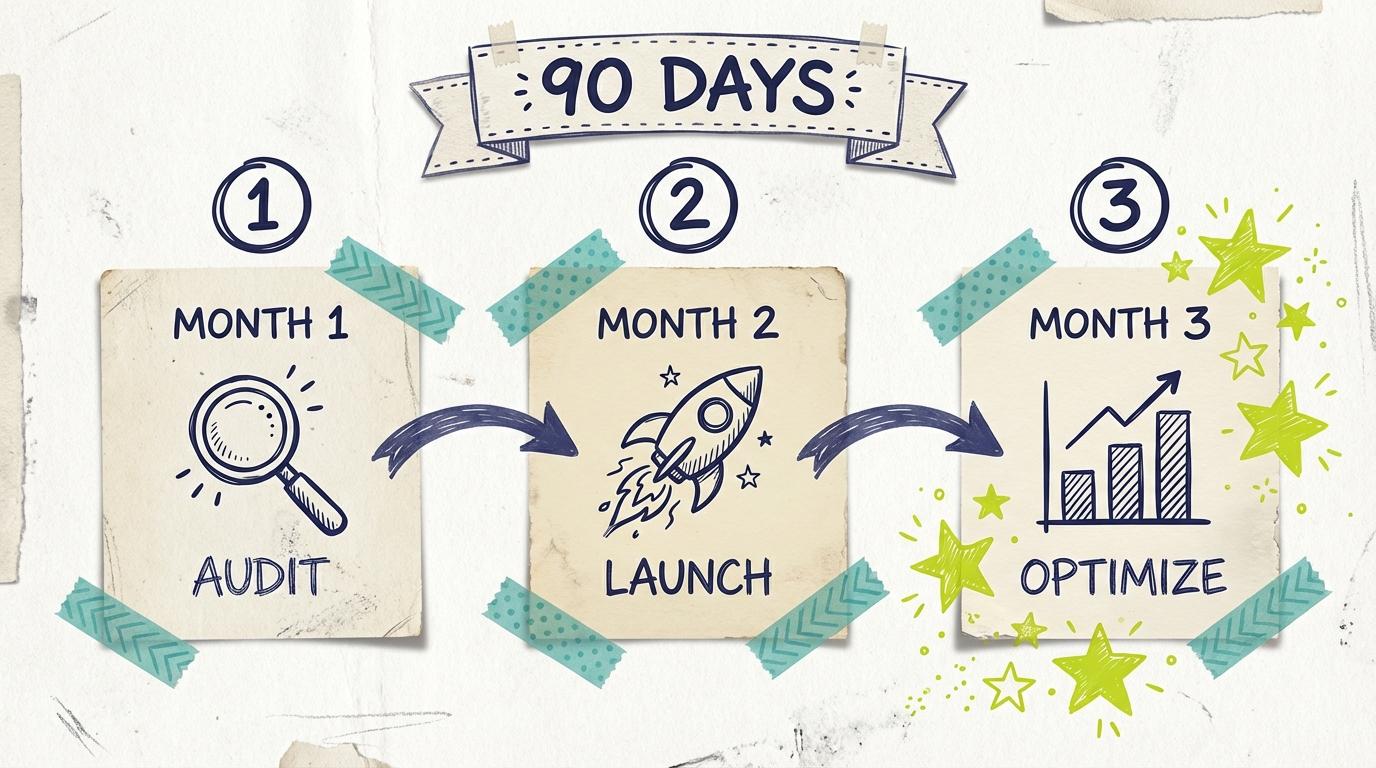
26. Build a 90-Day Plan to Reduce Excessive Referral Dependence
Businesses should develop additional acquisition channels gradually rather than immediately replacing existing sources.
Days 1–30: Understand the acquisition gap
Key activities:
-
Review existing customer acquisition sources.
-
Calculate referral concentration.
-
Define commercially important customer segments.
-
Assess website and search performance.
-
Review competitor visibility.
-
Evaluate existing sales processes.
-
Verify analytics and lead tracking.
-
Establish initial digital marketing priorities.
Expected outcome: A documented acquisition baseline and prioritised strategy.
Days 31–60: Build acquisition infrastructure
Key activities:
-
Improve priority commercial website pages.
-
Address important technical SEO issues.
-
Develop relevant customer-focused content.
-
Improve enquiry forms and contact processes.
-
Establish lead qualification criteria.
-
Set up or improve CRM tracking.
-
Prepare targeted outreach lists.
-
Launch selected campaigns where appropriate.
Expected outcome: Improved digital infrastructure and functioning acquisition processes.
Days 61–90: Test, measure and refine
Key activities:
-
Review early organic search performance.
-
Evaluate advertising and outreach responses.
-
Analyse genuine and qualified enquiries.
-
Collect sales team feedback.
-
Assess acquisition expenditure.
-
Refine customer targeting.
-
Identify implementation problems.
-
Establish the next phase of investment.
Expected outcome: Initial evidence about acquisition opportunities, performance and remaining limitations.
Ninety days may be sufficient to establish foundations and collect early data, but it does not guarantee consistent organic leads or complete acquisition diversification.
27. A Six-Month Customer Acquisition Diversification Roadmap
Companies with limited digital infrastructure may require a longer implementation period.
| Month | Primary focus | Intended business outcome |
|---|---|---|
| Month 1 | Acquisition audit and customer research | Understand dependence and opportunities |
| Month 2 | Website and technical SEO improvements | Establish stronger digital foundations |
| Month 3 | Commercial landing pages and content | Support relevant customer discovery |
| Month 4 | Campaign testing and structured outreach | Collect additional acquisition data |
| Month 5 | Lead quality and conversion improvements | Improve the efficiency of acquisition |
| Month 6 | Financial review and channel allocation | Make informed scaling decisions |
What should happen after six months?
Evaluate which activities deserve continued investment.
Some channels may produce encouraging results. Others may require further improvements or may not be suitable for the business.
Allocate resources according to evidence rather than assuming that every channel will become commercially successful.
28. How Different Industries Can Acquire Customers Beyond Referrals
Customer acquisition strategies should reflect industry-specific requirements.
B2B manufacturing companies
Relevant strategies may include commercial SEO, technical product pages, supplier discovery platforms, industry publications, targeted outreach and distribution partnerships.
Legal and business consulting companies
Focus on relevant service pages, accurate regulatory resources, problem-solving content, search visibility and structured enquiry management, subject to applicable professional marketing rules.
Renewable energy companies
Develop useful commercial and industrial solution pages, project documentation, feasibility information, case studies and relevant acquisition campaigns.
Healthcare equipment manufacturers
Prioritise product specifications, valid certifications, distribution capabilities, technical resources and professional customer communication.
Corporate gifting businesses
Build relevant product categories, industry-specific gifting solutions, bulk order enquiry processes, LinkedIn outreach and suitable search campaigns.
Real estate businesses
Provide accurate property information, relevant geographic visibility, professional networking and organised lead qualification.
SaaS and technology companies
Develop solution-focused content, product demonstrations, industry use cases, search marketing and suitable trial or consultation acquisition strategies.
Professional service companies
Focus on service explanations, expertise, verified evidence, relevant search visibility and customer education.
The appropriate mix will differ depending on the company's customers, purchasing process and operational capabilities.
29. Common Mistakes Companies Make When Moving Beyond Referrals
Mistake 1: Expecting digital marketing to replace referrals immediately
Additional acquisition channels require planning, implementation and evaluation.
Continue maintaining existing relationships.
Mistake 2: Investing in every marketing platform simultaneously
Prioritise the channels most relevant to your customers.
Mistake 3: Generating traffic without commercial targeting
Ensure your website addresses relevant products, services and customer requirements.
Mistake 4: Running campaigns without tracking
Establish measurement before increasing expenditure.
Mistake 5: Neglecting sales follow-ups
Additional leads are of limited value if suitable opportunities are not managed effectively.
Mistake 6: Selecting marketing services only on price
Evaluate strategic relevance, execution capabilities and total investment.
Mistake 7: Assuming every enquiry represents a potential customer
Use appropriate qualification criteria.
Mistake 8: Copying competitors' digital strategies
Your customer requirements and commercial strengths may differ.
Mistake 9: Publishing excessive low-value content
Focus on useful information and distinct customer requirements.
Mistake 10: Scaling marketing faster than fulfilment capacity
The business must be able to deliver what it sells.
Mistake 11: Measuring acquisition without considering profitability
Evaluate contribution margins, acquisition costs and customer value.
Mistake 12: Abandoning channels before meaningful evaluation
Use suitable review periods while continuing to monitor implementation quality and economic risks.
30. Is Your Company Ready to Move Beyond Referral-Based Growth?
Use the following self-assessment to identify gaps in your acquisition capabilities.
Rate each area from 1 to 5.
| Assessment area | Maximum score |
|---|---|
| Understanding existing acquisition channels | 5 |
| Measuring referral concentration | 5 |
| Clear customer acquisition objectives | 5 |
| Professional and commercially useful website | 5 |
| Relevant organic search visibility | 5 |
| Customer-focused content | 5 |
| Additional acquisition channels | 5 |
| CRM and lead tracking | 5 |
| Lead qualification process | 5 |
| Sales follow-up capabilities | 5 |
| Customer acquisition cost measurement | 5 |
| Operational capacity for growth | 5 |
| Maximum score | 60 |
Illustrative score interpretation
50–60: Several important acquisition capabilities may already be established.
40–49: Useful foundations exist, but selected improvements may support additional growth.
30–39: Significant acquisition infrastructure gaps may require attention.
Below 30: Prioritise foundational improvements before substantially increasing acquisition expenditure.
This scorecard is a practical self-assessment framework, not a validated industry benchmark.
A high score does not guarantee growth. Actual commercial performance and operational capacity should guide investment decisions.
31. When Should a Growing Company Consider Hiring a Digital Marketing Agency?
A digital marketing agency may be useful when a business recognises that its existing customer acquisition methods are no longer sufficient to support its objectives.
Common situations include
The company depends heavily on referrals.
Potential customers cannot easily discover the business online.
Competitors have stronger relevant search visibility.
The website does not communicate the company's capabilities effectively.
The company wants to target new industries or locations.
The existing sales team needs additional qualified opportunities.
Internal marketing expertise is limited.
Customer acquisition tracking is incomplete.
The business requires coordinated SEO, development, content and advertising support.
What should the company expect?
A clear understanding of its customer acquisition challenges.
A documented digital strategy.
Appropriate implementation priorities.
Transparent deliverables.
Realistic performance expectations.
Suitable measurement.
Regular communication.
An agency should help develop acquisition capabilities rather than simply report website traffic or the number of activities completed.
32. How SEOspade Helps Growing Companies Develop Additional Customer Acquisition Channels
At SEOspade, we understand that many established businesses have excellent service capabilities, satisfied customers and strong professional relationships.
However, they may not have developed a digital acquisition system capable of supporting their next stage of growth.
Our services can help businesses address these requirements through an appropriate combination of strategy and implementation.
Search engine optimisation
Develop relevant organic search strategies to help potential customers discover business products and services.
Technical SEO
Identify website architecture, indexing, internal linking and other technical limitations affecting search visibility.
Website design and development
Build or improve professional websites that communicate business capabilities and support customer enquiries.
Content writing
Develop customer-focused service pages, product content and problem-solving resources.
Paid marketing and lead generation
Plan and manage relevant advertising campaigns aligned with agreed customer requirements and investment objectives.
Social media marketing
Support professional communication, brand visibility and audience engagement.
Digital PR and guest posting
Identify appropriate opportunities for relevant brand exposure and editorial visibility.
B2B digital marketing
Develop marketing approaches suited to businesses targeting decision-makers, manufacturers, distributors, institutional buyers and professional customers.
Digital performance measurement
Help businesses understand customer acquisition sources, relevant enquiries and marketing performance within the agreed implementation scope.
The objective is not to eliminate referrals.
It is to complement existing relationships with additional customer discovery and acquisition opportunities that can be evaluated and improved over time.