You invested in website development, purchased a domain, arranged hosting and published information about your products and services.
Your website looks professional. You share its link with customers, mention it on business cards and include it in company presentations.
But when was the last time a new customer discovered your business through your website and contacted your sales team?
For many established businesses, the answer is surprisingly unclear.
They have a website but continue to depend almost entirely on sales representatives, referrals, distributors, personal relationships and traditional marketing activities to acquire customers.
Their website exists as a digital company profile rather than an active customer acquisition channel.
Meanwhile, potential customers may be searching on Google for exactly the products or services these businesses offer.
If your website is not visible for those searches, does not communicate your capabilities effectively or fails to encourage relevant enquiries, your business may be missing valuable commercial opportunities.
The solution is not necessarily to develop an entirely new website.
In many cases, businesses can improve their existing websites through better search visibility, content, conversion optimisation, technical improvements and structured enquiry management.
Your website should do more than introduce your business. It should actively support your business growth.
This guide explains how business owners can identify underutilised website opportunities and develop their existing websites into measurable lead generation channels.
1. Is Your Business Website an Online Brochure or a Customer Acquisition Asset?

Having a website and using a website to acquire customers are two different things.
Many companies develop websites because they need a professional online identity. Once the website is launched, very little attention is given to its performance.
The difference between a traditional website and a lead-generating website
| Traditional business website | Lead-generating business website |
|---|---|
| Provides basic company information | Addresses customer requirements |
| Depends on branded searches | Targets relevant non-branded searches |
| Contains general product information | Provides detailed commercial information |
| Uses a basic contact page | Offers relevant enquiry opportunities |
| Receives occasional updates | Is continuously maintained and improved |
| Has limited performance tracking | Measures enquiries and acquisition sources |
| Supports existing customer relationships | Helps discover new customers |
| Operates independently of sales | Connects with sales and enquiry management |
| Is treated as a development expense | Is managed as a customer acquisition asset |
A website becomes a valuable acquisition asset when it helps potential customers discover your business, understand your offerings and take appropriate next steps.
2. Why Businesses Build Websites but Fail to Use Them for Lead Generation
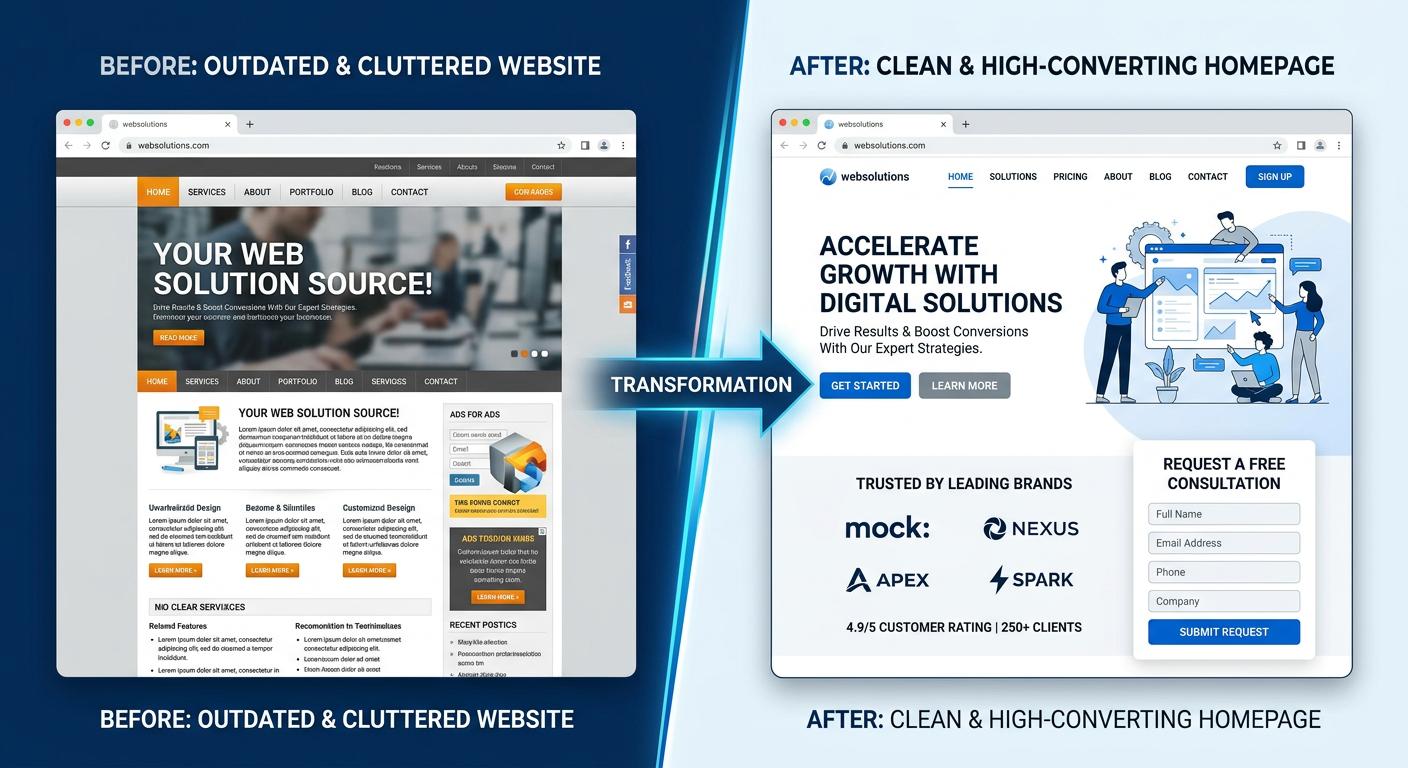
Website development is often treated as a one-time project.
A company hires a developer, approves a design, publishes its content and considers the project complete.
However, there may be no defined strategy for generating business through that website.
Common reasons include:
-
No SEO strategy after website launch.
-
No research into customer search behaviour.
-
Limited product and service information.
-
No ongoing website maintenance.
-
Missing conversion tracking.
-
Poor integration with sales activities.
-
Limited internal digital marketing expertise.
-
Unclear ownership of website performance.
-
No dedicated customer acquisition budget.
-
Dependence on traditional sales channels.
The website may be technically functional while remaining commercially underutilised.
Businesses need to establish clear responsibilities and measurable objectives for their online presence.
3. Identify Whether Your Website Is Being Underutilised
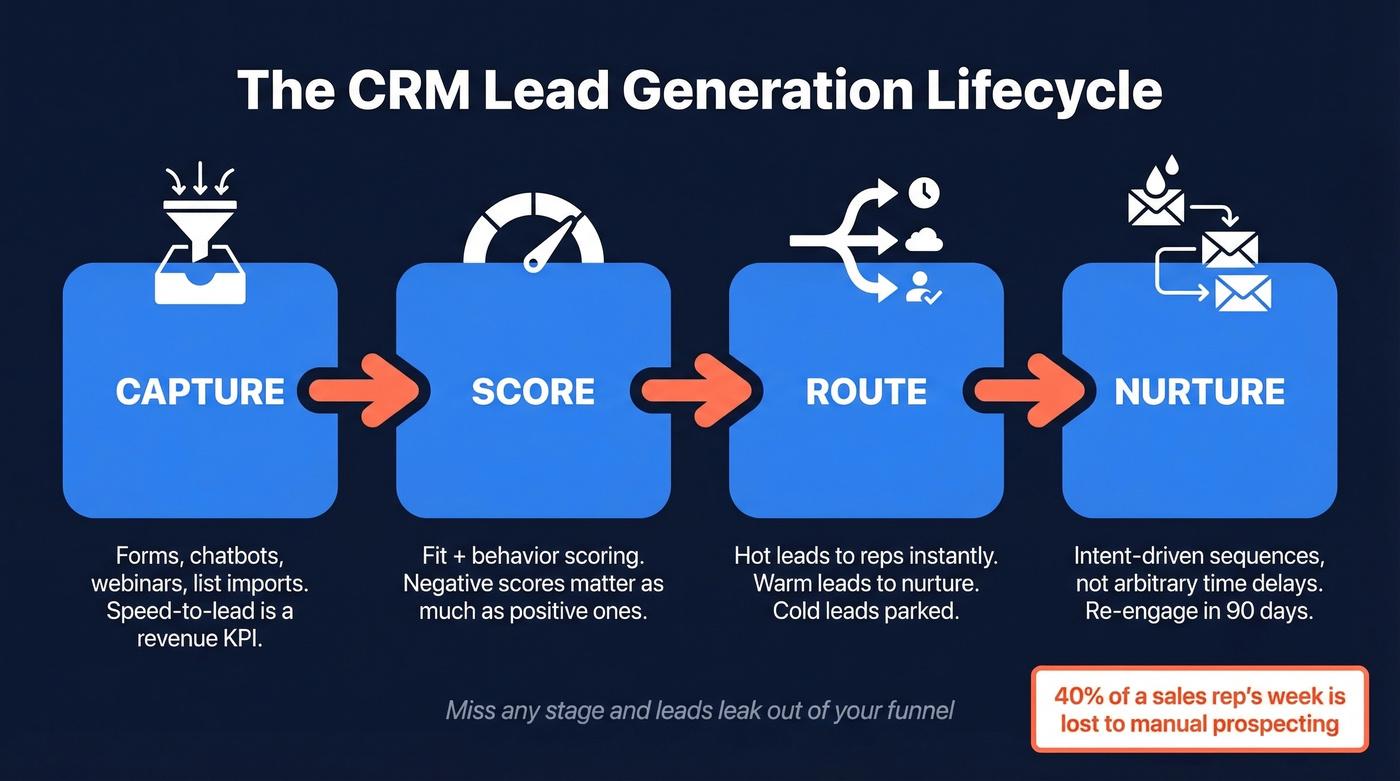
Before investing in additional digital marketing activities, understand how your existing website currently performs.
Ask the following questions:
-
How many potential customers visit your website every month?
-
How many discover your website without searching for your company name?
-
Which products or services attract the most organic visibility?
-
How many genuine enquiries originate from your website?
-
Which pages generate customer interest?
-
Are website enquiries automatically assigned to sales representatives?
-
Can you identify revenue associated with website-generated opportunities?
-
When was your website last reviewed for SEO?
-
Is your product and service information up to date?
-
Does your website have a defined monthly improvement plan?
If management cannot answer most of these questions, the company may lack the infrastructure needed to evaluate its website as a business acquisition channel.
4. Understand the Business Opportunities Your Existing Website May Be Missing
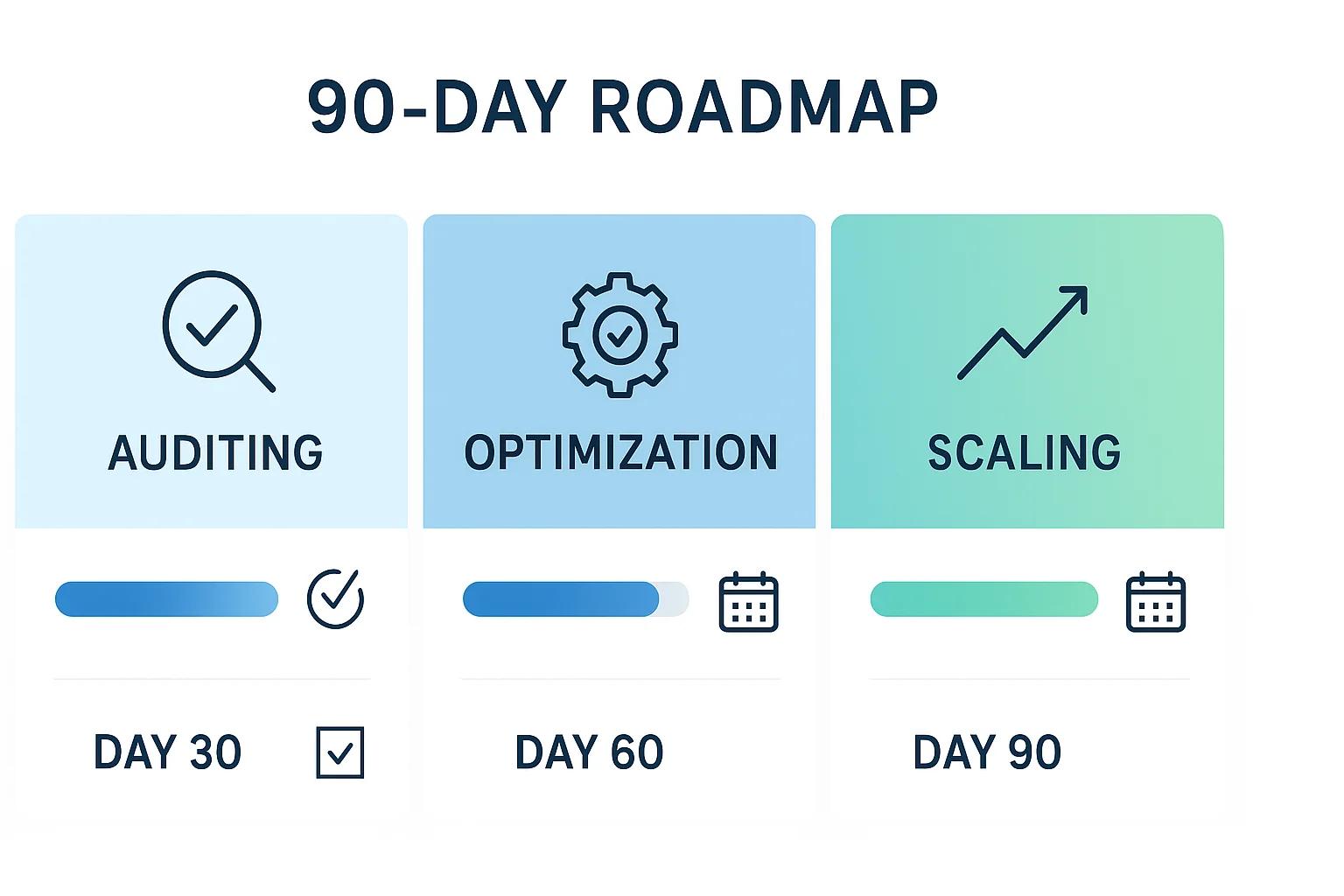
Potential customers frequently search online before contacting a supplier or service provider.
Consider an industrial packaging manufacturer with an existing website.
Its potential customers may search for:
-
Industrial packaging manufacturers.
-
Custom corrugated box suppliers.
-
Bulk packaging solutions.
-
Export packaging manufacturers.
-
Protective packaging for electronic products.
-
Industrial packaging suppliers in specific locations.
If the company's website contains only a homepage, an about page and a general product listing, it may not adequately address these distinct requirements.
Competitors with detailed, useful and technically accessible product pages may have more opportunities to appear during relevant customer searches.
The business already possesses the manufacturing capabilities. Its website simply does not communicate them effectively to potential online customers.
5. Why Having a Professional Website Design Is Not Enough
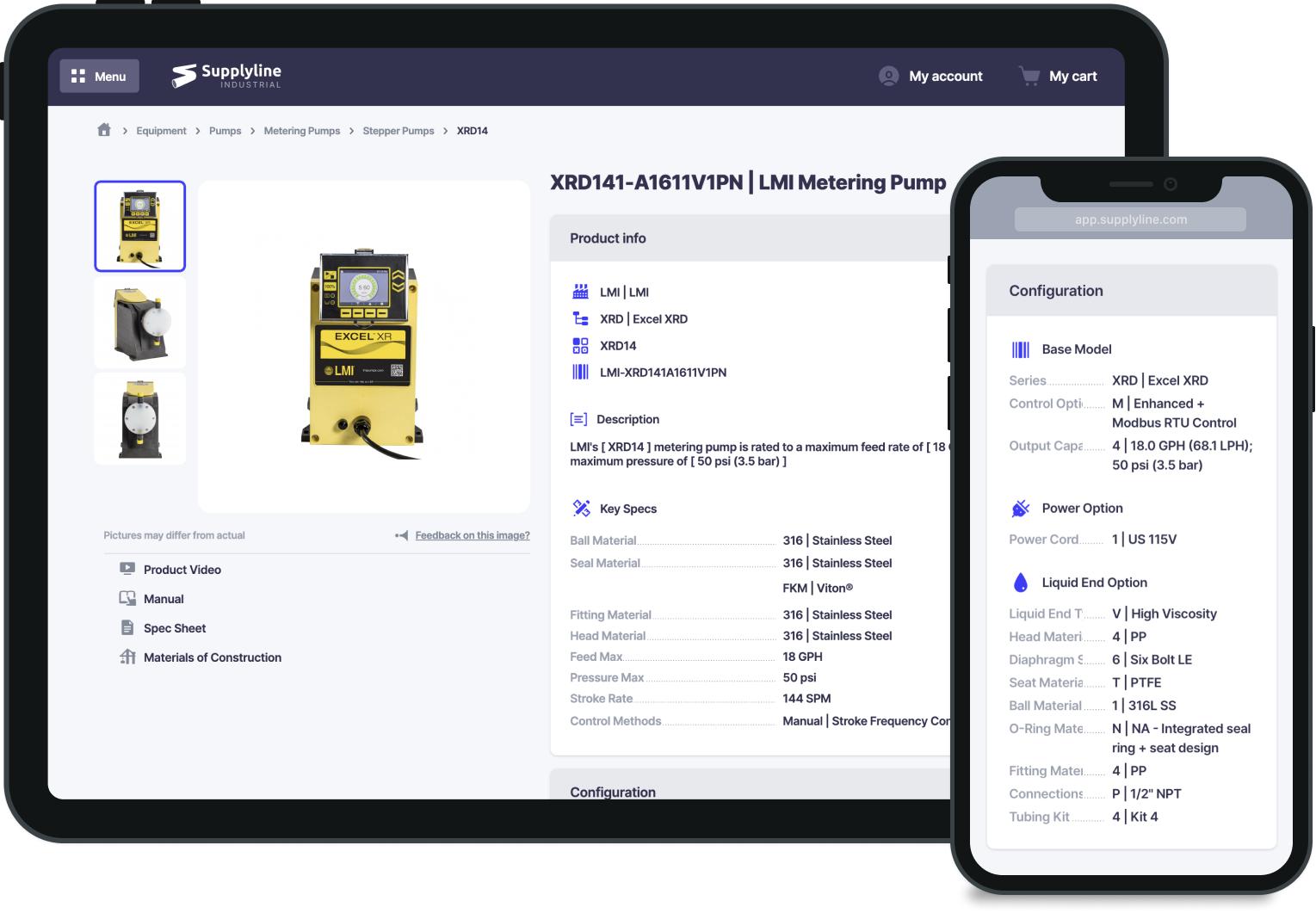
Visual design plays an important role in establishing credibility.
However, an attractive website does not automatically generate business enquiries.
A visually impressive website may still have:
-
Poor Google visibility.
-
Limited commercial content.
-
Slow loading performance.
-
Complicated navigation.
-
Missing enquiry opportunities.
-
Unclear product information.
-
Poor mobile usability.
-
Incomplete analytics.
-
Technical indexing problems.
A successful business website needs to combine design, technical functionality, customer-focused information and acquisition strategy.
Good design supports the customer experience. SEO supports discoverability. Content supports decision-making. Conversion optimisation supports customer action.
These capabilities must work together.
6. Start With a Website Lead Generation Audit
Before rebuilding your website or increasing your advertising budget, conduct a comprehensive audit of its existing capabilities.
Technical SEO audit
Evaluate website crawling, indexing, performance, mobile usability, redirects, duplicate content and internal linking.
Commercial content audit
Review whether important products, services and customer requirements are adequately represented.
Search visibility audit
Identify the searches for which your website currently appears and the commercial opportunities it may be missing.
Conversion audit
Examine enquiry forms, calls to action, contact information, page layouts and customer interaction paths.
Competitor audit
Understand how relevant competitors present their capabilities and address customer requirements online.
Analytics audit
Verify whether genuine website enquiries and their acquisition sources are being measured correctly.
Sales process audit
Determine whether website-generated enquiries are received, qualified, assigned and followed up appropriately.
| Audit area | Important business question |
|---|---|
| Technical SEO | Can Google discover important website pages? |
| Commercial content | Can customers understand what we offer? |
| Search visibility | Are relevant potential customers finding us? |
| Website usability | Can customers find information easily? |
| Conversion optimisation | Can interested visitors contact us conveniently? |
| Analytics | Can we measure genuine website enquiries? |
| Sales integration | Are digital enquiries handled effectively? |
The audit should result in a prioritised implementation plan rather than a generic list of technical issues.
7. Determine Whether You Actually Need a New Website
Many businesses assume that poor lead generation requires complete website redevelopment.
However, the existing website may already provide a suitable technical foundation.
When optimising the existing website may be sufficient
-
The website is technically maintainable.
-
Its content management system supports new pages.
-
Important technical SEO issues can be resolved.
-
Mobile usability can be improved.
-
Enquiry functionality can be integrated.
-
The navigation and structure can be modified.
-
The website has existing organic visibility worth preserving.
When website redevelopment may be necessary
-
The technology is outdated or insecure.
-
Important changes cannot be implemented.
-
The website architecture is fundamentally unsuitable.
-
Performance limitations cannot reasonably be resolved.
-
The company cannot manage product or service information.
-
Existing systems cannot support essential business integrations.
| Approach | Suitable situation |
|---|---|
| Website optimisation | Existing website requires targeted improvements |
| Website restructuring | Navigation and commercial content need significant changes |
| Website redevelopment | Existing infrastructure prevents meaningful improvement |
| Website migration | Business requires a different platform or technical environment |
The decision should be based on business requirements and technical evidence, not simply on the age or appearance of the website.
If redevelopment involves changing URLs or platforms, establish a migration plan to protect existing search visibility.
8. Use Google Search Console to Discover Existing Website Opportunities
Google Search Console provides valuable information about how customers discover your website through Google Search.
Many companies already have search visibility that they are not actively using.
Look for:
-
Commercial queries generating impressions but few clicks.
-
Relevant pages ranking outside prominent search positions.
-
Product categories with limited visibility.
-
Search queries that existing content does not adequately address.
-
Pages losing organic visibility.
-
Important pages that are not indexed.
-
Multiple pages competing for similar search intent.
Hypothetical example
| Search query | Monthly impressions | Average position | Potential action |
|---|---|---|---|
| Industrial water treatment solutions | 2,400 | 14 | Improve service page |
| Commercial water treatment systems | 1,800 | 18 | Review commercial content |
| Water treatment plant manufacturers | 3,200 | 12 | Strengthen manufacturing information |
| Industrial wastewater treatment | 1,500 | 22 | Develop relevant technical resources |
These figures are illustrative, not verified keyword research.
The website in this example already has some visibility for commercially relevant searches.
Improving existing pages may be more productive than publishing unrelated blog content.
9. Shift From Branded Visibility to Relevant Non-Branded Visibility
Some businesses assume their websites perform well because they appear first when someone searches for their company name.
However, branded searches usually come from people who already know the business.
Non-branded searches can introduce the business to potential customers who have not previously encountered it.
Examples
| Branded search | Non-branded search |
|---|---|
| ABC Solar Company | Commercial rooftop solar installation |
| XYZ Packaging Pvt Ltd | Industrial packaging manufacturer |
| ABC Consulting Services | Corporate compliance consultancy |
| XYZ Medical Products | Medical device manufacturer |
| ABC Software Solutions | Custom CRM development services |
A company appearing for its brand name has established basic online discoverability.
A company appearing for relevant non-branded searches may have additional opportunities to attract new customers.
Both types of search visibility are valuable, but they serve different business purposes.
10. Identify Which Products and Services Should Generate Leads
Not every offering deserves the same marketing investment.
Some products generate higher margins. Others provide recurring revenue, larger contracts or stronger market demand.
Management should identify commercially important offerings before developing a website lead generation strategy.
Evaluate each product or service based on:
-
Customer demand.
-
Business profitability.
-
Average contract value.
-
Delivery capacity.
-
Competitive positioning.
-
Repeat purchase potential.
-
Geographic coverage.
-
Sales cycle duration.
-
Customer acquisition requirements.
-
Existing online visibility.
Illustrative prioritisation
| Service | Commercial value | Online opportunity | Priority |
|---|---|---|---|
| Enterprise consulting | High | Medium | High |
| Annual maintenance contracts | High | Medium | High |
| Basic one-time service | Low | High | Selective |
| Specialised technical services | High | High | High |
| Low-margin commodity products | Low | Medium | Low |
SEO and website improvements should reflect business priorities rather than simply targeting the keywords with the highest search volumes.
11. Create Dedicated Pages for Commercially Important Offerings
A common limitation of established business websites is combining numerous services on one general page.
Customers may struggle to understand individual offerings, and search engines may have limited information about specific commercial requirements.
A dedicated service page should explain:
What the service involves.
Who it is suitable for.
Which business problems it addresses.
What is included.
How the service is delivered.
What information customers need to provide.
Relevant technical or operational considerations.
Genuine experience and credibility indicators.
Frequently asked customer questions.
How to request further information or a quotation.
Separate pages should be developed only where they address meaningfully distinct customer requirements.
Avoid creating multiple pages for minor variations of the same keyword.
12. Turn Existing Product Pages Into Commercially Useful Resources
Manufacturing and distribution websites frequently contain product pages with limited descriptions.
Customers may need considerably more information before contacting a supplier.
Useful product page elements
-
Clear product name and description.
-
Original product photographs.
-
Technical specifications.
-
Available variants.
-
Product applications.
-
Industries served.
-
Manufacturing capabilities.
-
Applicable certifications.
-
Minimum order requirements, where appropriate.
-
Customisation possibilities.
-
Downloadable technical documentation.
-
Request-for-quotation functionality.
Detailed product information can support customer evaluation and reduce repetitive communication with sales teams.
Always ensure that technical specifications, certifications and commercial claims are accurate.
13. Make Your Website Answer Questions Customers Ask Your Sales Team
Your existing sales team is a valuable source of website content ideas.
Sales representatives regularly communicate with potential customers and understand their concerns.
Common questions may include:
How much does your service cost?
What is your delivery timeline?
Can you handle bulk requirements?
Do you provide customised solutions?
Which industries do you serve?
Can you deliver to our location?
What certifications do you possess?
What happens after installation?
Can you provide ongoing maintenance?
What information is required to obtain a quotation?
Use these questions to improve relevant service pages, product pages, buying guides and FAQs.
Do not publish sensitive, uncertain or commercially inappropriate information merely for SEO purposes.
The website should support the sales process rather than create additional confusion.
14. Develop Content That Supports Commercial Decision-Making
Publishing blogs without understanding their commercial relevance may increase website traffic without generating suitable enquiries.
For an existing business website, content should connect naturally with the company's products and services.
Examples of customer-focused content
| Business sector | Useful content topic |
|---|---|
| Industrial manufacturing | What to Check Before Selecting an Industrial Equipment Supplier |
| Renewable energy | How to Evaluate Solar Installation Requirements for Your Factory |
| Corporate consultancy | What Businesses Should Prepare Before a Compliance Assessment |
| Commercial construction | How to Compare Commercial Construction Proposals |
| Corporate gifting | How Companies Can Plan Bulk Employee Gifting Requirements |
| Software development | What Businesses Should Consider Before Implementing a Custom CRM |
| Logistics | How Manufacturers Can Evaluate Their Distribution Requirements |
| Medical devices | Important Procurement Considerations for Medical Device Distributors |
Each article should address a genuine customer question and provide useful, accurate information.
Where relevant, link to the appropriate product or service page so interested readers can continue their research.
15. Establish an Effective Internal Linking Structure
Internal linking helps customers navigate between related website pages.
It also helps search engines understand the relationship between important topics.
Example website journey
A potential customer discovers a blog about factory rooftop solar requirements.
The article links to commercial solar installation information.
The service page links to an appropriate manufacturing or industrial solar case study.
The customer reviews the company's capabilities.
The customer submits an enquiry.
A well-structured website provides logical next steps without forcing customers to repeatedly return to the homepage.
Internal links should be contextually relevant and use descriptive anchor text.
Avoid excessive or repetitive keyword-focused linking.
16. Improve Website Conversion Opportunities
Customers should not have to search extensively to find out how to contact your business.
A website may attract relevant visitors but provide limited opportunities for those visitors to express interest.
Suitable calls to action for B2B websites
| Customer requirement | Suggested call to action |
|---|---|
| Product pricing | Request a Quotation |
| Technical information | Discuss Your Requirements |
| Bulk purchasing | Submit a Bulk Enquiry |
| Professional services | Request a Consultation |
| Product evaluation | Request a Demonstration |
| Custom manufacturing | Share Your Product Requirements |
| Distribution opportunities | Become a Distribution Partner |
| Enterprise solutions | Schedule a Business Discussion |
Select calls to action based on the actual service and customer purchasing process.
A complex industrial purchase may require a quotation request rather than an immediate online purchase button.
17. Improve Enquiry Forms Without Reducing Lead Quality
Complicated enquiry forms can make it difficult for potential customers to contact a business.
However, collecting too little information can also create additional qualification work for sales teams.
The objective is to balance ease of use with commercial relevance.
Recommended initial enquiry fields
-
Name.
-
Company name.
-
Email address.
-
Phone number.
-
Product or service requirement.
-
Location, where relevant.
-
Brief description of requirements.
Additional fields may be appropriate for specialised B2B enquiries.
For example, a manufacturing company may ask about estimated order quantities, while a software company may ask about implementation requirements.
Avoid collecting sensitive information before it is necessary.
Explain appropriate privacy practices and handle customer data securely.
18. Use WhatsApp and Telephone Enquiries Strategically
Many customers prefer direct communication rather than completing a website form.
This is particularly relevant for businesses serving Indian customers.
A website may support multiple enquiry methods:
Website forms.
Business telephone numbers.
Company email addresses.
WhatsApp Business communication.
Appointment scheduling.
Request-for-quotation systems.
However, adding a WhatsApp button alone does not establish a complete lead generation system.
Management should understand how messages are assigned, recorded and followed up.
Relevant business communications should be handled through company-controlled processes rather than remaining exclusively on personal devices.
Track contact-button interactions separately from confirmed genuine enquiries.
A WhatsApp click is not necessarily a qualified lead.
19. Establish Trust Before Asking Customers to Submit an Enquiry
Potential customers may discover your business for the first time through Google.
They may know very little about your company.
Before sharing their contact details, they may want to understand whether your business is credible and suitable.
Trust-building website elements
-
Accurate company information.
-
Genuine office or manufacturing facility details.
-
Real photographs of operations.
-
Verified certifications.
-
Relevant industry experience.
-
Authentic client testimonials, where permitted.
-
Properly documented case studies.
-
Clear product and service information.
-
Professional team information.
-
Transparent contact details.
-
Appropriate privacy and business policies.
Avoid fabricated testimonials, unsupported performance claims, misleading certifications or unauthorised client logos.
Trust is particularly important for businesses selling expensive products, long-term services or technically complex solutions.
20. Resolve Technical Issues That Limit Website Lead Generation
Technical problems may prevent potential customers from discovering or using important website pages.
Common technical issues
| Technical issue | Potential business impact |
|---|---|
| Important pages marked noindex | Reduced search discovery |
| Slow mobile loading | Poor customer experience |
| Broken enquiry forms | Lost customer enquiries |
| Incorrect redirects | Difficulty accessing relevant pages |
| Duplicate pages | Unclear preferred search pages |
| Broken internal links | Difficult website navigation |
| Missing analytics | Incomplete performance measurement |
| Unsecured forms | Customer data risks |
| Incorrect canonical tags | Indexing problems |
| Poor mobile layouts | Difficulty contacting the business |
Technical SEO should prioritise issues according to their actual impact on search visibility, customer experience and business operations.
A long list of minor technical warnings is not a substitute for addressing critical commercial problems.
21. Optimise Your Website for Mobile Customers
Business decision-makers do not necessarily conduct all their research through desktop computers.
They may initially discover suppliers or service providers through mobile devices.
They may later revisit the website from an office computer.
Important mobile improvements
Readable content.
Responsive page layouts.
Accessible navigation.
Convenient enquiry forms.
Clickable contact details.
Optimised images.
Fast and stable page loading.
Accessible product information.
Non-intrusive calls to action.
Limited unnecessary pop-ups.
Test important customer journeys on actual mobile devices.
Check that customers can access commercial information and successfully submit enquiries without unnecessary difficulties.
22. Connect Website Enquiries With Your Sales Team
Generating website enquiries is only one stage of customer acquisition.
A genuine commercial opportunity may still be lost if the sales team does not respond appropriately.
A common disconnected process
A customer submits an enquiry.
The message arrives in a general company inbox.
An employee forwards it to a salesperson.
The salesperson may contact the customer.
Management has limited information about the outcome.
A structured process
The website enquiry enters a central system.
Relevant acquisition information is captured.
The enquiry is assigned to a responsible employee.
The salesperson verifies the requirement.
The sales process is recorded.
Management monitors the outcome.
Marketing receives feedback about enquiry relevance.
This approach helps businesses evaluate whether website improvements are generating meaningful opportunities.
23. Introduce CRM-Based Lead Management
A customer relationship management system can help businesses organise website-generated opportunities.
Useful information to maintain
| CRM field | Business purpose |
|---|---|
| Enquiry date | Monitor timing and response |
| Customer and company | Identify the prospective client |
| Product or service | Understand the requirement |
| Acquisition source | Evaluate marketing performance |
| Landing page | Understand initial website interaction |
| Assigned salesperson | Establish responsibility |
| Qualification status | Assess commercial relevance |
| Follow-up date | Manage ongoing communication |
| Quotation value | Assess potential commercial value |
| Final outcome | Measure customer acquisition |
| Lost opportunity reason | Identify process improvements |
A company does not necessarily need an expensive CRM platform.
Start with a system appropriate for its enquiry volume, sales complexity and data protection requirements.
The most important consideration is consistent usage across the relevant teams.
24. Track Website Leads Correctly Using GA4 and CRM Data
Many businesses install Google Analytics but do not configure meaningful enquiry tracking.
Knowing how many people visit a website is useful, but it does not establish how many genuine business opportunities the website generates.
Recommended website tracking events
Successful enquiry form submissions.
Quotation request submissions.
Consultation bookings.
Telephone link clicks.
WhatsApp link clicks.
Relevant email interactions.
Product documentation downloads.
Important commercial page interactions.
Distinguish between customer actions and confirmed commercial leads.
For example, five telephone link clicks do not necessarily represent five completed conversations.
Combine website analytics with CRM records to assess genuine enquiries, qualification outcomes and acquired customers.
Configure tracking in accordance with applicable privacy requirements. Personally identifiable customer information should not be sent to Google Analytics.
25. Build a Website Lead Generation Dashboard for Management
Founders and managing directors should receive information that connects website activity with commercial outcomes.
Illustrative monthly management dashboard
| Metric | Previous month | Current month |
|---|---|---|
| Organic website visitors | 3,000 | 4,200 |
| Relevant commercial page visits | 1,200 | 1,850 |
| Genuine website enquiries | 30 | 48 |
| Qualified leads | 12 | 22 |
| Proposals submitted | 7 | 14 |
| New customers | 2 | 5 |
| New customer revenue | ₹1,20,000 | ₹3,00,000 |
These figures are hypothetical.
A dashboard like this can help management understand whether website improvements are associated with stronger customer acquisition outcomes.
Revenue should be attributed carefully because customers may interact with multiple marketing and sales channels before purchasing.
26. Understand How Much Business Your Website Could Potentially Generate
Business owners can estimate website acquisition opportunities using historical performance and reasonable assumptions.
Illustrative lead generation model
Suppose your existing website attracts 5,000 monthly visitors.
The current genuine enquiry conversion rate is 0.5%.
That generates approximately 25 enquiries every month.
Assume improvements increase the conversion rate to 1.5%, without changing total website traffic.
The website would generate approximately 75 enquiries.
| Metric | Current situation | Improved scenario |
|---|---|---|
| Monthly website visitors | 5,000 | 5,000 |
| Enquiry conversion rate | 0.5% | 1.5% |
| Genuine enquiries | 25 | 75 |
| Qualification rate | 40% | 40% |
| Qualified leads | 10 | 30 |
| Qualified lead closing rate | 20% | 20% |
| Expected new customers | 2 | 6 |
| Average initial revenue | ₹50,000 | ₹50,000 |
| Initial customer revenue | ₹1,00,000 | ₹3,00,000 |
In this hypothetical scenario, improving website conversion performance could increase initial customer revenue without increasing website traffic.
However, actual results depend on visitor relevance, customer behaviour, market demand, website improvements and sales effectiveness.
These figures are planning assumptions, not guaranteed outcomes.
27. Calculate the Financial Return From Website Lead Generation
Businesses should evaluate website investments against meaningful financial outcomes.
Hypothetical monthly example
| Metric | Amount |
|---|---|
| SEO expenditure | ₹35,000 |
| Website improvement and content expenditure | ₹15,000 |
| Total measured acquisition expenditure | ₹50,000 |
| Genuine enquiries | 50 |
| Qualified leads | 20 |
| New customers | 4 |
| Average initial customer revenue | ₹75,000 |
| Total initial customer revenue | ₹3,00,000 |
Acquisition expenditure calculations
Cost per genuine enquiry:
₹50,000 ÷ 50 = ₹1,000.
Cost per qualified lead:
₹50,000 ÷ 20 = ₹2,500.
Measured acquisition expenditure per new customer:
₹50,000 ÷ 4 = ₹12,500.
Contribution calculation
Assuming a 40% contribution margin before measured acquisition expenditure:
-
Initial customer revenue: ₹3,00,000.
-
Contribution before acquisition expenditure: ₹1,20,000.
-
Measured acquisition expenditure: ₹50,000.
-
Remaining contribution: ₹70,000.
The remaining contribution is not net profit. Additional costs, sales salaries, overheads and taxes may apply.
This calculation illustrates how website performance can be evaluated commercially rather than through rankings and traffic alone.
28. Should You Invest in SEO or Google Ads for Your Existing Website?
The answer depends on the website's condition, customer demand and acquisition objectives.
| Factor | SEO | Google Ads |
|---|---|---|
| Primary purpose | Organic search visibility | Paid customer acquisition |
| Time to initial visibility | Usually gradual | Can begin after campaign approval and setup |
| Traffic cost | No direct organic click charge | Advertising expenditure required |
| Website requirements | Useful content and technical accessibility | Relevant landing pages and tracking |
| Long-term potential | Can support sustained discoverability | Depends on ongoing campaign investment |
| Testing opportunities | Gradual search performance analysis | Faster testing of selected commercial demand |
For an existing business website, a practical approach may involve improving its technical and conversion foundations first.
SEO can then support long-term customer discovery, while carefully selected paid campaigns may help test relevant commercial demand.
Neither channel guarantees profitable customer acquisition.
Avoid increasing advertising expenditure before confirming that enquiries can be measured and handled properly.
29. Website Lead Generation Strategies for Different Businesses
Manufacturing companies
Manufacturers should focus on detailed product information, industry applications, manufacturing capabilities, technical specifications and quotation opportunities.
B2B service providers
Service companies should develop clear service information, problem-solving resources, relevant case studies and consultation opportunities.
Corporate gifting companies
Corporate gifting websites can organise products around bulk purchasing, employee requirements, corporate events, custom branding and seasonal procurement.
Renewable energy companies
Solar and renewable energy businesses can provide information about commercial installations, industrial applications, project capabilities and technical assessments.
Real estate businesses
Real estate companies should provide accurate property or service information, genuine location details, suitable enquiry opportunities and applicable regulatory disclosures.
Healthcare and medical device companies
These businesses should focus on accurate product information, institutional procurement requirements and appropriate technical documentation while complying with applicable regulations.
Professional consultancy firms
Consultancies can publish useful information explaining their areas of expertise and customer requirements, subject to any applicable professional advertising restrictions.
The strategy should reflect how customers evaluate and purchase the company's particular offerings.
30. A Practical 30-Day Plan to Activate Your Existing Website
The initial objective should be identifying and resolving the most important barriers to customer acquisition.
Days 1–7: Audit and establish a baseline
Review technical SEO, Google Search Console, analytics, commercial pages and existing enquiries.
Days 8–14: Prioritise commercial opportunities
Identify important products, services, search requirements and existing pages with improvement potential.
Days 15–21: Improve website conversion foundations
Review enquiry forms, calls to action, mobile usability, trust information and tracking.
Days 22–30: Establish sales integration and implementation priorities
Connect website enquiries with responsible employees, review qualification procedures and define the next phase of SEO.
| Week | Expected deliverable |
|---|---|
| Week 1 | Website and acquisition audit |
| Week 2 | Commercial page improvement plan |
| Week 3 | Initial conversion and tracking improvements |
| Week 4 | Structured enquiry management and SEO roadmap |
The first month should establish a reliable foundation rather than promise immediate rankings or revenue.
31. A 90-Day Website Lead Generation Roadmap
| Period | Main implementation activities |
|---|---|
| Days 1–15 | Technical, content, conversion and analytics audits |
| Days 16–30 | Search research and commercial page prioritisation |
| Days 31–45 | Technical SEO and website structure improvements |
| Days 46–60 | Product and service page optimisation |
| Days 61–75 | Customer-focused content and conversion improvements |
| Days 76–90 | Search performance review, CRM analysis and strategy refinement |
After 90 days, management should review completed work, implementation quality, early search performance and enquiry relevance.
Depending on the website's starting condition and competitive environment, substantial organic improvements may require a longer period.
32. What Should Your Marketing Team or Agency Do Every Month?
Website lead generation requires continuous management.
A monthly implementation programme should include:
-
Technical website monitoring.
-
Search performance analysis.
-
Commercial keyword research.
-
Existing page improvements.
-
Relevant content development.
-
Customer enquiry analysis.
-
Conversion optimisation.
-
Competitor research.
-
Internal linking improvements.
-
Website functionality testing.
-
Sales feedback review.
-
Management reporting.
Every activity should have a clear commercial or operational purpose.
Publishing a fixed number of blogs each month is not necessarily sufficient if important service pages remain incomplete or website enquiry forms do not work.
33. Common Mistakes Businesses Make When Trying to Generate Website Leads
Mistake 1: Treating the website as a completed project
A business website requires ongoing maintenance and improvement.
Mistake 2: Rebuilding the website without an audit
Existing organic visibility and useful technical infrastructure may be unnecessarily disrupted.
Mistake 3: Targeting only high-volume keywords
Commercial relevance matters more than search volume alone.
Mistake 4: Sending every potential customer to the homepage
Customers should reach pages relevant to their requirements.
Mistake 5: Publishing generic blog content
Content should support customer research and business objectives.
Mistake 6: Creating duplicate service pages
Multiple pages targeting substantially identical requirements can create unnecessary overlap.
Mistake 7: Ignoring enquiry form functionality
Broken forms can prevent interested customers from contacting the company.
Mistake 8: Treating every contact click as a genuine lead
Measure actual enquiries and qualified opportunities separately.
Mistake 9: Failing to involve the sales team
Marketing decisions should incorporate feedback about customer requirements and enquiry quality.
Mistake 10: Expecting immediate returns
Organic acquisition and conversion improvements require implementation, testing and evaluation.
Mistake 11: Purchasing traffic without improving commercial pages
Additional visitors may not create meaningful opportunities if the website lacks suitable information.
Mistake 12: Assuming rankings automatically generate revenue
Revenue depends on multiple factors, including search relevance, website conversion, lead qualification and sales effectiveness.
34. Business Website Lead Generation Readiness Scorecard
Rate each area from 1 to 5, where 1 represents a major limitation and 5 represents an established capability.
| Evaluation area | Maximum score |
|---|---|
| Website technical health | 5 |
| Mobile usability | 5 |
| Non-branded Google visibility | 5 |
| Product and service information | 5 |
| Commercial keyword strategy | 5 |
| Customer-focused content | 5 |
| Website credibility | 5 |
| Enquiry forms | 5 |
| Relevant calls to action | 5 |
| GA4 tracking | 5 |
| Google Search Console monitoring | 5 |
| CRM integration | 5 |
| Lead qualification | 5 |
| Sales follow-up procedures | 5 |
| Management performance reporting | 5 |
| Total possible score | 75 |
Illustrative interpretation
60–75: Strong foundations may exist. Focus on commercial growth and continuous optimisation.
45–59: Several capabilities are established, but meaningful improvement opportunities remain.
30–44: Important technical, marketing or sales process limitations require attention.
Below 30: The website may be substantially underutilised as a customer acquisition channel.
This scorecard is a practical self-assessment tool, not a validated industry benchmark.
35. How Much Should You Invest in Activating Your Existing Website?
Investment depends on website quality, competition, business objectives and implementation requirements.
Illustrative monthly investment scenarios
| Activity | Foundational plan | Growth-focused plan |
|---|---|---|
| SEO and technical optimisation | ₹15,000 | ₹30,000 |
| Content development | ₹10,000 | ₹20,000 |
| Website and conversion improvements | ₹5,000 | ₹10,000 |
| Analytics and reporting | ₹5,000 | ₹5,000 |
| Paid advertising budget | Optional | ₹25,000 |
| Illustrative monthly investment | ₹35,000 | ₹90,000 |
These are hypothetical planning budgets, not market averages or formal agency quotations.
Website redevelopment, complex technology integrations and CRM implementation may require separate investment.
The appropriate budget should be evaluated against customer value, contribution margins, acquisition potential and delivery capacity.
36. When Should You Hire an Agency to Improve Website Lead Generation?
A business may benefit from external support when:
Its website has limited commercial Google visibility.
The internal team lacks technical SEO expertise.
Product and service pages require substantial improvement.
Website-generated enquiries cannot be accurately measured.
Management does not have a structured digital strategy.
The existing development team focuses only on technical maintenance.
Marketing and sales activities remain disconnected.
The company wants to develop an additional customer acquisition channel.
A suitable agency should explain what it intends to improve, why those improvements matter and how the business can evaluate progress.
Avoid selecting an agency based solely on guaranteed rankings or promised enquiry volumes.
37. How SEOspade Helps Businesses Generate Leads From Their Existing Websites
At SEOspade, we help businesses identify opportunities within their existing digital infrastructure and develop website strategies aligned with customer acquisition objectives.
Our approach begins with understanding the business rather than immediately recommending website redevelopment or advertising expenditure.
Website and SEO audit
Identify technical, structural, content and commercial limitations affecting website performance.
Commercial keyword research
Understand how potential customers search for relevant products and services.
Technical SEO implementation
Improve website crawling, indexing, internal linking, architecture and technical performance.
Existing website optimisation
Improve commercially important pages, customer navigation and website information.
Website design and development
Implement suitable website improvements or redevelopment when existing technology cannot support business requirements.
Customer-focused content development
Create useful product information, service pages, buying guides and problem-solving resources.
Conversion optimisation
Improve enquiry forms, calls to action, landing pages and customer interaction opportunities.
Paid marketing and lead generation
Develop appropriately targeted campaigns where they align with customer acquisition requirements.
Website and CRM integration
Support agreed enquiry management functionality and suitable business system integrations.
Analytics and performance measurement
Establish measurement frameworks to understand website-generated opportunities and relevant acquisition outcomes.
Ongoing growth strategy
Review implementation progress, customer feedback, organic visibility and opportunities for continuous improvement.
Our objective is to help businesses make better commercial use of their websites, whether through optimising existing infrastructure or developing new capabilities where necessary.
Conclusion: Make Your Existing Website Work for Your Business
Your business has already invested in establishing an online presence.
But owning a website is only the beginning.
If your website does not help relevant customers discover your products, understand your capabilities or contact your sales team, it may not be delivering its full commercial potential.
You do not necessarily need another website.
You may need a better strategy for the website you already have.
Start by understanding its technical condition, commercial visibility, content quality, conversion opportunities and enquiry management processes.
Improve the product and service pages that matter most to your business.
Make useful information accessible to potential customers through Google.
Create clear opportunities for interested visitors to communicate with your company.
Connect your website with your sales team.
Measure genuine enquiries, qualified opportunities and appropriate customer acquisition outcomes.
A business website should not remain an inactive company profile that customers visit only after meeting your sales representatives.
It should become an additional channel through which new customers can independently discover and evaluate your business.
You have already invested in building your website. Now it is time to make that website contribute to your business growth.
If your company has an existing website but is not actively generating business opportunities through it, connect with SEOspade to discuss your website performance, SEO opportunities, customer acquisition requirements and growth strategy.