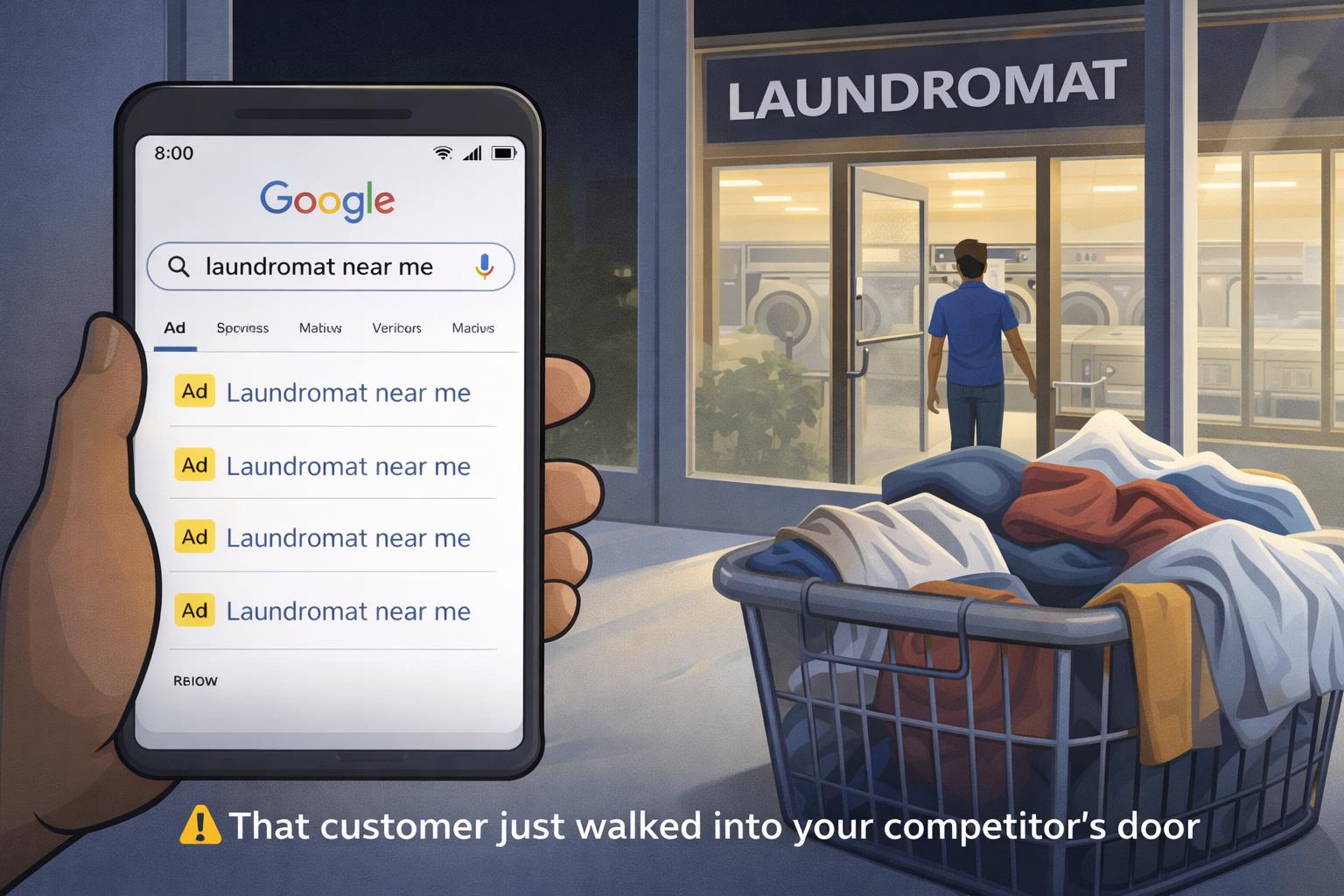
Imagine a potential customer searching on Google for a product or service your business offers.
Your company has years of experience, competitive pricing, qualified employees and the infrastructure required to fulfil the customer's requirements.
You also have a professional website.
However, when the customer searches online, your competitors appear prominently in the search results while your business is nowhere to be found.
The customer visits their websites, compares their offerings, submits an enquiry and eventually purchases from one of them.
Your company never receives an opportunity to present its capabilities.
This situation is experienced by many established businesses that have invested in website development but have not developed a structured organic search visibility strategy.
Some of these businesses may have better products, greater manufacturing capacity or more industry experience than the competitors appearing above them.
But potential customers cannot evaluate a business they have not discovered.
Having a website establishes your online presence. Being discoverable when customers search for your offerings creates opportunities for business growth.
The difference between these two capabilities can determine whether your business participates in a customer's purchasing journey or remains invisible throughout it.
This guide explains why competitors may be attracting customers through Google instead of your business, how to identify competitive visibility gaps and what your organisation can do to improve its position.
1. Having a Website Does Not Mean Customers Can Find Your Business
Many business owners assume that creating a website automatically makes their company visible on Google.
However, there is a significant difference between having a website that exists online and having a website that appears for relevant customer searches.
Your website may be accessible when someone enters its URL directly.
It may appear when people search for your company name.
But what happens when a potential customer does not know your business exists?
Consider a manufacturing company
An industrial equipment manufacturer may appear first when someone searches for its company name.
However, potential customers may use searches such as:
-
Industrial equipment manufacturers in India.
-
Heavy machinery suppliers.
-
Custom industrial equipment manufacturers.
-
Industrial automation solutions.
-
Manufacturing equipment suppliers in Delhi NCR.
If competitors appear for these searches while your website does not, they have additional opportunities to introduce their businesses to potential customers.
Your website exists, but it may not be participating in relevant customer discovery.
2. Google Visibility Is Different From Business Reputation
A company may have an excellent reputation within its existing professional network but limited visibility online.
Similarly, a relatively new competitor may have developed a stronger digital presence.
| Business factor | Established company | Digitally active competitor |
|---|---|---|
| Industry experience | 20 years | 5 years |
| Existing customer relationships | Strong | Developing |
| Manufacturing capacity | High | Moderate |
| Website structure | Basic | Detailed and organised |
| Product information | Limited | Comprehensive |
| Organic search strategy | Not established | Actively implemented |
| Content development | Occasional | Customer-focused |
| Non-branded visibility | Limited | Stronger |
| Online customer discovery | Limited | More established |
This hypothetical comparison illustrates why business experience alone does not guarantee stronger Google rankings.
Search engines need accessible, relevant and useful information to understand a company's offerings.
Google rankings should not be interpreted as a definitive measure of which company provides the best products or services.
However, visibility can influence which businesses potential customers discover first.
3. Why Customers May Be Finding Your Competitors Instead
Several factors can contribute to competitive search visibility differences.
Your competitors may have:
-
More relevant product and service pages.
-
Better understanding of customer search behaviour.
-
Stronger technical website foundations.
-
More useful industry-specific information.
-
Better internal linking.
-
Greater legitimate online recognition.
-
More accurate geographic information.
-
Stronger mobile website usability.
-
Regular website maintenance.
-
Dedicated SEO implementation resources.
Your website may also have technical or content-related issues preventing important pages from appearing prominently.
Understanding these differences is the first step towards developing a competitive organic growth strategy.
4. Your Website May Only Be Ranking for Your Company Name
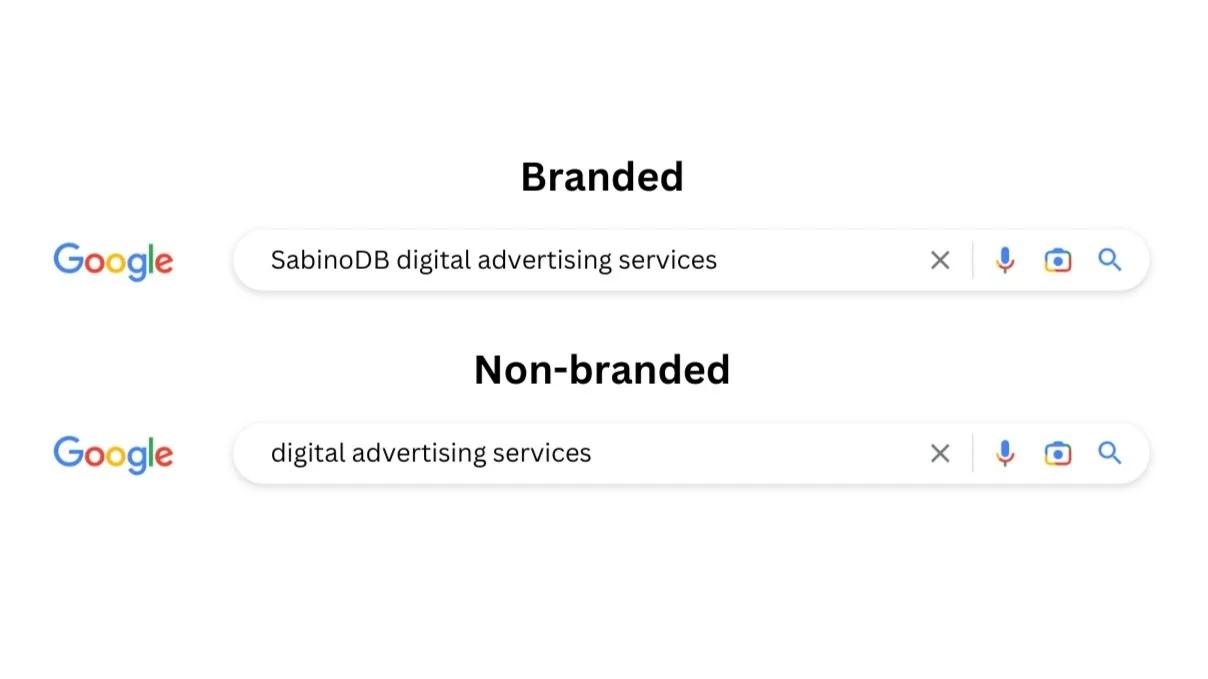
Branded search visibility is important, but it is not the same as reaching new customers.
Branded vs non-branded searches
| Business sector | Branded search | Non-branded search |
|---|---|---|
| Solar energy | ABC Solar Pvt Ltd | Industrial solar installation company |
| Manufacturing | XYZ Industries | Industrial machinery manufacturer |
| Corporate consultancy | ABC Consultants | Business compliance services |
| Medical devices | XYZ Healthcare | Disposable syringe manufacturer |
| Corporate gifting | ABC Gifts | Bulk corporate gifting suppliers |
| Software development | XYZ Technologies | Custom CRM development company |
| Packaging | ABC Packaging | Corrugated box manufacturers |
Customers searching for your company name generally already know about your business.
Non-branded searches create opportunities to reach customers who are still discovering suppliers or comparing available solutions.
If your competitors appear for both branded and relevant non-branded searches while your business appears only for its own name, your customer discovery opportunities may be considerably more limited.
5. Your Competitors Understand What Customers Actually Search For
Businesses often describe themselves differently from the way customers search for their offerings.
A company may use technical terminology, internal product names or broad corporate descriptions.
Potential customers may use more practical language.
Example
A company describes its offering as:
"Integrated sustainable energy infrastructure solutions."
However, prospective customers may search for:
-
Commercial rooftop solar installation.
-
Solar power systems for factories.
-
Industrial solar EPC companies.
-
Solar panel installation for manufacturing plants.
-
Commercial solar energy solutions.
The company's description may be professionally accurate, but its website needs to communicate its offerings using language customers understand.
Effective keyword research should consider:
Customer requirements.
Commercial search intent.
Industry terminology.
Product applications.
Geographic demand.
Purchasing behaviour.
Business profitability.
Competitive search results.
Keyword research is not simply about identifying phrases with high search volumes.
It is about understanding how suitable potential customers discover products and services.
6. Your Competitors Are Targeting Different Stages of the Customer Journey
Not every potential customer searches for a supplier immediately.
Many begin by researching a problem.
Example B2B customer journey
| Customer stage | Example search |
|---|---|
| Problem identification | Why is electricity consumption increasing in my factory? |
| Solution research | How can factories reduce electricity costs? |
| Technology evaluation | Solar power systems for industrial buildings |
| Commercial investigation | Industrial solar installation cost |
| Supplier discovery | Industrial solar EPC companies |
| Supplier comparison | What to check before selecting a solar EPC contractor |
| Commercial enquiry | Request a commercial solar installation quotation |
A competitor with resources addressing multiple stages of this journey may be discovered more frequently.
Your business may only have a general page describing solar installation services.
This limits the number of relevant customer questions your website can address.
The solution is not to create unnecessary pages for every keyword variation.
Develop distinct, useful resources that support genuine purchasing and research requirements.
7. Your Website Structure May Be Limiting Google Visibility
Many traditional business websites contain a small number of general pages.
A typical structure might include:
-
Homepage.
-
About us.
-
Products.
-
Services.
-
Contact us.
This may be sufficient for introducing a company.
However, businesses offering multiple specialised products or services may require a more detailed structure.
Example: Traditional manufacturing website
Products
All products are displayed on a single page with short descriptions.
Example: Structured manufacturing website
Products:
-
Industrial pumps.
-
Centrifugal pumps.
-
Chemical process pumps.
-
Industrial water pumps.
-
-
Industrial valves.
-
Ball valves.
-
Butterfly valves.
-
Control valves.
-
-
Industrial filtration equipment.
Industries:
-
Chemical manufacturing.
-
Water treatment.
-
Food processing.
-
Pharmaceutical manufacturing.
Resources:
-
Product specifications.
-
Technical guides.
-
Application information.
-
Frequently asked purchasing questions.
The appropriate structure depends on the company's actual product portfolio.
A well-organised architecture helps customers navigate the website and helps search engines understand the relationships between relevant pages.
8. Your Competitors Have More Useful Product and Service Pages
Potential customers often require detailed information before contacting a supplier.
A competitor's product page may contain information that your website does not provide.
| Information | Your existing page | Competitor's page |
|---|---|---|
| Product description | Short paragraph | Detailed explanation |
| Technical specifications | Missing | Available |
| Product applications | Limited | Clearly explained |
| Available variants | Not mentioned | Organised by product type |
| Industry suitability | Missing | Relevant industries listed |
| Manufacturing capabilities | General statement | Specific factual information |
| Certifications | Not explained | Verified details provided |
| Technical documentation | Unavailable | Downloadable |
| Enquiry options | General contact page | Relevant quotation form |
A customer comparing these websites may find the competitor's information more useful.
Google also evaluates whether content is relevant and helpful for a search.
Page length alone is not the deciding factor. The quality, accuracy and relevance of information matter.
Review your commercial pages from the perspective of someone unfamiliar with your business.
9. Your Website May Have Important Technical SEO Problems
Search engines must be able to access and understand relevant website pages.
Technical issues can reduce the visibility of otherwise useful content.
Common technical SEO limitations
| Technical issue | Potential impact |
|---|---|
| Important pages blocked from crawling | Search engines may struggle to access content |
| Incorrect noindex directives | Important pages may be excluded from search results |
| Incorrect canonical tags | Search engines may select an unintended page |
| Broken internal links | Important content becomes harder to discover |
| Poor website architecture | Important pages may receive limited internal links |
| Duplicate URLs | Search signals may become fragmented |
| Redirect errors | Customers and search engines may reach unintended pages |
| JavaScript rendering problems | Important content may be difficult to process |
| Slow mobile performance | Customer experience may deteriorate |
| Server errors | Website content may become temporarily inaccessible |
An attractive website can still have significant technical limitations.
Before assuming competitors are winning because of their content or backlinks, verify that your website's technical foundations are functioning correctly.
10. Your Competitors May Be Publishing Information Customers Need
Customers regularly search for answers before making purchasing decisions.
Businesses that publish useful answers may be discovered during those searches.
Example content opportunities
| Business sector | Customer research topic |
|---|---|
| Manufacturing | How to select an industrial machinery supplier |
| Corporate gifting | How to plan bulk employee gifting requirements |
| Renewable energy | What factories should assess before installing solar panels |
| Medical devices | Procurement considerations for institutional medical supplies |
| Business consultancy | Documents required before a corporate compliance assessment |
| Software development | What to evaluate before implementing a custom CRM |
| Packaging | How to select packaging materials for export shipments |
| Logistics | How manufacturers can evaluate warehouse distribution requirements |
Useful content can help potential customers understand their requirements while introducing them to your company's capabilities.
However, publishing large numbers of generic articles is not necessarily an effective strategy.
Every article should address a genuine customer need and receive appropriate technical review.
11. Your Competitors May Have Stronger Industry Coverage
Companies serving multiple industries sometimes use the same generic description for every potential customer.
However, customer requirements often differ considerably between sectors.
Consider a commercial solar installation company.
Its customers may include:
-
Textile manufacturers.
-
Pharmaceutical factories.
-
Educational institutions.
-
Warehouses.
-
Hospitals.
-
Commercial office buildings.
-
Food processing companies.
-
Shopping centres.
Each customer segment may have different installation requirements, energy consumption patterns and operational considerations.
Competitors may publish useful industry-specific information addressing those distinctions.
Your website can do the same wherever genuine expertise and supporting information exist.
Avoid creating nearly identical industry pages by replacing only the industry name.
Industry-focused content should provide meaningful information that is not adequately addressed elsewhere.
12. Your Business May Have Weak Geographic Search Visibility
A potential customer may want to identify suppliers or service providers operating within a particular area.
Typical searches include:
-
Industrial equipment manufacturers in Delhi NCR.
-
Website development company in Gurgaon.
-
Commercial solar installation company in Gujarat.
-
Corporate gifting suppliers in Mumbai.
-
Packaging manufacturers in Ahmedabad.
Your competitors may have more accurate geographic information or stronger local search visibility.
Improve geographic discoverability through:
Genuine office and business location information.
Accurate service coverage.
Relevant local business listings.
Consistent contact details.
Eligible and correctly maintained Google Business Profiles.
Useful location-specific information where justified.
Genuine customer reviews where appropriate.
Avoid creating fictitious offices or large numbers of nearly identical city pages.
Google's doorway abuse policies discourage pages created primarily to rank for similar searches while providing little distinct value.
Geographic SEO should represent genuine business operations.
13. Your Competitors May Have Stronger Online Credibility
Search visibility is not the only challenge.
When customers discover multiple companies, they may compare their credibility before making contact.
They may evaluate:
-
Company history.
-
Industry experience.
-
Product capabilities.
-
Certifications.
-
Customer references.
-
Case studies.
-
Professional qualifications.
-
Manufacturing facilities.
-
Team expertise.
-
Online reputation.
-
Contact information.
A competitor with a more complete and trustworthy digital presence may appear more established to a customer, even when your company has greater actual experience.
Make genuine business capabilities accessible online.
Use verified information, original photographs and accurate supporting documentation.
Avoid fabricated testimonials, exaggerated claims and unauthorised client logos.
14. Your Competitors May Have Better Internal Linking
Internal links connect relevant pages within a website.
They help customers find additional information and help search engines discover related resources.
Example
An article explaining industrial wastewater treatment requirements could link to:
-
Industrial wastewater treatment services.
-
Relevant water treatment equipment.
-
Manufacturing industry applications.
-
Technical documentation.
-
Appropriate project case studies.
This establishes a logical information structure.
Without suitable internal links, important pages may remain isolated or difficult to discover.
Review your website for:
Important pages with few internal links.
Orphan pages.
Broken internal links.
Generic anchor text.
Unnecessary navigation complexity.
Relevant articles that do not link to commercial pages.
Product categories that are difficult to access.
Internal linking should support navigation and topic relationships rather than involve excessive keyword repetition.
15. Your Competitors May Have Stronger External Recognition
Competitors may receive legitimate references from industry publications, professional organisations, business partners and relevant websites.
These references can help customers discover the company and may support organic search visibility.
Potential sources of legitimate recognition
Industry association websites.
Trade publications.
Supplier and partner websites.
Relevant business directories.
Original industry research.
Professional interviews.
Educational resources.
Relevant editorial coverage.
Industry events and conferences.
Avoid purchasing links for the purpose of manipulating rankings.
Mass-produced guest posting, artificial authority schemes and irrelevant directory submissions can create SEO risks.
Third-party authority scores are not official Google ranking metrics.
Focus on genuine relevance, useful information and legitimate business recognition rather than attempting to increase an arbitrary authority score.
16. Your Website May Have Keyword Cannibalisation Problems
Keyword cannibalisation can occur when several pages target substantially the same search intent without providing meaningful distinctions.
Example
A packaging manufacturer creates five pages:
-
Industrial packaging manufacturers.
-
Industrial packaging company.
-
Industrial packaging suppliers.
-
Industrial packaging solutions.
-
Industrial packaging services.
Depending on their content and actual search results, these pages may address substantially the same requirement.
Instead of supporting a clear commercial page, they may create unnecessary overlap.
Recommended approach
Identify the primary page that best addresses the shared intent.
Consolidate substantially duplicated information where appropriate.
Create separate pages only when customer requirements differ meaningfully.
Review internal links and canonical signals.
Use appropriate redirects when retiring redundant URLs.
Monitor page-level performance through Google Search Console.
Multiple pages appearing for the same query do not automatically indicate a problem. Investigate whether overlapping pages are genuinely affecting search performance before making changes.
17. Your Competitors Could Be Reaching Customers Through Paid Search
Not every prominent Google result is an organic ranking.
Some competitors may be appearing through paid advertising.
When evaluating competitive visibility, distinguish between:
Organic search results.
Sponsored search advertisements.
Google Maps and local business results.
Shopping results where relevant.
Featured information and AI-generated search experiences.
Different search features require different strategies.
If competitors are primarily appearing through sponsored advertisements, their visibility may be supported by advertising expenditure rather than stronger organic SEO.
A competitor analysis should identify which opportunities are organic, paid or location-based.
This helps management allocate resources more effectively.
18. How to Identify Your Real SEO Competitors
Your traditional business competitors may not be the same organisations competing for visibility on Google.
For example, a manufacturing company may compete commercially with five established suppliers.
However, its shortlisted Google search competitors may include:
-
Direct manufacturers.
-
Distributors.
-
Online marketplaces.
-
Industry directories.
-
International suppliers.
-
Specialist product websites.
-
Trade publications.
Some of these websites may rank for relevant searches without providing an identical commercial offering.
How to identify relevant search competitors
Select commercially important products and services.
Identify representative customer searches.
Review the websites repeatedly appearing for those searches.
Separate direct commercial competitors from informational and marketplace competitors.
Compare relevant pages rather than entire domains alone.
Consider geographic and device-related search differences.
Build your competitive strategy around genuine business relevance.
Your objective is not to copy every website appearing on Google. It is to understand where relevant customer discovery opportunities exist.
19. Conduct a Competitor Keyword Gap Analysis
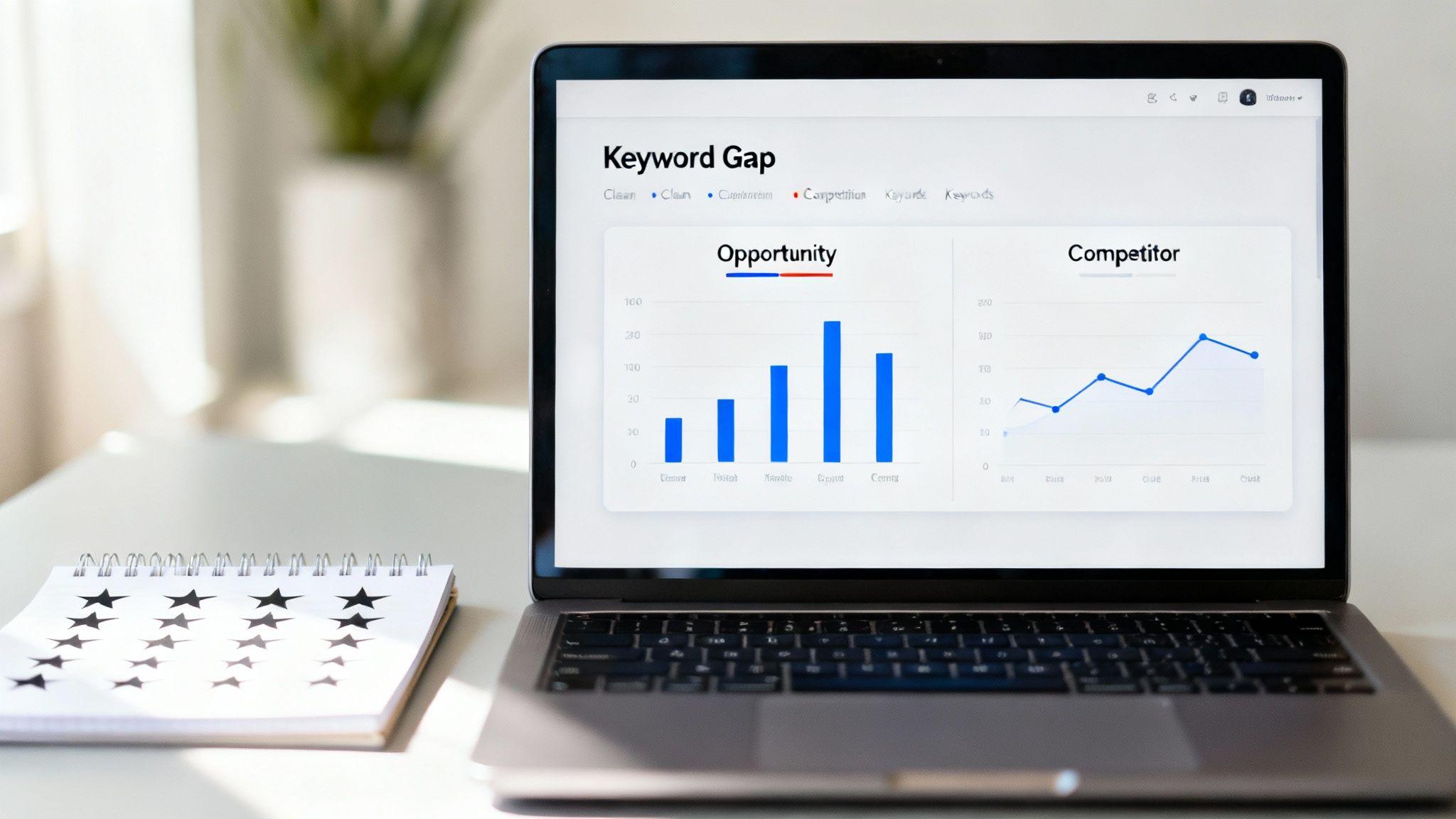
Keyword gap analysis identifies relevant search opportunities where competing websites have visibility and your website has limited or no visibility.
Tools such as Google Search Console, Ahrefs and Semrush can support this research.
Illustrative keyword gap analysis
| Search query | Your website position | Competitor position | Opportunity |
|---|---|---|---|
| Industrial packaging manufacturers | 24 | 4 | Improve main product category |
| Custom corrugated box suppliers | 38 | 6 | Review product information |
| Bulk packaging solutions | Not found | 8 | Assess genuine commercial relevance |
| Export packaging manufacturers | 31 | 5 | Improve export capability information |
| Protective packaging for electronics | Not found | 9 | Develop relevant application resource |
These positions are hypothetical and are not taken from a real website audit.
Prioritise keyword opportunities based on:
Business relevance.
Customer intent.
Product profitability.
Existing website capabilities.
Search competition.
Available expertise.
Commercial opportunity.
Do not target every keyword a competitor ranks for.
Many of their keywords may have no meaningful relationship with your business objectives.
20. Conduct a Competitor Content Gap Analysis
A content gap exists when potential customers require information that competing websites provide but your website does not adequately address.
Illustrative analysis
| Customer requirement | Your website | Competitor website | Recommended action |
|---|---|---|---|
| Product specifications | Limited | Detailed | Improve technical information |
| Industry applications | Missing | Available | Develop useful application resources |
| Supplier selection questions | Missing | Detailed guide | Create an original buying guide |
| Manufacturing capabilities | Generic | Clearly explained | Document actual capabilities |
| Quality certifications | Incomplete | Verified information | Update accurate certification details |
| Technical documentation | Missing | Available | Provide appropriate downloadable resources |
Competitor analysis should identify unanswered customer questions.
Do not reproduce competitor text, website designs or proprietary information.
Your content should be based on your company's own expertise and genuine business capabilities.
21. Compare Your Website's Organic Search Coverage
A single keyword does not provide a complete picture of competitive visibility.
Your competitor may appear across a broad range of relevant searches associated with its product portfolio.
Hypothetical comparison
| Search category | Your website ranking keywords | Competitor ranking keywords |
|---|---|---|
| Core commercial offerings | 25 | 110 |
| Product-specific searches | 40 | 180 |
| Industry-related searches | 15 | 95 |
| Geographic searches | 20 | 80 |
| Customer research queries | 30 | 220 |
| Total | 130 | 685 |
This illustrative competitor has wider search coverage.
However, keyword counts from third-party tools are estimates and should not automatically be interpreted as customer numbers or business revenue.
The important question is whether those additional search opportunities are relevant to your company.
A smaller number of commercially relevant keywords may be more valuable than thousands of unrelated informational rankings.
22. Use Google Search Console to Find Opportunities You Already Have
You may not need to build your entire SEO strategy from scratch.
Your website may already appear for relevant searches but receive relatively few clicks.
Google Search Console can help identify those opportunities.
Review searches where:
Your website generates impressions but receives limited clicks.
Commercial pages appear outside prominent search positions.
Relevant queries are associated with an unintended page.
Important pages have recently lost visibility.
Search impressions are increasing without corresponding engagement.
A competitor appears to provide more relevant information for the same requirement.
Example
A business website receives 8,000 monthly impressions for a group of commercially relevant searches.
Its click-through rate is 1%.
That represents approximately 80 clicks.
If improved search visibility and result presentation increased the click-through rate to 3%, the same impression volume would represent 240 clicks.
The additional 160 clicks could create further commercial opportunities, depending on their relevance and conversion performance.
This is a hypothetical calculation, not a prediction or guaranteed SEO result.
23. Estimate the Business Opportunities Competitors May Be Capturing
Business owners should understand competitive visibility in commercial terms.
Consider a hypothetical group of searches representing 20,000 monthly search impressions.
Assume these impressions remain constant for both businesses and that all subsequent performance rates are equal.
| Metric | Your business | Competitor |
|---|---|---|
| Search impressions | 20,000 | 20,000 |
| Click-through rate | 1% | 5% |
| Website clicks | 200 | 1,000 |
| Genuine enquiry rate | 2% | 2% |
| Genuine enquiries | 4 | 20 |
| Enquiry qualification rate | 50% | 50% |
| Qualified leads | 2 | 10 |
| Qualified lead closing rate | 20% | 20% |
| Expected customers | 0.4 | 2 |
| Average customer revenue | ₹1,00,000 | ₹1,00,000 |
| Expected initial customer revenue | ₹40,000 | ₹2,00,000 |
The hypothetical difference is ₹1,60,000 in expected initial monthly customer revenue.
Fractional customer figures represent statistical expectations over time, not individual customers acquired in a particular month.
Actual competitors' enquiries, closing rates and revenue cannot be determined from keyword rankings alone.
Nevertheless, the example illustrates how differences in search visibility can influence potential commercial opportunities.
24. Why Competitors With Smaller Businesses May Rank Above You
Many established company owners ask why a smaller or newer business appears above their website.
A competitor may have:
A more focused website.
Better commercial page content.
Stronger technical accessibility.
More relevant customer resources.
Clearer website architecture.
More specific search targeting.
Better mobile usability.
Consistent website improvement.
Useful industry information.
Relevant online recognition.
Your company may possess greater operational capacity, but those capabilities need to be represented accurately and effectively online.
A strong SEO strategy helps translate real business expertise into accessible digital information.
25. Should You Copy Your Competitors' SEO Strategy?
No.
Competitor research provides useful evidence, but copying another company's website is unlikely to establish a sustainable competitive advantage.
Your business may differ in:
Product range.
Pricing structure.
Target industries.
Customer requirements.
Geographic coverage.
Operational capabilities.
Manufacturing processes.
Professional expertise.
Commercial objectives.
A stronger approach
Understand what customers value.
Identify where competitor information is incomplete.
Document your genuine competitive advantages.
Create original customer-focused resources.
Improve technical website accessibility.
Communicate factual capabilities clearly.
Monitor commercial search visibility.
Your strategy should be informed by competitor research but built around your own business.
26. Build a Competitive SEO Strategy Around Your Actual Business Strengths
Your company may already have advantages that competitors cannot easily replicate.
These could include:
Long-standing industry experience.
Specialised manufacturing capabilities.
Technical expertise.
Customisation options.
Quality management systems.
Distribution infrastructure.
Established service processes.
Research and development.
Relevant completed projects.
Customer support capabilities.
Experienced professionals.
Instead of relying on generic claims such as "best service provider" or "leading company," explain your capabilities through accurate, useful information.
Example
A manufacturer might replace a generic statement about high-quality products with factual information describing:
Available production capabilities.
Materials used.
Product testing procedures.
Applicable quality standards.
Customisation requirements.
Technical specifications.
Genuine manufacturing experience.
This provides customers with information they can use during supplier evaluation.
27. Do You Need to Redesign Your Website to Compete on Google?
Not necessarily.
Many competitive SEO limitations can be addressed without completely rebuilding a website.
Optimise the existing website when:
The platform is maintainable.
New pages can be introduced.
Technical issues can be resolved.
The website can support appropriate navigation.
Customer experience can be improved.
Existing organic visibility is worth preserving.
Consider redevelopment when:
The technology is outdated or insecure.
Website architecture cannot support business requirements.
Important content cannot be managed efficiently.
Technical limitations prevent meaningful improvement.
Essential customer functionality cannot be implemented.
The decision should follow a technical and commercial audit.
If a migration is necessary, identify valuable existing URLs, establish redirects, preserve relevant information and monitor search performance.
An unnecessary redesign can create additional expenditure without resolving competitive visibility problems.
28. Should Your Business Invest in SEO or Paid Advertising to Compete?
Both channels can support customer acquisition, but they serve different purposes.
| Factor | Organic SEO | Paid advertising |
|---|---|---|
| Main objective | Improve organic discoverability | Purchase advertising visibility |
| Initial visibility | Usually gradual | Can begin after setup and approval |
| Investment model | Implementation and ongoing optimisation | Advertising and campaign management costs |
| Long-term potential | May support sustained visibility | Primarily depends on continued expenditure |
| Competitive requirements | Relevant content and technical foundations | Suitable targeting, budget and landing pages |
| Best use | Developing organic market visibility | Testing or acquiring selected commercial demand |
Businesses that need immediate market testing may benefit from appropriately managed advertising campaigns.
Businesses seeking stronger long-term organic discoverability should develop a structured SEO strategy.
The right investment depends on customer acquisition economics, market demand and the company's growth objectives.
Neither channel guarantees profitable business outcomes.
29. A Practical 30-Day Competitor Visibility Assessment
The first month should focus on understanding why competing businesses are more discoverable.
Week 1: Establish your current position
Review Google Search Console.
Audit important commercial pages.
Identify technical limitations.
Document current non-branded search visibility.
Week 2: Identify search competitors
Select commercially important search terms.
Identify frequently appearing competitors.
Review organic and paid search features.
Evaluate business relevance.
Week 3: Analyse competitive gaps
Compare keyword coverage.
Review product and service page information.
Assess website architecture.
Identify unanswered customer questions.
Evaluate technical and geographic visibility.
Week 4: Establish implementation priorities
Prioritise commercially valuable opportunities.
Prepare website improvement requirements.
Identify content development needs.
Set measurable visibility objectives.
Define implementation responsibilities.
The deliverable should be a competitor-focused SEO roadmap based on evidence rather than a generic ranking report.
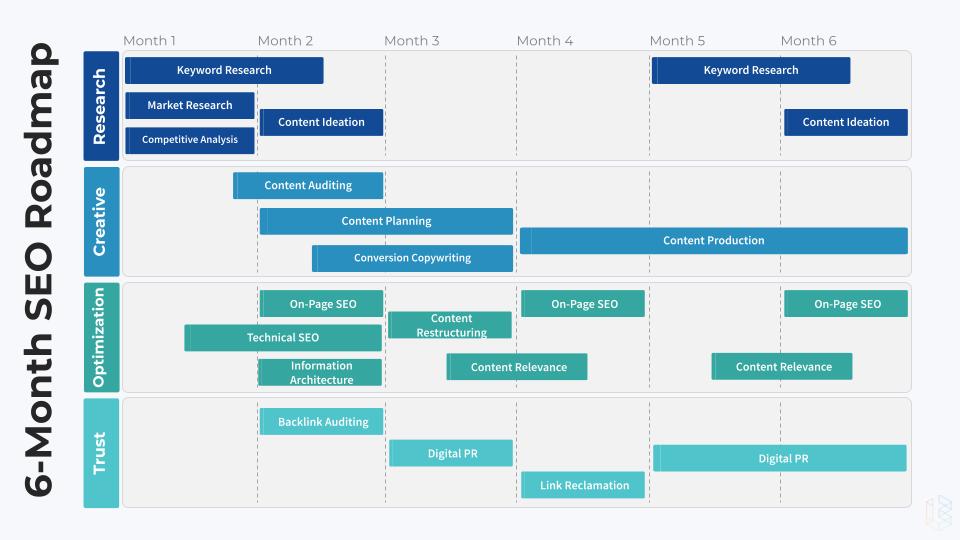
30. A Six-Month SEO Strategy to Improve Competitive Visibility
| Month | Main activities | Intended outcome |
|---|---|---|
| Month 1 | Technical audit, search competitor identification and gap analysis | Clear competitive SEO baseline |
| Month 2 | Resolve critical technical issues and improve website architecture | Stronger search accessibility |
| Month 3 | Optimise commercially important product and service pages | Improved relevance for priority searches |
| Month 4 | Develop original industry resources and customer-focused content | Wider relevant search coverage |
| Month 5 | Improve internal linking, geographic information and legitimate brand visibility | Stronger connected digital presence |
| Month 6 | Review competitive search performance and refine priorities | Evidence-based organic growth strategy |
Actual progress depends on competition, website condition, industry requirements and implementation resources.
Six months is a useful planning period, not a guaranteed timeline for outranking competitors.
31. What Should Business Owners Monitor Every Month?
Management should receive reporting that explains whether the company is becoming more competitive for relevant customer searches.
Competitive visibility indicators
| Metric | Business purpose |
|---|---|
| Priority non-branded search visibility | Understand new customer discovery opportunities |
| Relevant ranking keyword coverage | Measure breadth of search presence |
| Commercial page impressions | Monitor visibility of important offerings |
| Organic click-through rate | Evaluate search result engagement |
| Priority page indexing | Verify search accessibility |
| Competitive search visibility | Compare performance across selected queries |
| Relevant organic website visits | Assess customer discovery |
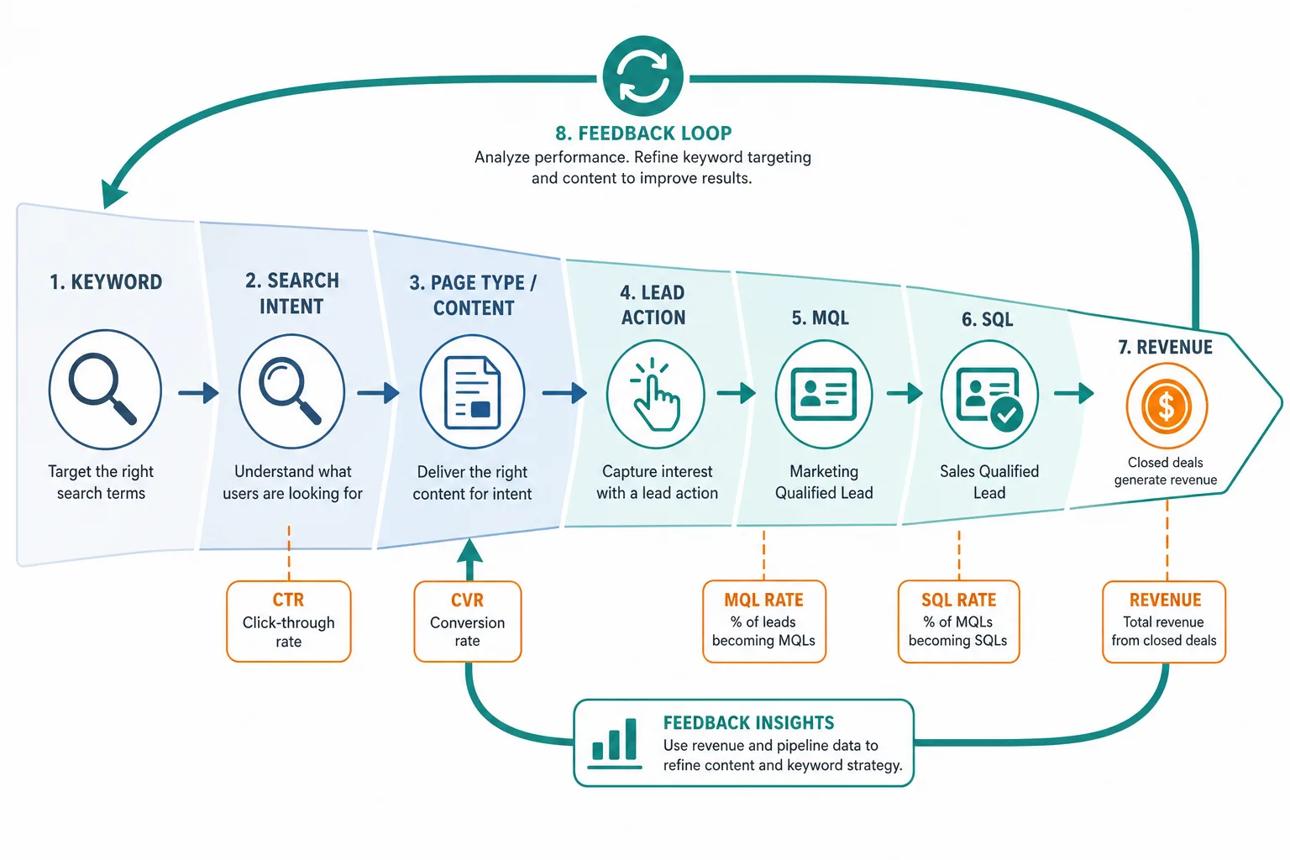
| Genuine organic enquiries | Connect visibility with business opportunities |
| Qualified organic leads | Evaluate enquiry relevance |
| Acquired customer revenue | Understand commercial contribution where attributable |
Avoid evaluating SEO performance through a single high-volume keyword.
Monitor a representative group of commercially important requirements.
32. How Much Should a Business Invest in Competitive SEO?
The appropriate investment depends on the company's current website, competitive environment and implementation requirements.
Illustrative monthly investment scenarios
| Business requirements | Indicative planning budget |
|---|---|
| Foundational SEO for a small business website | ₹25,000–₹40,000 |
| Competitive SEO for an established service business | ₹40,000–₹75,000 |
| B2B or manufacturing SEO with substantial product coverage | ₹60,000–₹1,25,000 |
| Complex enterprise or international SEO | ₹1,00,000–₹2,50,000+ |
These are illustrative planning scenarios, not verified industry averages or formal SEOspade quotations.
Website redevelopment, advertising expenditure, specialist content review and complex development requirements may involve additional costs.
Businesses should evaluate SEO expenditure against realistic customer acquisition opportunities and customer contribution margins.
33. Common Mistakes Businesses Make When Competing on Google
Mistake 1: Focusing only on branded rankings
Customers who already know your company represent only one part of online demand.
Mistake 2: Copying competitor content
Original information based on genuine business expertise is more useful and avoids unnecessary duplication.
Mistake 3: Targeting every competitor keyword
Prioritise searches connected to your business offerings and customer requirements.
Mistake 4: Creating excessive location pages
Develop geographic information only where it reflects genuine operations and provides distinct customer value.
Mistake 5: Purchasing manipulative backlinks
Focus on legitimate industry recognition and relevant editorial exposure.
Mistake 6: Ignoring technical SEO
Website accessibility and index management are important foundations.
Mistake 7: Publishing large amounts of generic content
Useful commercial and educational information deserves greater priority than content volume.
Mistake 8: Changing strategies every month
SEO requires consistent implementation and evidence-based adjustments.
Mistake 9: Expecting to outrank every competitor
Different companies may remain stronger across different product categories, locations or search requirements.
Mistake 10: Measuring success only through rankings
Customer discovery, qualified enquiries and business contribution are more commercially meaningful outcomes.
Mistake 11: Rebuilding the website without understanding existing search performance
Unnecessary changes may disrupt established visibility.
Mistake 12: Treating SEO as a one-time activity
Competitive search conditions, website information and customer requirements change over time.
34. Competitive SEO Readiness Scorecard
Rate each area from 1 to 5.
A score of 1 indicates a significant limitation, while 5 indicates an established capability.
| Evaluation area | Maximum score |
|---|---|
| Technical website health | 5 |
| Commercial keyword coverage | 5 |
| Competitor keyword analysis | 5 |
| Competitor content analysis | 5 |
| Non-branded search visibility | 5 |
| Product and service page quality | 5 |
| Website architecture | 5 |
| Internal linking | 5 |
| Industry-specific information | 5 |
| Geographic visibility | 5 |
| Genuine digital credibility | 5 |
| Original customer-focused content | 5 |
| Google Search Console monitoring | 5 |
| Enquiry and commercial tracking | 5 |
| Ongoing SEO implementation | 5 |
| Total maximum score | 75 |
Illustrative interpretation
60–75: Strong foundations may exist. Focus on specific competitive opportunities.
45–59: Several useful capabilities are established, but competitors may have advantages in important areas.
30–44: Significant search visibility and website improvement requirements may exist.
Below 30: Begin with technical assessment, competitor analysis and commercial website planning.
This is a practical self-assessment tool, not a validated industry benchmark or Google ranking score.
35. When Should You Hire an SEO Agency to Improve Competitive Visibility?
External support may be valuable when:
Your company appears primarily for branded searches.
Competitors consistently appear for important commercial searches.
Your website has limited product and service information.
You cannot identify meaningful keyword opportunities.
Your internal development team lacks technical SEO expertise.
Existing marketing activities are not improving relevant visibility.
Your business plans to enter new markets.
Management requires clearer competitive performance reporting.
A suitable SEO agency should explain:
Which competitors are relevant.
Which commercial opportunities exist.
What technical limitations require attention.
Which pages should be improved.
What original resources should be developed.
How implementation will be measured.
What realistic timelines and responsibilities apply.
Avoid agencies that guarantee first-position rankings without understanding your business and competitive environment.
36. How SEOspade Helps Businesses Compete More Effectively on Google
At SEOspade, we help businesses understand the gap between their actual business capabilities and their online visibility.
Our approach focuses on identifying why potential customers may be discovering competitors instead of your business.
Competitor SEO analysis
Identify relevant search competitors and assess commercially important visibility differences.
Commercial keyword gap analysis
Discover relevant search opportunities that your existing website does not adequately address.
Technical SEO audit and implementation
Identify and resolve technical limitations affecting crawling, indexing, website architecture and search accessibility.
Website design and development
Improve existing website infrastructure or develop suitable new capabilities when necessary.
Commercial page optimisation
Strengthen product and service information based on genuine customer requirements.
Content gap analysis and development
Identify unanswered customer questions and develop original, useful resources.
B2B and manufacturing SEO
Develop strategies aligned with corporate purchasing behaviour, industrial products and specialised business requirements.
Local and international SEO
Support genuine geographic market visibility based on operational capabilities and customer demand.
Digital PR and legitimate brand visibility
Develop relevant opportunities for professional exposure and industry recognition.
Paid marketing
Plan suitable advertising campaigns where they support agreed commercial objectives.
Analytics and competitive performance monitoring
Measure relevant search visibility, customer discovery and genuine business opportunities.
Our objective is not simply to help businesses rank for additional keywords.
It is to improve their ability to compete for relevant customer attention and commercially meaningful search demand.
Conclusion: Your Competitors Are Not Necessarily Better — They May Simply Be Easier to Find
Your business may have excellent products, experienced professionals, established customers and strong operational capabilities.
However, those strengths cannot influence a potential customer's purchasing decision if the customer never discovers your business.
A competitor appearing prominently on Google receives an opportunity to introduce its products, explain its services and communicate its capabilities.
Your business deserves to participate in relevant purchasing journeys too.
Achieving that requires more than owning a professional website.
It requires understanding customer searches, identifying competitive visibility gaps, improving technical infrastructure and making genuine business expertise accessible through useful online information.
Do not simply copy your competitors.
Understand why they are being discovered, determine where your business has meaningful advantages and develop a strategy that communicates those advantages effectively.
Your next customer may already be searching for exactly what your business offers. The question is whether they will discover your company or one of your competitors.
If your business has a website but competitors are consistently appearing for important commercial searches, connect with SEOspade.
Our competitor SEO analysis, technical SEO, website optimisation and digital marketing services can help identify missed search opportunities and develop a structured strategy for improving relevant Google visibility.