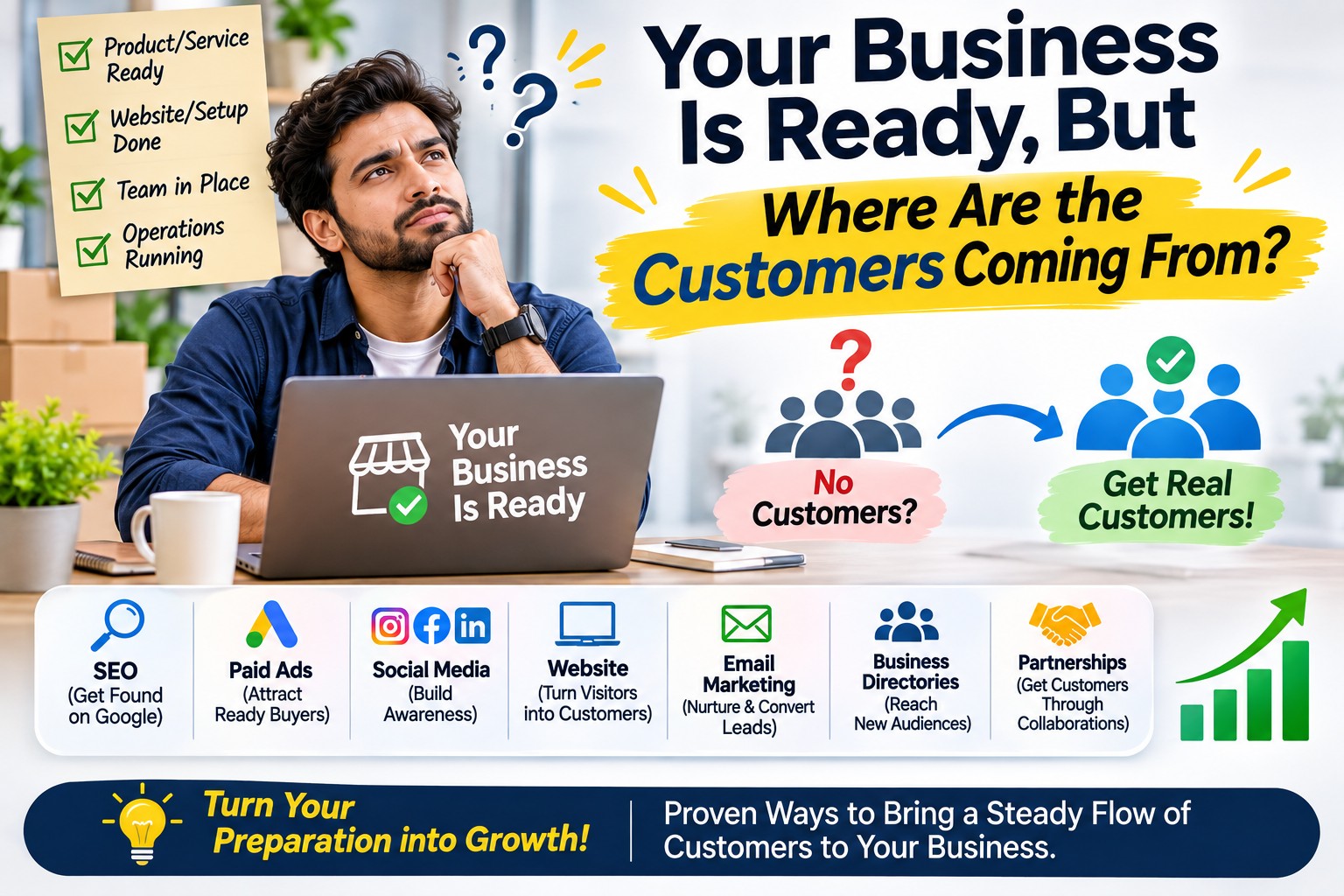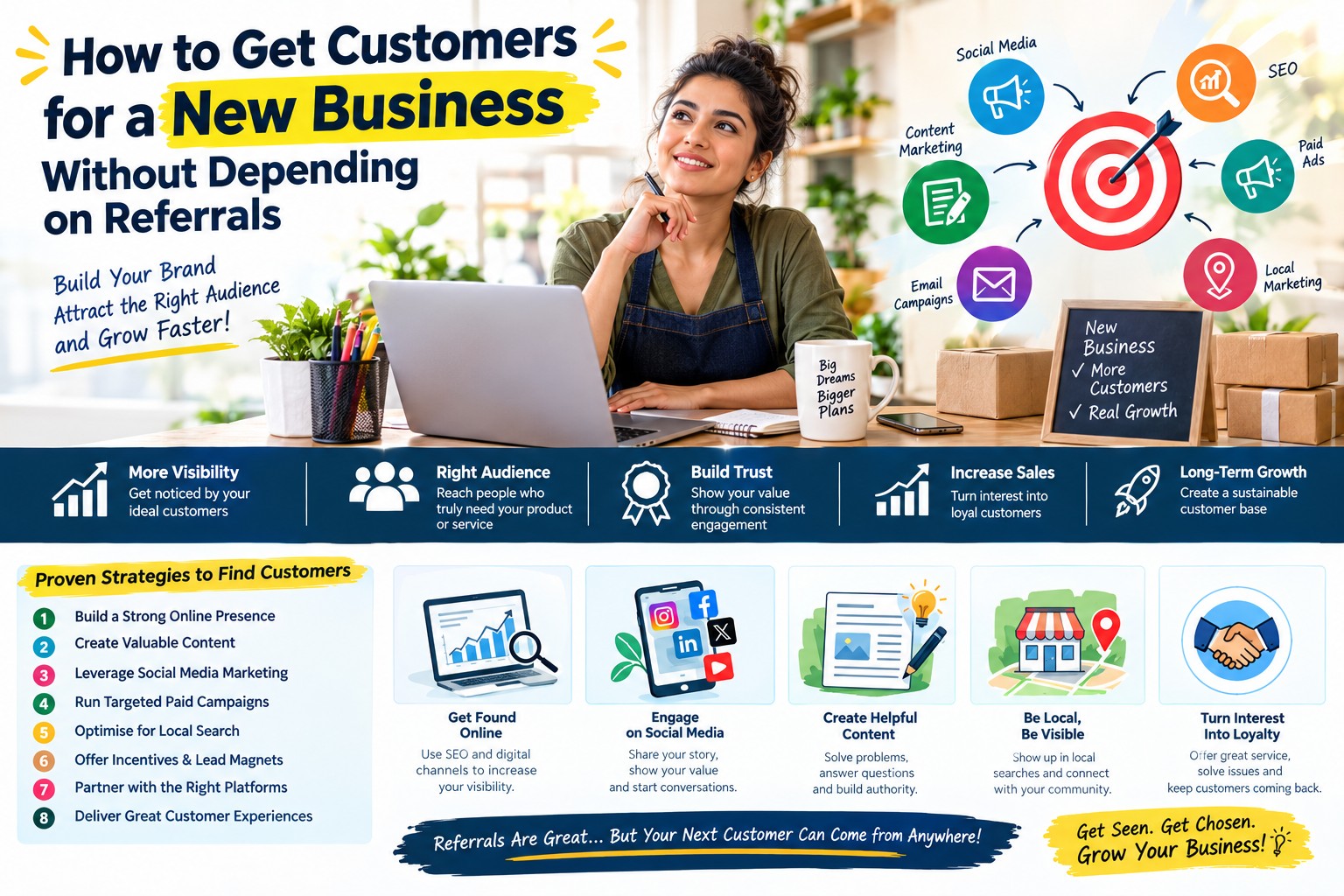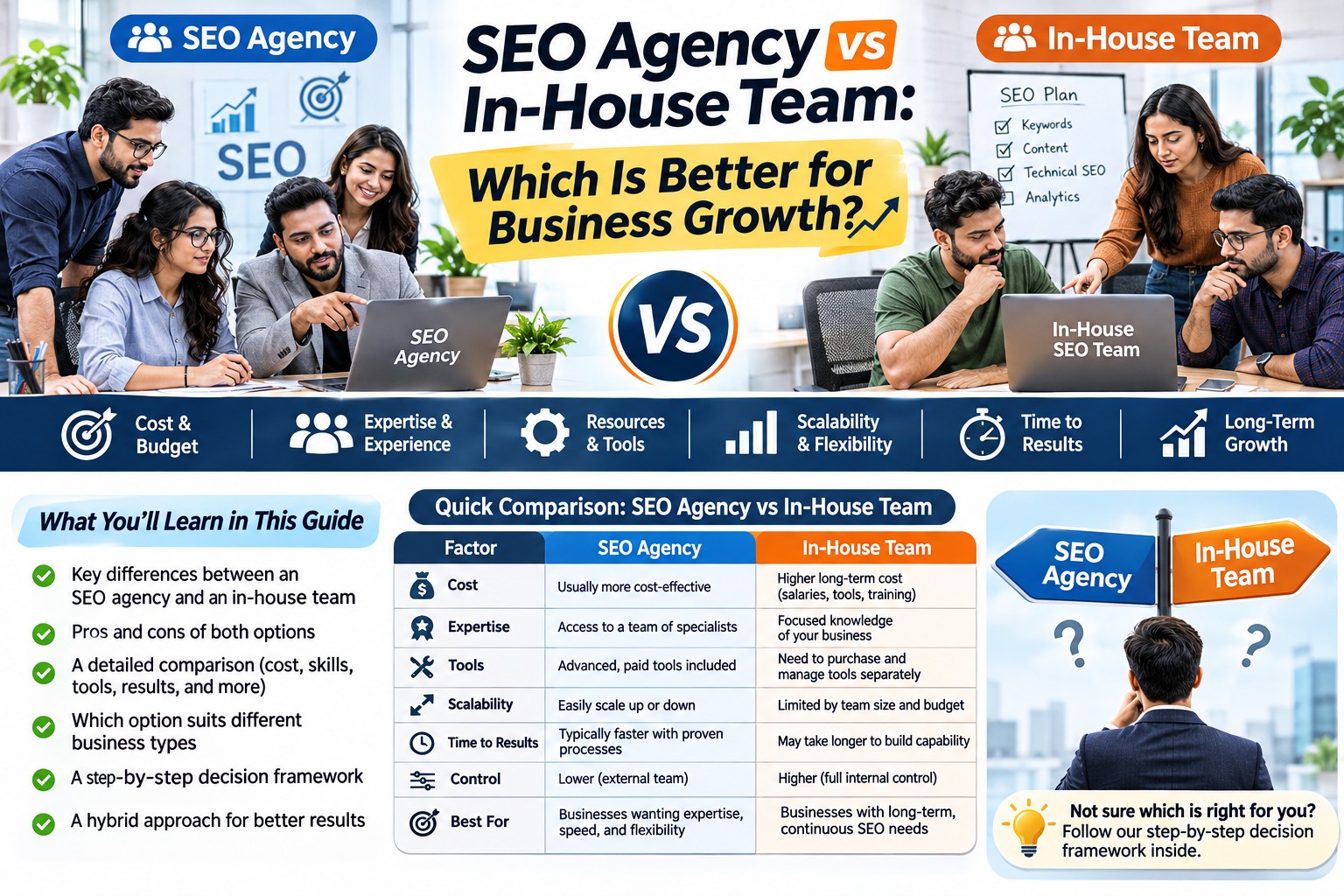
You have started a business, hired a small team, arranged your products or services and perhaps completed your first few projects.
Things are beginning to move forward.
Now you are thinking about expansion.
You may want to hire more employees, move into a larger office, increase production capacity, launch new services or invest in better equipment.
These decisions can help a growing business serve more customers.
But before making them, there is an important question you should answer:
Where will the additional customers come from to support your expansion?
Many new businesses focus on increasing their capacity before establishing a reliable process for attracting customers.
They invest in infrastructure, employees, technology and marketing activities without knowing how many qualified enquiries they can generate or how many of those enquiries are likely to become paying customers.
The result can be a business that is prepared to deliver more work but does not have enough customers to keep that capacity occupied.
Imagine hiring five additional employees because your first three months went well.
During those months, most projects came from personal contacts and a few referrals.
After expanding, the referrals slow down.
Your new employees still need salaries. Office rent and other operating expenses continue. But the sales pipeline is not strong enough to support the larger business.
The problem is not necessarily that your service is poor.
The problem is that your business expanded before developing a dependable customer acquisition process.
This is why a lead generation strategy matters.
A good strategy helps you understand who your customers are, how they discover your business, what encourages them to enquire, how much it costs to acquire them and whether your sales pipeline can support future growth.
It does not guarantee a fixed number of leads every month. Customer demand changes, and no marketing channel performs perfectly.
However, it gives you a more informed basis for making expansion decisions.
In this guide, we will explain how lead generation connects to business scaling, what can go wrong when businesses expand too early, how to calculate the demand needed to support growth and how to build a practical lead generation strategy before increasing your operating costs.
1. What Does Scaling a Business Actually Mean?

Business growth and business scaling are related, but they are not exactly the same.
A business can grow by adding customers, employees, revenue and expenses.
Scaling generally means increasing business output or revenue without requiring costs and resources to increase at the same rate.
For example, a website development agency may initially deliver four projects every month with a small team.
As it improves its processes, reusable components and project management, it may be able to deliver more projects without increasing its costs proportionally.
However, if the agency hires a large team before securing enough projects, its expenses may increase faster than its revenue.
Common ways new businesses try to expand
-
Hiring additional employees.
-
Opening a larger office.
-
Increasing manufacturing capacity.
-
Purchasing machinery or equipment.
-
Launching new products or services.
-
Entering new cities or markets.
-
Investing in software and automation.
-
Expanding sales and marketing teams.
-
Increasing inventory.
-
Opening additional branches.
Each decision creates new financial or operational responsibilities.
Before expanding, a business needs to understand whether sufficient demand exists and whether it can reach that demand profitably.
Growth is not the same as financial stability
Suppose a business increases its monthly revenue from ₹5 lakh to ₹8 lakh.
That appears positive.
But if monthly expenses rise from ₹4 lakh to ₹7.8 lakh, the additional revenue may not translate into a meaningful improvement in profit.
A growing business should monitor revenue, gross margin, operating costs, cash flow and customer acquisition expenses.
Lead generation is one important part of that picture.
2. What Is a Lead Generation Strategy?

A lead generation strategy is a structured plan for attracting people or organisations that may be interested in purchasing your products or services.
It defines how your business will reach potential customers, encourage enquiries, qualify opportunities and support the sales process.
A complete strategy should answer several questions.
Who are our ideal customers?
Identify the types of people or organisations most likely to need your offering.
What problems do they want to solve?
Understand the reasons customers begin looking for products or services.
Where do they search for solutions?
They may use Google, professional networks, industry directories, business events or other channels.
Why should they consider our company?
Explain the value and suitability of your offering.
How will they contact us?
Provide clear enquiry, quotation, consultation or demonstration options.
How will we manage enquiries?
Establish a process for qualification, follow-up and sales conversations.
How will we measure results?
Track qualified leads, conversion rates, acquisition costs and customer outcomes.
Lead generation is more than marketing activity
Publishing social media posts, running advertisements and improving SEO can all support lead generation.
But these activities do not automatically form a strategy.
A strategy connects marketing activity to customer requirements and commercial outcomes.
For example, a manufacturing business may decide to focus on procurement managers searching for a specific industrial component.
It can then create detailed product pages, publish technical specifications, provide quotation forms and track relevant enquiries.
That is more focused than simply trying to increase website traffic.
3. Why New Businesses Often Expand Before Building a Customer Pipeline

New businesses sometimes make expansion decisions based on early success.
A few profitable projects can create confidence.
A founder may assume that if the company delivered five projects this month, it can easily deliver fifteen after hiring more employees.
But early demand may not represent a stable pattern.
Early customers may come from personal relationships
Founders often receive their first projects through former colleagues, friends, professional contacts or referrals.
These can be valuable opportunities.
However, they may not arrive at a predictable rate.
One large project can distort expectations
Suppose a consulting company receives a project worth ₹6 lakh.
The founder may interpret this as evidence that the business can regularly generate similar revenue.
But one project does not establish a repeatable sales process.
Customer demand may be seasonal
Some products and services experience fluctuations throughout the year.
Expanding based on a peak month can create difficulties during quieter periods.
Sales cycles may be longer than expected
A B2B customer may need several weeks or months to compare suppliers, review proposals and obtain approval.
The business may incur expansion costs before new projects are confirmed.
Founders may confuse enquiries with confirmed revenue
A prospect requesting a quotation is not the same as a customer placing an order.
Expansion decisions should account for the uncertainty between enquiry and purchase.
4. What Can Go Wrong When You Scale Without a Lead Generation Strategy?

Expanding without a reliable acquisition process can create several problems.
Higher fixed costs
Additional employees, office space, subscriptions and equipment may create recurring expenses.
These costs often continue even when sales are slow.
Unused capacity
A manufacturer may purchase equipment that remains underutilised.
An agency may hire developers who have insufficient billable work.
A consulting company may build a larger delivery team without enough active clients.
Cash flow pressure
Revenue may arrive after expenses are due.
A business with growing sales can still experience cash shortages if customer payments are delayed.
Increased dependence on a few customers
If a large share of revenue comes from one or two clients, losing a single account can create serious problems.
Pressure to accept unsuitable projects
A company struggling to cover expenses may accept low-margin projects, unrealistic deadlines or customers outside its expertise.
Unplanned advertising expenditure
When enquiries slow down, the business may increase advertising budgets without understanding which customers it should target.
Poor customer experience
Expansion can also fail in the opposite direction.
If a business attracts many customers but lacks the capacity or processes to serve them, delivery quality may decline.
The objective is to balance customer demand, sales capacity, delivery capability and financial resources.
5. Understand the Difference Between Leads, Qualified Leads and Customers

A lead generation strategy becomes useful only when your business defines what it is measuring.
Consider these stages.
| Stage | Meaning |
|---|---|
| Visitor | Someone discovers your website or business profile |
| Enquiry | Someone contacts you with a question or requirement |
| Qualified lead | The requirement appears relevant to your offering |
| Sales opportunity | The business is actively discussing a potential purchase |
| Customer | The prospect completes a purchase or signs an agreement |
| Repeat customer | An existing customer purchases again |
Not every enquiry will become a customer.
Some people may be comparing options.
Others may have unsuitable budgets, locations or requirements.
Example
A website development company receives 100 enquiries in one month.
Of these:
-
40 are relevant to its services.
-
20 progress to detailed project discussions.
-
8 become paying customers.
The business should not plan its expansion as though all 100 enquiries represent future projects.
It should use actual qualification and conversion data.
Why lead quality matters
A company receiving 30 highly relevant enquiries may have a stronger sales pipeline than one receiving 200 unsuitable messages.
Focus on whether leads match your services and have a realistic chance of becoming profitable customers.
6. Calculate How Many Leads You Need Before Expanding
Before hiring employees or increasing capacity, estimate how many additional customers your business needs.
Start with the revenue you want to generate and work backward.
Step 1: Define the additional revenue target
Suppose your company wants to generate an additional ₹3 lakh in monthly revenue.
Step 2: Estimate average revenue per new customer
Assume each new customer generates ₹50,000 in monthly revenue.
You would need six additional customers to reach ₹3 lakh in monthly revenue.
This assumes the revenue is recurring or otherwise recognised in the target month.
For one-time projects, use the appropriate project revenue and delivery schedule.
Step 3: Review your lead-to-customer conversion rate
Suppose historical data shows that 20% of qualified leads become customers.
To acquire six customers:
6 ÷ 20% = 30 qualified leads.
Step 4: Estimate the proportion of enquiries that qualify
Suppose 50% of enquiries are qualified.
To generate 30 qualified leads:
30 ÷ 50% = 60 total enquiries.
Illustrative planning model
| Metric | Value |
|---|---|
| Additional monthly revenue target | ₹3,00,000 |
| Average monthly revenue per new customer | ₹50,000 |
| Additional customers required | 6 |
| Qualified-lead-to-customer conversion rate | 20% |
| Qualified leads required | 30 |
| Enquiry qualification rate | 50% |
| Total enquiries required | 60 |
These are hypothetical figures, not expected industry conversion rates.
What this calculation tells you
If your current marketing generates only 15 enquiries per month, you should investigate whether the business can realistically reach the required demand before committing to expansion.
You may need to improve conversion rates, increase relevant visibility, strengthen your sales process or adjust the growth target.
Account for customer retention
For recurring-revenue businesses, calculate how many existing customers may leave.
If you need six additional active customers but expect two cancellations, you may need eight new customers to achieve the desired net increase.
This is why a proper acquisition plan should consider both new customers and retention.
7. Calculate Whether Your Business Can Afford to Acquire More Customers
Lead volume alone does not determine whether scaling is financially sensible.
You also need to understand acquisition costs and customer profitability.
Cost per lead
Cost per lead = Marketing expenditure ÷ Number of leads.
Suppose your business spends ₹30,000 on a campaign and receives 60 enquiries.
The cost per enquiry is ₹500.
Cost per qualified lead
If 30 enquiries qualify, the cost per qualified lead is ₹1,000.
Customer acquisition cost
If six become customers, the marketing expenditure per acquired customer is ₹5,000.
A fuller customer acquisition cost calculation should include relevant sales expenses and other acquisition costs.
Compare acquisition cost with contribution margin
Revenue is not profit.
Suppose a customer pays ₹50,000, but delivering the service costs ₹35,000 in variable and directly attributable costs.
The contribution before other expenses is ₹15,000.
If acquiring the customer costs ₹5,000, the business has ₹10,000 remaining before other relevant overheads and costs.
This is a simplified example.
Why this matters before expansion
If acquisition costs rise as you target more customers, the economics may change.
A strategy that works for your first five customers may not remain equally profitable at fifty customers.
Review the numbers before increasing spending.
8. Identify the Customers Most Suitable for Your Next Stage of Growth
A business that wants to scale should not automatically target every available customer.
Some customer segments may be more profitable, easier to serve or better aligned with your expertise.
Review your existing customers
Ask:
-
Which customers generate healthy margins?
-
Which projects fit our capabilities?
-
Which customers pay within agreed terms?
-
Which requirements are repeatable?
-
Which projects involve excessive revisions or delivery costs?
-
Which customers are likely to purchase again?
Identify common characteristics
For example, a website development agency may discover that manufacturing companies requiring product catalogues are a better fit than very small projects with extensive custom requirements and limited budgets.
A manufacturer may find that recurring bulk orders are more suitable for expansion than occasional small orders.
Create a target customer profile
Include industry, company size, location, purchasing requirements, expected project value, buying process and service suitability.
Avoid relying only on revenue
A high-value customer may still be unprofitable if delivery costs and support requirements are excessive.
Consider margins, payment terms, repeat demand and operational fit.
9. Build a Lead Generation Strategy Around How Customers Actually Buy
Different customers follow different purchasing journeys.
A homeowner buying a local service may make a decision relatively quickly.
A manufacturing company purchasing expensive machinery may involve technical evaluation, procurement and management approval.
Your lead generation strategy should reflect these differences.
Example: Local service business
A customer may search Google, compare nearby providers, read reviews and request a quotation.
Relevant channels may include local SEO, an eligible Google Business Profile, service pages and carefully targeted advertising.
Example: B2B manufacturer
A procurement manager may search for product specifications, compare suppliers, request samples and negotiate commercial terms.
Relevant channels may include technical product pages, industry directories, professional relationships and procurement opportunities.
Example: Professional consultancy
A business owner may research a problem, review the consultant's expertise and arrange an initial discussion.
Useful channels may include detailed service pages, educational content and professional networking.
Example: Digital marketing agency
A founder may search for SEO services, compare agencies, review case studies and request a proposal.
The agency needs clear service information, credible experience, relevant search visibility and a professional sales process.
The right strategy depends on the customer's decision-making process, not simply which marketing platform is popular.
10. Choose Lead Generation Channels Based on Business Needs
A new business does not need to invest in every marketing channel immediately.
Start with the channels most likely to reach suitable customers.
Search engine optimisation
SEO can help your business become visible for relevant organic searches.
It may be particularly useful when customers actively search for your products or services.
However, results take time and rankings are not guaranteed.
Google Ads
Search advertising can help businesses test relevant commercial searches.
Campaigns require suitable budgets, relevant landing pages, accurate tracking and ongoing optimisation.
Professional networking
LinkedIn and industry networks may help B2B companies connect with relevant decision-makers.
Avoid mass unsolicited messaging.
Direct business outreach
Targeted outreach can be useful when you can identify suitable organisations and approach them through appropriate professional channels.
Content marketing
Useful articles, guides and technical resources can help customers research problems and evaluate solutions.
Business partnerships
Complementary providers may introduce relevant customers when there is a genuine fit.
Local discovery
Eligible local businesses may benefit from accurate Google Business Profiles and local search optimisation.
How to prioritise channels
| Business situation | Channels to evaluate first |
|---|---|
| Local service business | Local SEO, Google Business Profile, relevant search advertising |
| B2B professional service | Targeted outreach, professional networking, SEO |
| Manufacturing supplier | Product SEO, technical content, procurement channels |
| E-commerce business | Product SEO, relevant shopping experiences, conversion optimisation |
| New consultancy | Expertise-led content, networking, service pages |
| Established business entering a new market | Market research, focused campaigns, relevant partnerships |
Do not choose channels only because competitors use them.
Choose them based on your customers' behaviour and your ability to measure results.
11. Build a Website That Supports Your Lead Generation Strategy
Your website should do more than introduce your company.
It should help suitable prospects understand what you provide and decide whether to contact you.
Make your services easy to understand
Create clear pages for important products or services.
Explain what is included, who the service is suitable for and how the process works.
Answer purchasing questions
Potential customers may want to know about costs, timelines, requirements, delivery methods, support and qualifications.
Provide accurate information where appropriate.
Show genuine credibility
Use authentic project examples, team experience, product specifications or relevant credentials.
Do not invent testimonials or certifications.
Create clear enquiry options
Depending on your business, offer quotation requests, consultation bookings, demonstrations or product enquiries.
Improve mobile usability
Ensure customers can navigate pages and complete forms on mobile devices.
Test your contact process
Submit test forms and verify that enquiries reach the correct person.
Track meaningful interactions
Configure appropriate analytics to understand which pages and channels contribute to enquiries.
A website that attracts visitors but cannot capture relevant interest may limit your ability to scale.
12. Use SEO to Build a Long-Term Customer Acquisition Channel
SEO can support sustainable business growth when it is aligned with real customer demand.
However, SEO should not be treated as a guaranteed source of leads.
Start with commercial-intent searches
Identify the phrases customers use when looking for your services or products.
For example, a manufacturing company may focus on product and supplier searches.
A consultancy may focus on searches related to specific services and requirements.
Create useful service pages
Explain the offering in sufficient detail to help customers make decisions.
Publish supporting content
Answer relevant questions customers ask before purchasing.
Improve technical accessibility
Review indexing, internal links, page structure, mobile usability and website performance.
Avoid unnecessary duplication
Do not create multiple pages targeting minor variations of the same search intent.
Track commercial outcomes
Measure which pages generate qualified enquiries, not only which pages attract traffic.
For a detailed Google-specific approach, link this section to SEOspade's guide, How Can Small Businesses Generate Consistent Leads Through Google?
13. Use Paid Advertising Carefully Before Increasing Your Budget
Advertising can be useful for reaching potential customers, but it should be tested rather than treated as a guaranteed growth mechanism.
Begin with a focused offering
Select a service with clear customer demand and suitable margins.
Use relevant targeting
Avoid broad campaigns that attract visitors who are unlikely to purchase.
Create a suitable landing page
Explain the offer and provide an appropriate enquiry option.
Track qualified leads
Do not evaluate campaigns only by clicks or form submissions.
Review sales outcomes
Measure whether paid enquiries become customers and whether acquisition costs are acceptable.
Increase spending gradually
A campaign that performs well at a small budget may not produce the same cost per customer when spending increases.
Competition, audience size and conversion performance can change.
14. Create a Lead Qualification Process Before Your Team Becomes Busy
As enquiry volume increases, businesses can waste time handling unsuitable requests.
A lead qualification process helps sales teams focus on relevant opportunities.
Define your criteria
Depending on your business, consider:
-
Required service or product.
-
Location.
-
Budget suitability.
-
Project timeline.
-
Technical requirements.
-
Expected order value.
-
Decision-making authority.
-
Delivery feasibility.
Use appropriate forms
A manufacturing quotation form may need product specifications and quantities.
A website development form may need project type, features and timeline.
Avoid making forms unnecessarily long
Ask enough to understand the requirement without creating excessive friction.
Create lead statuses
Examples include:
New enquiry, Contacted, Qualified, Proposal sent, Negotiation, Won, Lost and Follow-up required.
Assign responsibility
Every enquiry should have an owner responsible for the next action.
15. Improve Sales Conversion Before Spending More on Lead Generation
Sometimes a business does not need twice as many leads.
It needs to convert more of its existing qualified opportunities.
Example
Suppose a company receives 40 qualified leads per month.
At a 10% conversion rate, it acquires four customers.
If it improves its conversion rate to 15%, it acquires six customers from the same number of qualified leads.
This is an illustrative calculation, not a guaranteed improvement.
How to improve conversion
Respond within a realistic timeframe.
Ask relevant questions.
Prepare clear proposals.
Explain service scope and deliverables.
Address customer concerns.
Follow up professionally.
Record reasons for lost opportunities.
Review the sales process
If prospects frequently request quotations but rarely proceed, investigate pricing, proposal clarity, credibility, competition and service suitability.
Do not automatically increase advertising spend to compensate for a weak sales process.
16. Build a Simple Sales Pipeline That Supports Expansion
A sales pipeline helps you understand which opportunities are likely to require attention.
It also helps you plan future delivery capacity.
Suggested pipeline stages
| Stage | Meaning |
|---|---|
| New enquiry | Prospect has contacted the business |
| Qualified | Requirement appears suitable |
| Discovery | Requirements are being discussed |
| Proposal | Quotation or proposal has been shared |
| Negotiation | Commercial or scope discussions are ongoing |
| Won | Customer has confirmed the purchase |
| Lost | Opportunity will not proceed |
| On hold | Prospect has delayed the decision |
Why pipeline visibility matters
Suppose your business has ten proposals pending.
That does not mean you have ten confirmed projects.
You should understand the likely timing, uncertainty and value of those opportunities.
Use a CRM or spreadsheet
A small business can begin with a secure spreadsheet.
As enquiry volume grows, a CRM may help manage ownership, follow-ups, reporting and sales history.
Avoid treating forecasts as guaranteed revenue
Even well-qualified opportunities can be delayed or cancelled.
Use conservative assumptions when planning expansion.
17. Understand the Relationship Between Lead Generation and Delivery Capacity
A lead generation strategy should not operate separately from business operations.
Marketing may produce more demand than the business can handle.
Alternatively, the business may have excess capacity because demand is insufficient.
Example: Website development agency
Suppose each developer can complete a certain amount of work per month, depending on project complexity.
If the agency wins more projects than its team can deliver, deadlines may be missed.
If it hires too many developers before securing projects, costs may increase without sufficient revenue.
Example: Manufacturer
A manufacturer may need to consider production capacity, raw materials, lead times, quality control and delivery commitments.
Example: Consultancy
A consulting firm may need to consider specialist availability, project timelines and client communication requirements.
Create a capacity plan
Estimate:
-
Current delivery capacity.
-
Confirmed workload.
-
Expected workload from qualified opportunities.
-
Available staff or equipment.
-
Additional capacity required.
-
Time needed to expand.
Use the plan to coordinate marketing, sales and operations.
18. Do Not Ignore Customer Retention When Planning Growth
New customer acquisition is important, but existing customers can also contribute to business stability.
A company that continually loses customers may need to acquire more new customers just to maintain revenue.
Review customer satisfaction
Understand whether customers are receiving the service they expected.
Improve communication
Keep customers informed about progress, timelines and relevant changes.
Identify repeat-purchase opportunities
Some businesses naturally have recurring requirements.
For example, a manufacturer may receive repeat orders for consumable products.
A service company may offer ongoing support where appropriate.
Track customer retention
For recurring businesses, monitor cancellations, renewals and customer lifetime value.
Avoid unsuitable upselling
Recommend additional services only when they are genuinely relevant to the customer's needs.
Retention does not replace lead generation, but it can reduce the pressure to acquire new customers continuously.
19. Create a Monthly Lead Generation Budget Before Scaling
A business should connect its marketing budget to expected commercial outcomes.
Avoid choosing a budget simply because a competitor appears to spend a similar amount.
Example planning budget
| Activity | Illustrative monthly budget |
|---|---|
| SEO and website improvements | ₹15,000 |
| Content development | ₹8,000 |
| Paid search testing | ₹20,000 |
| Prospect research and outreach | ₹5,000 |
| Analytics and supporting tools | ₹2,000 |
| Total | ₹50,000 |
These figures are hypothetical, not current supplier quotations or recommendations for every business.
Questions to ask before approving spending
What customer segment will the activity target?
What outcome are we trying to achieve?
How will we measure qualified enquiries?
Who will handle the leads?
What acquisition cost can the business afford?
How long can the business sustain the test?
Include non-advertising costs
SEO, content creation, sales staff, software and website improvements may all contribute to acquisition costs.
A realistic budget should account for relevant resources.
20. Build a Lead Generation Dashboard That Helps You Make Decisions
A dashboard should connect marketing activity with business results.
It should not focus only on website traffic or social media engagement.
Essential metrics
Total enquiries: How many people contacted the business?
Qualified leads: How many enquiries matched the target customer profile?
Lead qualification rate: What percentage of enquiries were relevant?
Sales conversion rate: What percentage of qualified leads became customers?
Customer acquisition cost: How much did the business spend to acquire customers?
Pipeline value: What is the value of open sales opportunities?
Revenue from new customers: How much revenue was generated?
Customer retention: How well does the business retain existing customers?
Example dashboard
| Metric | Month 1 | Month 2 | Month 3 |
|---|---|---|---|
| Total enquiries | 40 | 52 | 65 |
| Qualified leads | 20 | 29 | 39 |
| New customers | 4 | 6 | 8 |
| Qualification rate | 50% | 55.8% | 60% |
| Qualified-lead conversion rate | 20% | 20.7% | 20.5% |
Illustrative data.
What to investigate
If enquiries increase but qualified leads do not, targeting may need improvement.
If qualified leads increase but customers do not, investigate sales conversion.
If customers increase but profitability declines, review acquisition and delivery costs.
Use the dashboard to identify problems, not simply to celebrate higher numbers.
21. How to Know Whether Your Business Is Ready to Scale
Before committing to significant expansion, evaluate several areas.
Demand
Do you have evidence of repeatable demand beyond a few isolated projects?
Lead generation
Can you identify channels that regularly produce suitable enquiries?
Sales conversion
Do you understand how qualified leads become customers?
Financial performance
Are your margins, cash flow and acquisition costs sustainable?
Delivery capacity
Can your business maintain quality as workload increases?
Customer concentration
Are you overly dependent on one or two customers?
Operations
Do you have documented processes and clear responsibilities?
Risk management
Can the business withstand a slower sales period or delayed customer payments?
A business does not need perfect predictability before growing.
But expansion decisions should be based on evidence and realistic assumptions.
22. A Practical 90-Day Lead Generation Strategy Before Scaling
The following plan helps a new business assess its customer acquisition process before making larger commitments.
Days 1–15: Review your current position
Identify your most important products or services.
Review existing customers and enquiries.
Calculate basic conversion rates where data is available.
Identify your target customer segments.
Review current marketing channels.
Check website enquiry functionality.
Deliverable: A clear picture of current demand and acquisition weaknesses.
Days 16–30: Strengthen the foundations
Improve priority service pages.
Clarify your offer.
Set up appropriate analytics.
Create a lead tracking process.
Prepare relevant sales materials.
Assign responsibility for enquiries.
Deliverable: A functioning enquiry and qualification system.
Days 31–45: Test relevant channels
Begin focused outreach where appropriate.
Improve organic search content.
Review local discovery opportunities.
Consider a controlled advertising test if suitable.
Explore relevant business partnerships.
Deliverable: Early evidence about which channels attract suitable prospects.
Days 46–60: Improve lead quality and conversion
Review incoming enquiries.
Identify unsuitable traffic or contacts.
Improve targeting and messaging.
Refine landing pages.
Improve proposal and follow-up processes.
Deliverable: Better understanding of lead quality and sales performance.
Days 61–75: Review acquisition economics
Calculate relevant marketing and sales costs.
Estimate customer acquisition cost.
Review margins and expected customer value.
Assess sales pipeline quality.
Compare expected demand with delivery capacity.
Deliverable: An initial financial and operational assessment.
Days 76–90: Decide what to scale
Identify channels with encouraging evidence.
Document repeatable processes.
Review staffing and operational requirements.
Prepare conservative revenue and cash flow scenarios.
Decide whether to expand, continue testing or address remaining weaknesses.
Deliverable: A more informed business scaling decision.
Ninety days may help establish foundations and gather useful data, but it may not be enough to validate long sales cycles or seasonal demand.
23. Common Lead Generation Mistakes Businesses Make Before Scaling
Hiring before validating demand. Additional employees create costs that may not be supported by confirmed work.
Depending entirely on referrals. Personal introductions may not produce predictable demand.
Targeting everyone. Broad positioning can weaken marketing relevance.
Measuring traffic instead of qualified enquiries. High visitor numbers do not guarantee customers.
Ignoring sales conversion. More leads may not solve problems in the sales process.
Increasing advertising budgets too quickly. Acquisition costs can change as spending increases.
Using unclear service pages. Prospects may not understand the offering.
Failing to track enquiry sources. The business cannot identify which activities generate useful opportunities.
Confusing pipeline value with confirmed revenue. Open opportunities are uncertain.
Ignoring delivery capacity. Winning more customers than the business can serve may damage quality.
Overlooking cash flow. Revenue growth does not eliminate payment delays or working-capital needs.
Failing to retain existing customers. High customer losses can offset acquisition gains.
Scaling based on one successful month. Short-term performance may not represent sustained demand.
Expanding without a contingency plan. Unexpected delays or demand changes can create financial pressure.
24. Lead Generation Readiness Checklist Before Scaling
-
We know which customers are most suitable for our business.
-
We understand the problems our products or services solve.
-
We have identified relevant customer acquisition channels.
-
Our website clearly explains our offerings.
-
Our enquiry forms and contact details work.
-
We track enquiry sources.
-
We distinguish enquiries from qualified leads.
-
We have a defined sales process.
-
We know our approximate lead qualification rate.
-
We understand our sales conversion rate.
-
We have estimated customer acquisition costs.
-
We understand our gross margins and relevant delivery costs.
-
We have a realistic marketing budget.
-
We have evidence of demand beyond isolated projects.
-
We can estimate how many customers are needed to support expansion.
-
We understand our delivery capacity.
-
We have a process for managing customer relationships.
-
We monitor cash flow and payment terms.
-
We have reviewed major business risks.
- We have a practical plan for the next stage of growth.
Conclusion: Build Customer Demand Before Increasing Business Capacity
Scaling a new business is an important decision.
A larger team, better equipment, additional office space or expanded services may create opportunities for growth.
But these investments also increase responsibilities and financial commitments.
Before expanding, understand how your business will attract enough suitable customers to support the additional capacity.
Identify your ideal customer segments.
Develop relevant marketing channels.
Create useful website and service information.
Track enquiries and qualified leads.
Improve your sales process.
Calculate acquisition costs and understand your margins.
Then compare expected customer demand with the resources required to deliver the work.
You do not need perfect certainty before making a growth decision.
But you should avoid expanding based only on enthusiasm, a few successful projects or assumptions about future demand.
A business is better prepared to scale when it knows not only how to deliver more work, but also how to attract, convert and retain enough customers to support that growth.
Planning to Scale Your Business but Unsure Where Future Leads Will Come From?
At SEOspade, we help startups, small businesses and growing companies strengthen their online presence through SEO, website design and development, content writing, social media marketing and paid marketing services.
If your business is planning to expand, a useful first step is to evaluate your current website, search visibility, enquiry sources and lead generation process.
SEOspade can help you identify relevant digital marketing opportunities and develop an approach aligned with your business requirements and available budget.
Explore SEOspade's services to