Many established businesses have spent years building their reputation, developing customer relationships, improving operational capabilities and expanding their teams.
They have experienced employees, satisfied customers, reliable products and established sales processes.
However, when it comes to generating new business opportunities online, many of these companies are still at an early stage.
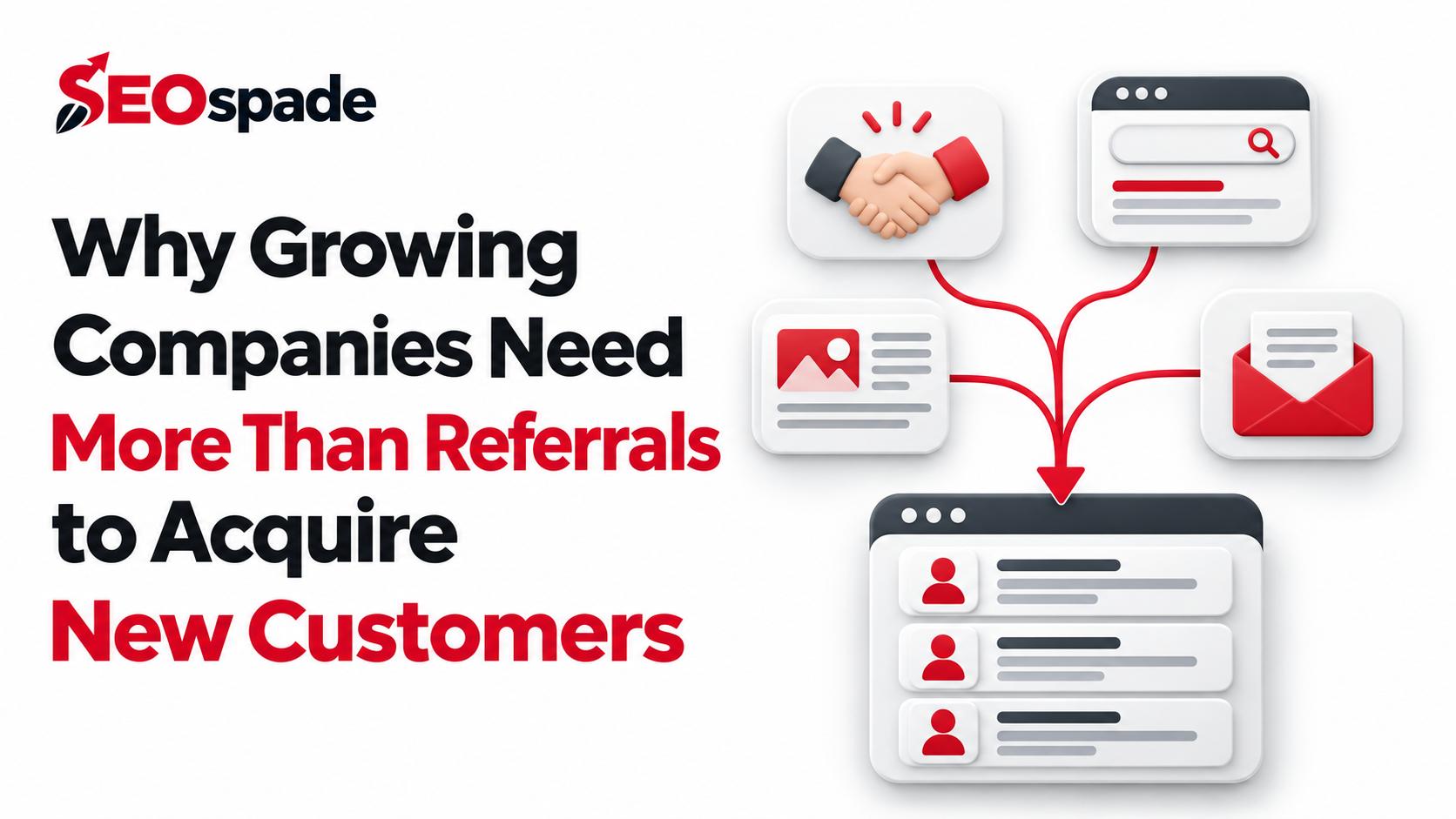
Their customers primarily come through personal recommendations, distributors, field sales representatives, business networks and existing relationships.
Some companies have a website but receive very few enquiries through it. Others maintain social media profiles without a clear customer acquisition strategy.
Meanwhile, competitors are investing in Google visibility, search engine optimisation, digital marketing and online lead generation.
They are creating additional opportunities to reach customers who may never have heard of these established businesses.
For business owners, this creates an important question:
If your company has already demonstrated its ability to serve customers successfully, why not make those capabilities discoverable to a much larger audience?
Generating leads online does not require an established business to abandon its traditional sales methods.
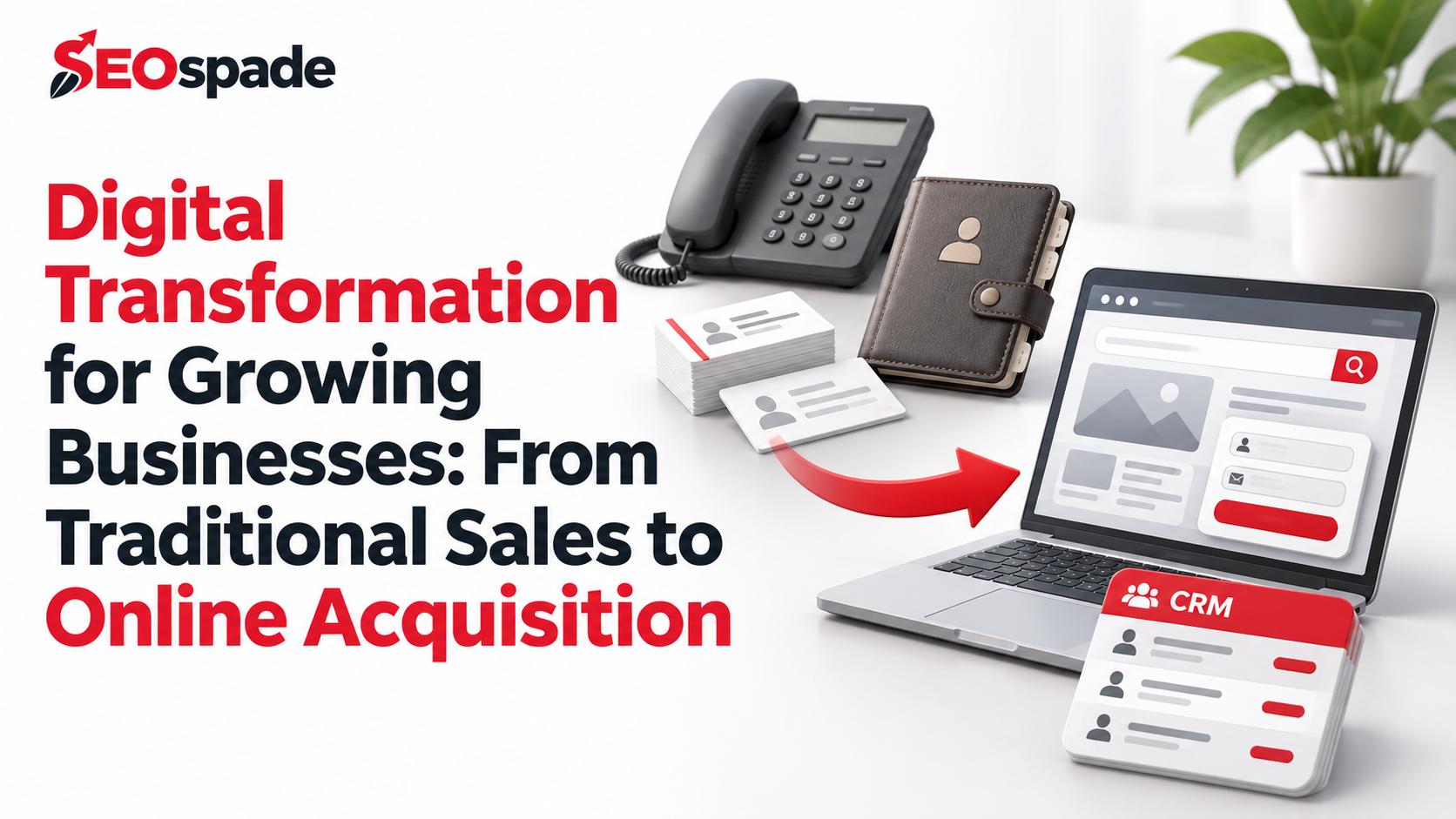
It requires developing a digital customer acquisition system that complements existing operations and helps the company reach potential customers beyond its current network.
This guide explains how established businesses can start generating qualified leads online, what infrastructure they need, where they should invest and how management can measure the commercial impact.
1. Why Established Businesses Often Struggle to Generate Leads Online
Many established companies were founded when customer acquisition depended primarily on direct relationships and traditional sales activities.
Their business development strategies evolved around:
-
Customer referrals.
-
Distributor networks.
-
Field sales representatives.
-
Industry exhibitions.
-
Professional relationships.
-
Direct telephone enquiries.
-
Existing customer accounts.
-
Regional business networks.
These methods may have worked successfully for many years.
However, customer discovery behaviour has evolved.
Potential buyers increasingly use websites, search engines, professional networks and digital resources to research products, compare suppliers and evaluate business capabilities.
Companies that have not adapted their customer acquisition processes may remain dependent on traditional methods even when additional market opportunities exist online.
The problem is not necessarily a lack of business expertise.
It is often the absence of a structured digital lead generation system.
2. Established Businesses Already Have an Advantage in Digital Marketing
Unlike newly launched businesses, established companies often possess valuable assets that can support digital customer acquisition.
| Existing business asset | Digital marketing opportunity |
|---|---|
| Years of industry experience | Expert educational content |
| Established product portfolio | Detailed SEO-friendly product pages |
| Existing customer relationships | Genuine testimonials and case studies |
| Manufacturing facilities | Original facility photographs and capability information |
| Experienced sales team | Qualified lead management |
| Technical expertise | Product guides and technical resources |
| Existing certifications | Credibility and trust information |
| Established distribution network | Accurate geographic market information |
| Completed projects | Project portfolios and case studies |
| Existing customer questions | Customer-focused content development |
An established business does not need to invent a new identity to succeed online.
It needs to communicate its existing strengths in a way that potential customers can discover, understand and evaluate.
3. What Does Online Lead Generation Mean for an Established Business?
Online lead generation is the process of attracting relevant potential customers through digital channels and encouraging them to communicate their business requirements.
A genuine lead may include:
-
A product quotation request.
-
A service consultation enquiry.
-
A corporate procurement requirement.
-
A manufacturing partnership enquiry.
-
A distributor application.
-
A project discussion request.
-
A relevant telephone enquiry.
-
A business email enquiry.
-
A product demonstration request.
Not every website visitor or social media interaction represents a business lead.
An effective lead generation system should focus on genuine commercial interest.
For established businesses, the objective is to generate enquiries that can be evaluated and developed by their existing sales teams.
4. Traditional Lead Generation vs Online Lead Generation
Traditional and digital customer acquisition can work together.
| Factor | Traditional lead generation | Online lead generation |
|---|---|---|
| Customer discovery | Referrals, networking and direct sales | Search engines, websites and digital channels |
| Geographic reach | Influenced by physical networks | Can extend across serviceable markets |
| Initial interaction | Personal introduction or sales contact | Website research or digital enquiry |
| Information availability | Often shared during sales discussions | Available through digital resources |
| Lead tracking | May depend on manual records | Can use analytics and CRM systems |
| Customer research | Brochures, meetings and recommendations | Websites, guides and online comparisons |
| Growth opportunities | Influenced by network and sales capacity | Influenced by demand, visibility and conversion |
| Measurement | Sales and relationship records | Channel, enquiry and customer acquisition data |
Online lead generation should strengthen traditional business development rather than automatically replace it.
A potential customer may discover a company online before meeting its sales representative.
Similarly, an existing sales representative may use digital resources to support ongoing commercial discussions.
5. Identify Your Ideal Customer Before Investing in Digital Marketing
One of the biggest mistakes established businesses make is beginning digital marketing without defining the customers they want to acquire.
Management should identify the customer segments that are commercially valuable and operationally suitable.
Questions business owners should answer
-
Which industries generate the most profitable customers?
-
What is the average order or contract value?
-
Which products have the strongest commercial demand?
-
Which geographic markets can the business serve?
-
Who makes purchasing decisions?
-
What information do customers require before contacting the company?
-
What problems does the business solve?
-
Which enquiries are generally unsuitable?
-
How long does the typical sales cycle last?
-
What is the company's capacity to serve additional customers?
Example: Industrial equipment manufacturer
An established manufacturer may identify its ideal customers as procurement managers and operations heads working in pharmaceutical, chemical and food processing companies.
Its digital marketing strategy should therefore focus on relevant equipment requirements and industrial applications rather than attracting general consumer traffic.
A clearly defined customer profile helps prevent unnecessary marketing expenditure.
6. Identify Which Products and Services Should Generate Online Leads
Established businesses may offer dozens or hundreds of products and services.
However, not every offering needs to receive equal marketing investment.
Product and service prioritisation framework
| Evaluation factor | Business consideration |
|---|---|
| Profitability | Which offerings generate stronger contribution? |
| Market demand | Which offerings have genuine customer demand? |
| Average order value | Which enquiries have meaningful commercial potential? |
| Delivery capacity | Can the business fulfil additional requirements? |
| Competitive advantage | Where does the company have genuine strengths? |
| Repeat business | Which offerings support long-term customer relationships? |
| Geographic suitability | Which markets can the company serve effectively? |
| Sales cycle | How long does customer acquisition typically take? |
Start with a commercially important group of products or services.
Expand digital coverage as the company develops stronger acquisition capabilities.
This approach allows founders to allocate marketing resources according to business priorities.
7. Audit Your Existing Website Before Starting Lead Generation
Many established businesses already have a website.
However, their websites may have been created primarily to introduce the company rather than generate customer enquiries.
A website audit should evaluate whether the existing platform can support digital customer acquisition.
Important website audit areas
| Audit area | Questions to investigate |
|---|---|
| Website architecture | Can customers easily discover relevant products and services? |
| Technical SEO | Can search engines access and understand important pages? |
| Commercial content | Does the website explain actual business offerings? |
| Mobile usability | Can customers navigate and enquire using mobile devices? |
| Website performance | Do important pages load reliably? |
| Credibility | Are genuine business capabilities clearly communicated? |
| Enquiry functionality | Can customers easily submit requirements? |
| Analytics | Are relevant website interactions being measured? |
| CRM integration | Are enquiries reaching the appropriate sales team? |
| Search visibility | Does the website appear for relevant non-branded searches? |
The audit should identify implementation priorities rather than simply produce a list of technical errors.
8. Do You Need a New Website to Generate Leads Online?
Not necessarily.
Many established businesses can begin generating online enquiries by improving their existing websites.
Optimise your existing website when:
-
The technology is maintainable.
-
Important pages can be updated.
-
New product and service pages can be introduced.
-
Technical SEO issues can be resolved.
-
Enquiry functionality can be improved.
-
Existing organic visibility is worth preserving.
Consider website redevelopment when:
-
The platform is outdated or insecure.
-
Website architecture cannot support the product portfolio.
-
Important content cannot be managed efficiently.
-
Technical limitations prevent meaningful SEO implementation.
-
Essential enquiry functionality cannot be introduced.
-
The website provides a significantly inadequate customer experience.
A redevelopment decision should follow a technical and commercial assessment.
If migration is necessary, preserve valuable existing URLs, implement appropriate redirects and monitor search performance.
A new design alone does not guarantee lead generation.
9. Transform Your Website Into a Commercial Information Platform
A potential customer discovering your business online may have no previous knowledge of your company.
Your website should help that customer understand:
What your business offers.
Which industries you serve.
What technical capabilities you possess.
How your products or services address their requirements.
Whether your company can fulfil their order.
How they can initiate a commercial discussion.
Recommended website structure for established businesses
| Website section | Purpose |
|---|---|
| Homepage | Communicate the company's main offerings and positioning |
| About us | Explain genuine business history and expertise |
| Product categories | Organise commercially relevant products |
| Individual product pages | Provide detailed product information |
| Service pages | Explain distinct professional or commercial services |
| Industry pages | Address meaningful industry-specific requirements |
| Manufacturing capabilities | Communicate actual operational capabilities |
| Certifications | Provide verified quality and compliance information |
| Case studies | Demonstrate relevant completed work |
| Knowledge centre | Answer genuine customer questions |
| Contact and enquiry pages | Support customer communication |
The website structure should reflect the actual business model.
Avoid creating unnecessary pages simply to target additional keyword variations.
10. Use Google Search to Reach Customers Who Do Not Know Your Business
Many potential customers begin their supplier research through Google.
They may search for products, services, manufacturers, consultants or solutions without knowing which company they will eventually select.
Examples of commercially relevant searches
| Industry | Potential customer search |
|---|---|
| Manufacturing | Industrial equipment manufacturers in India |
| Renewable energy | Commercial solar installation company |
| Corporate consultancy | Business compliance consultants |
| Packaging | Corrugated box manufacturers |
| Medical devices | Disposable medical device manufacturers |
| Software development | Custom CRM development company |
| Corporate gifting | Bulk corporate gifting suppliers |
| Logistics | Industrial warehousing service providers |
| Construction | Commercial construction contractors |
| Industrial services | Factory maintenance service providers |
An established business appearing for relevant searches can become part of a potential customer's supplier evaluation process.
Google visibility does not guarantee an enquiry, but it creates an opportunity for customer discovery.
11. Develop a Commercial Keyword Research Strategy
Keyword research helps businesses understand how potential customers search for their offerings.
The strategy should consider purchasing intent rather than search volume alone.
Types of keywords to consider
Product keywords
Searches associated with specific products or equipment.
Example: Industrial centrifugal pumps.
Service keywords
Searches associated with commercial or professional services.
Example: Corporate compliance consultancy.
Supplier keywords
Searches indicating interest in finding a provider.
Example: Industrial valve manufacturers.
Industry-specific keywords
Searches connected to particular business applications.
Example: Water filtration systems for pharmaceutical factories.
Geographic keywords
Searches associated with genuine serviceable markets.
Example: Industrial packaging manufacturers in Gujarat.
Research keywords
Searches addressing customer questions before purchasing.
Example: How to select industrial filtration equipment.
A structured keyword strategy should map relevant searches to the most appropriate existing or planned website pages.
Avoid creating separate pages for substantially identical search requirements.
12. Implement Technical SEO to Establish Reliable Foundations
Technical SEO helps ensure that important website information can be accessed, understood and appropriately indexed by search engines.
Technical SEO implementation priorities
| Activity | Intended benefit |
|---|---|
| Crawlability assessment | Identify barriers to search engine access |
| Indexing review | Identify important pages excluded from search |
| XML sitemap optimisation | Support discovery of relevant URLs |
| Robots.txt review | Identify inappropriate crawling restrictions |
| Canonical tag review | Communicate preferred page URLs |
| Redirect management | Maintain appropriate URL accessibility |
| Internal linking improvements | Connect relevant commercial pages |
| Website architecture improvements | Organise content logically |
| Mobile usability review | Improve customer experience |
| Page performance improvements | Support reliable website interactions |
| Structured data implementation | Communicate eligible structured information |
| Duplicate URL management | Reduce unnecessary URL duplication |
Technical SEO should be treated as an ongoing website management responsibility.
It provides foundations for organic lead generation but does not independently guarantee stronger rankings.
13. Create Product Pages That Support Corporate Purchasing Decisions
Manufacturers and product-based businesses often possess extensive technical information that is not available on their websites.
Potential customers may need this information before initiating contact.
A useful product page may include:
-
Detailed product descriptions.
-
Technical specifications.
-
Available sizes and variants.
-
Materials and manufacturing information.
-
Relevant industry applications.
-
Product photographs.
-
Applicable quality standards.
-
Customisation capabilities.
-
Product documentation.
-
Packaging and delivery information.
-
Frequently asked purchasing questions.
-
Request-a-quotation functionality.
Example
A manufacturer selling industrial pumps should provide meaningful information about available pump types, operating conditions, material options and intended applications.
Customers should be able to determine whether the product may be suitable for their requirements before contacting the sales team.
Accurate commercial information can also help reduce irrelevant enquiries.
14. Create Service Pages That Address Specific Business Requirements
Service-based businesses frequently use broad descriptions that do not explain their actual capabilities.
For example, a company may list all its professional services on a single page.
However, customers may search for distinct requirements.
A corporate consultancy might provide:
Company registration support.
Corporate compliance services.
Business licensing assistance.
Regulatory advisory services.
Corporate restructuring support.
Each genuinely distinct service may require its own useful page.
Important service page information
The customer problem addressed.
Scope of the service.
Suitable customer profiles.
Required information or documents.
Implementation process.
Relevant expertise.
Expected commercial discussion process.
Frequently asked questions.
Appropriate consultation opportunities.
Professional service firms should also comply with applicable advertising and professional conduct requirements.
15. Convert Your Existing Industry Knowledge Into Helpful Content
Established businesses possess knowledge developed through years of customer interactions.
Their sales teams, technical professionals and operational employees regularly answer important questions.
These questions can form the foundation of a customer-focused content strategy.
Examples of problem-solving content
| Industry | Potential content topic |
|---|---|
| Manufacturing | What Procurement Teams Should Check Before Selecting a Manufacturer |
| Renewable energy | How Factories Can Evaluate Their Commercial Solar Requirements |
| Corporate gifting | How Companies Can Plan Bulk Employee Gifting Orders |
| Software development | What Businesses Should Prepare Before Implementing a Custom CRM |
| Packaging | How Exporters Can Reduce Product Damage During Transportation |
| Logistics | What Manufacturers Should Consider Before Outsourcing Warehousing |
| Medical devices | Important Procurement Considerations for Institutional Buyers |
| Industrial services | How Companies Can Prepare for Industrial Equipment Maintenance |
Content should be based on genuine expertise and provide information customers can use.
Avoid publishing generic, repetitive or unverified articles solely to attract search traffic.
16. Use Existing Projects and Customers to Build Digital Credibility
An established company may have completed hundreds of projects without documenting them online.
Potential customers discovering the business through Google may not be aware of this experience.
Useful credibility assets include:
Verified customer testimonials.
Completed project case studies.
Original facility photographs.
Product demonstrations.
Technical team information.
Genuine certifications.
Company milestones.
Relevant industry experience.
Quality management processes.
Actual manufacturing capabilities.
Recommended case study structure
-
Customer or industry background.
-
Business requirement.
-
Challenges identified.
-
Solution implemented.
-
Project execution.
-
Verified outcomes.
-
Relevant business capabilities.
Obtain appropriate permission before publishing customer names, confidential information, testimonials or project details.
Avoid fabricated achievements and unsupported performance claims.
17. Start Generating Leads Through Google Ads Where Appropriate
SEO may require time before it generates meaningful commercial opportunities.
Businesses requiring earlier market testing may consider appropriately managed Google Ads campaigns.
Google Ads can support:
Testing demand for specific products.
Generating relevant service enquiries.
Evaluating new geographic markets.
Identifying commercially important search terms.
Testing landing page performance.
Supporting seasonal customer acquisition.
Important campaign requirements
Relevant keyword targeting.
Appropriate negative keywords.
Accurate geographic targeting.
Useful commercial landing pages.
Genuine enquiry tracking.
Lead quality measurement.
Budget management.
Customer acquisition analysis.
Paid campaigns should be evaluated using actual business opportunities rather than clicks alone.
A company should not assume that every advertising-generated enquiry is commercially valuable.
18. Use LinkedIn to Reach Corporate Decision-Makers
LinkedIn can be useful for established B2B companies whose customers include corporate decision-makers.
Potential audiences may include:
-
CEOs and founders.
-
Managing directors.
-
Procurement managers.
-
Operations heads.
-
Finance directors.
-
Marketing directors.
-
Project managers.
-
Business development professionals.
-
Industry consultants.
LinkedIn lead generation activities
Maintain an accurate company profile.
Communicate genuine business capabilities.
Publish useful industry insights.
Share relevant project information.
Develop professional relationships.
Identify suitable corporate accounts.
Conduct personalised and appropriate outreach.
Support sales conversations with useful resources.
Avoid indiscriminate mass messaging and misleading promotional claims.
LinkedIn should complement website-based acquisition rather than become an isolated marketing activity.
19. Use Google Business Profile for Eligible Local Operations
Businesses with eligible customer-facing locations or service-area operations may benefit from accurate Google Business Profiles.
Important profile information
Business name.
Actual location or eligible service area.
Contact details.
Website address.
Business category.
Operating hours.
Original photographs.
Relevant customer reviews.
For companies with multiple genuine locations, each eligible profile should accurately represent its corresponding operation.
Do not create fictitious offices, misleading listings or fabricated reviews.
Local visibility can be particularly useful for businesses serving customers within specific geographic markets.
20. Develop an Appropriate Digital Channel Mix
Established businesses do not need to invest in every digital marketing channel immediately.
Select channels based on customer behaviour and business requirements.
| Channel | Primary purpose | Suitable business requirement |
|---|---|---|
| SEO | Organic customer discovery | Long-term search visibility |
| Google Ads | Paid search acquisition | Demand testing and relevant commercial enquiries |
| Professional relationship development | B2B decision-maker engagement | |
| Email marketing | Permission-based customer communication | Retention and relationship development |
| Meta Ads | Audience discovery and advertising | Relevant consumer or selected B2B opportunities |
| Google Business Profile | Local customer discovery | Eligible local operations |
| Digital PR | Legitimate brand recognition | Industry visibility and professional awareness |
| Website content | Customer education | Supplier and service evaluation |
| YouTube | Product demonstrations and explanations | Technical or visual customer requirements |
The most suitable channel mix depends on the company's customer profile, budget, sales cycle and operational capabilities.
21. Make It Easy for Potential Customers to Submit Enquiries
A website may attract relevant customers but fail to provide convenient communication options.
Useful enquiry methods include:
Request a quotation.
Schedule a consultation.
Request product information.
Contact the sales team.
Submit a project requirement.
Request a product demonstration.
Call the business.
Send a relevant business email.
Use WhatsApp where appropriate.
Enquiry forms should collect enough information to support qualification without creating unnecessary friction.
Example B2B enquiry form
Full name.
Company name.
Business email.
Contact number.
Product or service requirement.
Required quantity or project details.
Location.
Additional information.
Collect only information genuinely required for the business purpose and handle customer data appropriately.
22. Connect Online Enquiries With Your Existing Sales Team
Online lead generation becomes commercially useful when genuine enquiries are handled effectively.
Many established businesses already have experienced sales representatives.
However, those teams may not have structured processes for managing digitally generated enquiries.
Recommended lead management workflow
-
Potential customer discovers the business online.
-
Customer submits an enquiry.
-
Enquiry enters the CRM or lead management system.
-
Acquisition source is recorded.
-
A responsible sales employee is assigned.
-
Customer requirements are verified.
-
The enquiry is qualified.
-
A quotation or proposal is prepared.
-
Follow-up activities are scheduled.
-
The final sales outcome is recorded.
The process should clearly define responsibility at every stage.
Without structured follow-up, businesses may lose genuine opportunities despite successful marketing activities.
23. Train Your Sales Team to Handle Online Leads
Traditional sales representatives may be accustomed to customers introduced through established relationships.
Online customers may have different expectations.
They may be contacting several suppliers simultaneously.
They may require detailed information before agreeing to a meeting.
They may have discovered the company through a specific product or service page.
Sales team training priorities
Understand how the enquiry was generated.
Respond within an appropriate timeframe.
Identify the customer's actual requirements.
Explain relevant business capabilities.
Provide accurate technical information.
Distinguish genuine enquiries from unsuitable requests.
Record customer questions.
Maintain structured follow-up.
Communicate lead quality feedback to the marketing team.
Digital lead generation should not operate independently of the company's sales department.
24. Establish Clear Lead Qualification Criteria
Not every enquiry should receive the same sales priority.
Businesses should define what constitutes a commercially suitable lead.
| Qualification factor | Information to evaluate |
|---|---|
| Product or service relevance | Does the requirement match the company's offerings? |
| Customer type | Is the customer within the target segment? |
| Geographic suitability | Can the business serve the location? |
| Order or project value | Is the opportunity commercially appropriate? |
| Purchasing timeline | When does the customer require the solution? |
| Decision-making process | Who is involved in supplier selection? |
| Technical requirements | Can the company fulfil the specifications? |
| Budget suitability | Is the opportunity financially realistic? |
Lead qualification helps management understand whether digital marketing is attracting the right customers.
A smaller number of qualified opportunities may be more valuable than hundreds of irrelevant enquiries.
25. How Many Online Leads Can an Established Business Generate?
There is no universal number of leads a business should expect.
Potential enquiry volumes depend on:
Market demand.
Industry competition.
Website quality.
Search visibility.
Marketing expenditure.
Product relevance.
Geographic coverage.
Website conversion.
Lead qualification.
Sales performance.
Hypothetical monthly lead generation scenario
Consider an established B2B company that begins developing online customer acquisition.
| Metric | Initial scenario | Developed scenario |
|---|---|---|
| Relevant monthly website visitors | 1,000 | 5,000 |
| Genuine enquiry conversion rate | 1.5% | 2% |
| Genuine enquiries | 15 | 100 |
| Qualification rate | 40% | 40% |
| Qualified leads | 6 | 40 |
| Qualified lead closing rate | 20% | 20% |
| Expected new customers | 1.2 | 8 |
| Average initial customer revenue | ₹1,00,000 | ₹1,00,000 |
| Expected initial customer revenue | ₹1,20,000 | ₹8,00,000 |
These figures are illustrative and do not represent a forecast.
Fractional customer figures represent statistical expectations over time.
Actual performance depends on the company's market, implementation quality and sales capabilities.
26. Calculate the Financial Value of Online Lead Generation
Established businesses should evaluate digital marketing using commercial outcomes.
Hypothetical monthly example
| Metric | Amount |
|---|---|
| Monthly digital marketing expenditure | ₹75,000 |
| Genuine online enquiries | 100 |
| Qualified leads | 40 |
| New customers | 8 |
| Average initial customer revenue | ₹1,00,000 |
| Total initial customer revenue | ₹8,00,000 |
Cost per genuine enquiry
₹75,000 ÷ 100 = ₹750.
Cost per qualified lead
₹75,000 ÷ 40 = ₹1,875.
Measured marketing expenditure per acquired customer
₹75,000 ÷ 8 = ₹9,375.
Contribution after marketing expenditure
Assume a 35% contribution margin before marketing expenditure.
Customer contribution:
₹8,00,000 × 35% = ₹2,80,000.
Remaining contribution after measured marketing expenditure:
₹2,80,000 − ₹75,000 = ₹2,05,000.
This amount is not net profit.
Additional sales costs, overheads, taxes and other expenses may apply.
The calculation demonstrates how businesses can evaluate digital marketing using customer acquisition economics rather than website traffic alone.
27. Determine How Many Customers You Need to Recover Your Marketing Investment
Established businesses often have historical customer revenue and profitability information.
This data can help management establish realistic marketing investment requirements.
Illustrative break-even calculation
| Metric | Amount |
|---|---|
| Monthly digital marketing investment | ₹60,000 |
| Average initial customer revenue | ₹1,00,000 |
| Contribution margin before marketing | 30% |
| Contribution per customer | ₹30,000 |
| Additional customers required to cover measured marketing expenditure | 2 |
Under these assumptions, two additional customers would cover the measured monthly marketing investment.
Businesses with high-value products or services may not require hundreds of enquiries to justify their expenditure.
However, actual calculations should consider sales cycles, customer servicing costs, payment collection and other acquisition-related expenses.
28. Implement Google Search Console, GA4 and CRM Tracking
A structured digital lead generation system requires reliable measurement.
Google Search Console
Use Google Search Console to monitor:
Organic search impressions.
Search clicks.
Relevant customer queries.
Commercial page visibility.
Indexing information.
Organic search performance trends.
Google Analytics 4
Use GA4 to understand:
Website acquisition sources.
Relevant landing pages.
Website engagement.
Enquiry form interactions.
Telephone and email link interactions.
Appropriately configured conversion events.
CRM system
Use CRM records to track:
Genuine enquiries.
Lead qualification.
Sales responsibilities.
Commercial discussions.
Quotations and proposals.
Acquired customers.
Customer revenue.
Website interactions should not automatically be treated as genuine or qualified leads.
The CRM should provide a clearer view of actual commercial outcomes.
29. Establish a Monthly Digital Lead Generation Dashboard
Business owners should receive reporting that connects marketing implementation with business performance.
Recommended management dashboard
| Metric | Business purpose |
|---|---|
| Organic search impressions | Understand customer discovery opportunities |
| Non-branded search clicks | Measure discovery beyond existing brand awareness |
| Commercial page performance | Evaluate visibility of important offerings |
| Paid marketing expenditure | Understand direct campaign investment |
| Genuine online enquiries | Measure actual customer interest |
| Qualified leads | Evaluate commercial relevance |
| Quotations submitted | Understand sales pipeline development |
| Customers acquired | Measure acquisition outcomes |
| Acquisition expenditure per customer | Evaluate efficiency |
| Customer revenue | Assess commercial contribution |
| Customer contribution | Support financial decision-making |
| Lead response time | Evaluate sales process effectiveness |
Management should also receive an explanation of activities completed, issues identified and implementation priorities for the following month.
30. A Practical 30-Day Online Lead Generation Launch Plan
The first month should focus on establishing the infrastructure required for reliable digital customer acquisition.
Week 1: Business and customer assessment
Understand the company's products and services.
Identify commercially important customer segments.
Review existing acquisition channels.
Evaluate sales processes.
Establish business growth objectives.
Week 2: Website and market assessment
Conduct a technical SEO audit.
Review commercial website pages.
Identify relevant search competitors.
Conduct keyword research.
Assess existing enquiry functionality.
Week 3: Lead generation infrastructure
Configure appropriate analytics.
Establish enquiry tracking.
Prepare CRM requirements.
Identify sales responsibilities.
Define lead qualification criteria.
Week 4: Implementation planning
Prioritise technical improvements.
Prepare commercial page requirements.
Develop a content strategy.
Identify suitable paid campaign opportunities.
Establish monthly reporting requirements.
The first month should create a clear implementation foundation rather than promise immediate sales growth.
31. A 90-Day Online Lead Generation Implementation Plan
| Duration | Primary activities | Intended deliverable |
|---|---|---|
| Days 1–15 | Business assessment, website audit and customer research | Digital acquisition baseline |
| Days 16–30 | Keyword mapping, technical planning and tracking setup | Prioritised implementation roadmap |
| Days 31–45 | Technical SEO and commercial website improvements | Stronger website foundations |
| Days 46–60 | Product and service page optimisation | Improved commercial information |
| Days 61–75 | Content development and suitable campaign implementation | Additional customer discovery opportunities |
| Days 76–90 | Lead quality review, CRM improvements and performance analysis | Refined acquisition strategy |
The initial 90 days should focus on establishing measurable processes and assessing early performance.
Organic search results may require a longer implementation period.
32. A Six-Month Lead Generation Roadmap for Established Businesses
| Month | Main activities | Intended outcome |
|---|---|---|
| Month 1 | Business assessment, technical audit, keyword research and competitor analysis | Clear acquisition strategy |
| Month 2 | Technical SEO, website architecture and enquiry tracking | Reliable digital foundations |
| Month 3 | Product, category and service page optimisation | Improved commercial search relevance |
| Month 4 | Customer-focused content, case studies and suitable digital campaigns | Broader discovery opportunities |
| Month 5 | Conversion optimisation, internal linking, CRM and lead qualification improvements | Stronger acquisition efficiency |
| Month 6 | Customer acquisition analysis, channel evaluation and expansion planning | Evidence-based growth roadmap |
The roadmap should be adapted to the company's existing website, industry competition and available implementation resources.
Six months is a planning framework, not a guarantee of lead volumes or revenue.
33. How Much Should Established Businesses Invest in Online Lead Generation?
The appropriate investment depends on the company's requirements.
A business with a technically sound website may require less initial development than a company with outdated digital infrastructure.
Illustrative monthly investment plans
| Activity | Foundational plan | Growth plan | Advanced B2B plan |
|---|---|---|---|
| SEO and technical optimisation | ₹15,000 | ₹25,000 | ₹40,000 |
| Commercial content development | ₹10,000 | ₹20,000 | ₹30,000 |
| Website and conversion improvements | ₹5,000 | ₹10,000 | ₹20,000 |
| Analytics and reporting | ₹5,000 | ₹5,000 | ₹10,000 |
| Optional advertising expenditure | — | ₹25,000 | ₹50,000 |
| Total monthly investment | ₹35,000 | ₹85,000 | ₹1,50,000 |
These figures are illustrative planning scenarios, not verified market averages or formal SEOspade quotations.
Major website redevelopment, specialist content requirements, CRM implementation and complex integrations may require additional expenditure.
Businesses should select an investment level based on customer value, market demand, operational capacity and realistic acquisition economics.
34. Online Lead Generation Strategies for Different Established Businesses
Manufacturing companies
Focus on product categories, technical specifications, manufacturing capabilities, industry applications and quotation requests.
B2B service companies
Develop commercially relevant service pages, industry-specific information, case studies and professional outreach.
Renewable energy companies
Communicate commercial installation capabilities, industrial applications, project requirements and genuine completed work.
Corporate gifting companies
Target relevant bulk purchasing requirements, corporate events, employee gifting programmes and product customisation.
Medical device companies
Provide accurate product information, relevant specifications, institutional procurement resources and applicable regulatory information.
Software development companies
Develop solution-specific pages, technical resources, implementation information and relevant project case studies.
Professional consultancy firms
Publish useful and permitted service information, professional expertise and educational resources while complying with applicable conduct and advertising restrictions.
Local service businesses
Develop accurate geographic information, eligible business listings, useful service pages and convenient enquiry options.
Every business should develop its lead generation strategy around actual customer requirements.
35. Common Mistakes Established Businesses Make When Starting Online Lead Generation
Mistake 1: Expecting immediate customers from SEO
Organic search visibility requires appropriate implementation and time.
Mistake 2: Investing in advertising before improving the website
Paid visitors may leave if important commercial information is missing.
Mistake 3: Targeting every product simultaneously
Prioritise commercially important offerings and expand gradually.
Mistake 4: Measuring success only through website traffic
Relevant enquiries and qualified opportunities are more commercially meaningful.
Mistake 5: Publishing generic content
Use genuine industry knowledge to address actual customer questions.
Mistake 6: Ignoring technical SEO
Important commercial pages need reliable technical foundations.
Mistake 7: Failing to assign responsibility for online enquiries
Every genuine lead should reach an appropriate sales employee.
Mistake 8: Ignoring sales team feedback
Customer questions and lead quality information can improve marketing priorities.
Mistake 9: Creating duplicate product or location pages
Develop separate pages only when they provide meaningful distinct information.
Mistake 10: Purchasing manipulative backlinks
Focus on legitimate industry recognition and useful digital resources.
Mistake 11: Abandoning traditional customer acquisition
Digital marketing should complement effective existing channels.
Mistake 12: Changing strategies without sufficient evidence
Use reliable performance data to refine implementation.
Mistake 13: Selecting an agency based only on low pricing
Evaluate implementation capabilities, business understanding and reporting quality.
Mistake 14: Expecting every online enquiry to become a customer
Lead qualification and sales conversion remain essential.
Mistake 15: Treating digital marketing as a one-time project
Customer acquisition infrastructure requires ongoing maintenance and improvement.
36. Online Lead Generation Readiness Scorecard
Business owners can evaluate their current digital readiness by assigning each area a score from 1 to 5.
A score of 1 represents a major limitation, while 5 represents an established capability.
| Evaluation area | Maximum score |
|---|---|
| Clearly defined target customers | 5 |
| Commercial product and service priorities | 5 |
| Technical website health | 5 |
| Website architecture | 5 |
| Detailed commercial website pages | 5 |
| Non-branded Google visibility | 5 |
| Customer-focused content | 5 |
| Genuine credibility information | 5 |
| Website enquiry functionality | 5 |
| Analytics and conversion tracking | 5 |
| CRM and lead management | 5 |
| Lead qualification criteria | 5 |
| Sales team readiness | 5 |
| Customer acquisition cost measurement | 5 |
| Management reporting | 5 |
| Total maximum score | 75 |
Illustrative score interpretation
60–75: Strong foundations may exist. Focus on improving acquisition performance and expanding relevant channels.
45–59: Several capabilities are established, but important implementation gaps may remain.
30–44: Significant website, marketing and sales integration improvements are required.
Below 30: Begin with a comprehensive digital lead generation assessment and foundational implementation.
This scorecard is a practical management tool, not a validated industry benchmark.
37. Should You Hire an Internal Digital Marketing Team or an Agency?
Established businesses may consider building an internal team, hiring an external agency or combining both approaches.
| Factor | Internal team | Digital marketing agency |
|---|---|---|
| Business familiarity | Direct access to internal operations | Requires structured onboarding |
| Specialist capabilities | Depends on employees hired | May provide multiple specialist disciplines |
| Recruitment | Managed internally | Existing agency resources |
| Implementation capacity | Depends on team size | Depends on agreed scope |
| Management requirements | Internal supervision | Agency coordination and performance reviews |
| Cost structure | Salaries, tools and overheads | Contracted service expenditure |
| Business control | Direct operational control | Requires clear ownership and access arrangements |
A hybrid approach can also be effective.
The company retains control over business expertise, commercial decisions and customer relationships while an agency supports technical SEO, content development, website improvements and digital marketing execution.
38. What Should an Established Business Expect From a Lead Generation Agency?
An agency should understand the company's commercial requirements before recommending marketing activities.
Important agency responsibilities
Business and customer research.
Technical website assessment.
Competitor analysis.
Commercial keyword research.
Product and service page optimisation.
Original content development.
Website conversion improvements.
Suitable paid campaign management.
Analytics implementation.
Lead quality evaluation.
Sales team coordination.
Monthly performance reporting.
Ongoing implementation planning.
An agency should explain why each activity is relevant to the company's business objectives.
Avoid agencies that guarantee specific lead volumes or rankings without evaluating market demand, competition, website capabilities and sales processes.
39. How SEOspade Helps Established Businesses Start Generating Leads Online
At SEOspade, we help established companies develop structured digital customer acquisition capabilities.
Our approach focuses on understanding the company's existing business strengths and converting those strengths into discoverable, useful digital information.
Business and digital acquisition assessment
Evaluate existing customer acquisition channels, commercially important offerings and digital marketing opportunities.
Website design and development
Improve existing websites or develop suitable new platforms that support customer discovery and enquiry generation.
Technical SEO services
Resolve technical limitations affecting website accessibility, crawling, indexing and search performance.
B2B SEO services
Develop organic search strategies aligned with corporate purchasing requirements and relevant commercial searches.
Product and service page optimisation
Create detailed commercial information that helps potential customers evaluate business capabilities.
Competitor and keyword research
Identify relevant search competitors, commercially important keyword opportunities and content gaps.
Content writing services
Develop original, customer-focused content based on genuine industry expertise.
Paid marketing and Google Ads
Implement suitable campaigns to support demand testing and relevant commercial enquiries.
Social media and LinkedIn marketing
Develop appropriate professional visibility and customer engagement strategies.
Lead generation and conversion optimisation
Improve website enquiry processes and support qualified customer acquisition.
CRM and analytics integration
Connect digital marketing performance with genuine enquiries, sales qualification and customer acquisition outcomes.
Ongoing digital growth management
Monitor performance, evaluate commercial opportunities and refine implementation priorities.
Our objective is not simply to generate website traffic.
It is to help established businesses develop an additional, measurable customer acquisition system that complements their existing sales operations.
Conclusion: Your Business Is Already Established — Now Make It Discoverable Online
Established businesses have something many new companies are still trying to develop: genuine industry experience, operational capabilities, customer relationships and proven commercial expertise.
However, those strengths cannot influence customers who have never discovered the business.
Online lead generation provides an opportunity to make existing business capabilities accessible to a broader audience.
By improving website infrastructure, developing relevant Google visibility, communicating useful commercial information and connecting enquiries with experienced sales teams, established companies can develop additional customer acquisition opportunities.
The transition does not require abandoning traditional sales methods.
It requires building digital capabilities that work alongside them.
Start with your most commercially important products and services.
Understand your customers.
Improve your website.
Develop relevant search visibility.
Establish reliable enquiry tracking.
Train your sales team.
Measure qualified opportunities and customer acquisition outcomes.
Expand your investment based on evidence.
Your business has already spent years building its capabilities. Digital marketing can help more potential customers discover those capabilities.
If your established business wants to start generating qualified enquiries online, connect with SEOspade.
Our SEO, website development, content marketing, paid marketing and lead generation services can help your company develop a structured digital customer acquisition strategy aligned with its long-term business growth objectives.