Paid advertising can be an effective way to introduce a business to potential customers, test market demand and generate commercial enquiries.
For many founders, it is also one of the first digital marketing channels they invest in.
They launch Google Ads campaigns, advertise on social media platforms, generate website traffic and begin receiving customer enquiries.
Initially, the approach may appear successful.
However, as the business grows, a different challenge can emerge.
Advertising expenditure increases. Competition becomes stronger. Customer acquisition costs fluctuate. Maintaining enquiry volumes requires continuous campaign investment.
When advertising campaigns are paused, customer enquiries may decline significantly.
The business has developed a customer acquisition channel, but it has not necessarily developed a sustainable customer acquisition system.
This raises an important question for founders:
Is your business building long-term customer acquisition capabilities, or is it continuously paying for access to potential customers?
The solution is not necessarily to stop paid advertising. Paid campaigns can remain an important part of a profitable marketing strategy.
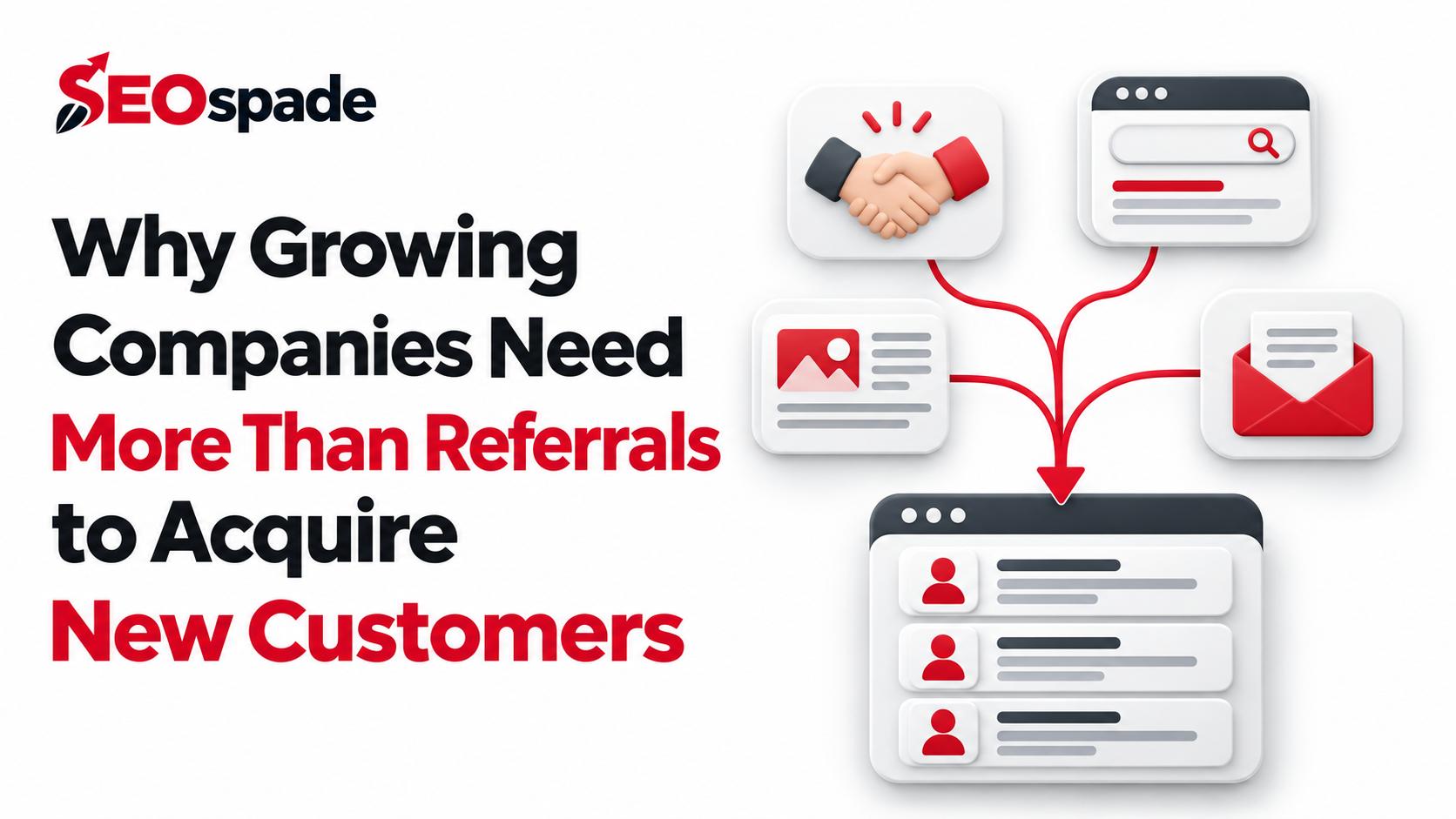
Instead, founders should develop complementary acquisition channels through SEO, useful content, organic brand visibility, customer relationships and stronger website conversion capabilities.
This article explains how founders can gradually reduce excessive dependence on paid advertising without unnecessarily disrupting their existing sales pipeline.
1. Why Founders Initially Depend on Paid Advertising
Paid advertising is attractive to new and growing businesses because it can provide access to potential customers without waiting for organic search visibility to develop.
A founder launching a new product or service may need to understand whether customers are interested in the offering.
Paid campaigns can support this process.
Common reasons founders invest in paid advertising
-
To introduce a new business to potential customers.
-
To test demand for products and services.
-
To generate initial customer enquiries.
-
To identify commercially relevant audiences.
-
To test different marketing messages.
-
To support new product launches.
-
To enter new geographic markets.
-
To generate opportunities while organic marketing develops.
These are legitimate business objectives.
The challenge arises when advertising becomes the company's only dependable source of new customer acquisition.
2. What Does Dependence on Paid Advertising Actually Mean?
A business is heavily dependent on paid advertising when a substantial portion of its customer acquisition depends on continuous advertising expenditure and alternative channels are underdeveloped.
For example, a company may generate 100 qualified leads every month.
Of those leads, 85 originate from paid advertising, 10 from referrals and five from organic search.
If advertising performance declines or the company reduces its media budget, a large portion of its sales pipeline may be affected.
Illustrative customer acquisition distribution
| Acquisition channel | Qualified monthly leads | Share |
|---|---|---|
| Google Ads | 55 | 55% |
| Meta Ads | 30 | 30% |
| Organic search | 5 | 5% |
| Customer referrals | 10 | 10% |
| Total | 100 | 100% |
In this hypothetical example, 85% of qualified leads originate from paid advertising.
This does not automatically mean the advertising strategy is unsuccessful.
However, it indicates significant acquisition channel concentration that management should understand and monitor.
3. Why Excessive Advertising Dependence Can Become a Business Risk
Paid advertising operates within competitive markets.
Campaign performance may change because of factors outside the company's direct control.
Potential risks include:
Increasing advertising competition.
Changes in advertising costs.
Seasonal demand fluctuations.
Changes in platform policies.
Declining campaign conversion rates.
Audience saturation.
Tracking limitations.
Advertising account disruptions.
Changes in customer behaviour.
Increased pressure on marketing budgets.
A business relying almost entirely on paid campaigns may have limited alternative sources of customer enquiries when these challenges occur.
Developing organic acquisition channels can help reduce this concentration risk.
4. Paid Advertising Is Not the Problem — Overdependence Is
Founders should avoid treating paid advertising as an inherently inefficient marketing channel.
A profitable advertising campaign can generate considerable business value.
For some companies, paid advertising may remain their strongest acquisition channel for years.
The objective should be to reduce unnecessary dependence, not eliminate profitable campaigns.
| Paid advertising approach | Balanced acquisition approach |
|---|---|
| Depends primarily on advertising platforms | Develops multiple acquisition channels |
| Requires ongoing media expenditure | Combines paid investment with organic assets |
| Focuses on immediate campaign opportunities | Supports immediate and long-term discovery |
| May concentrate acquisition risk | Can diversify acquisition sources |
| Campaign performance drives enquiry volume | Multiple channels contribute to enquiries |
A balanced strategy allows founders to retain effective advertising campaigns while developing additional customer acquisition capabilities.
5. Understand the Difference Between Buying Traffic and Building Marketing Assets
When a business runs a paid advertising campaign, it purchases access to selected audiences or advertising placements.
When it invests in SEO, website improvements and useful content, it develops digital assets that may continue supporting customer discovery over time.
Examples of business-owned marketing assets
A technically sound business website.
Detailed product and service pages.
Original educational content.
Customer case studies.
Product documentation.
An established email subscriber database.
A structured CRM system.
Useful industry research.
Recognisable brand information.
These assets require investment and ongoing maintenance.
They do not guarantee permanent visibility or free customer acquisition.
However, they can provide business value beyond an individual advertising campaign.
6. Identify How Much of Your Business Depends on Advertising
Before changing your marketing strategy, establish a reliable acquisition baseline.
Founders should understand:
How many genuine enquiries originate from paid campaigns?
How many become qualified leads?
How many qualified leads become customers?
What is the average customer acquisition cost?
Which campaigns generate profitable customers?
Which products depend most heavily on advertising?
How much revenue originates from organic search?
How many customers come through referrals?
Which channels assist customers before conversion?
Recommended acquisition audit
| Metric | Business purpose |
|---|---|
| Advertising expenditure | Understand direct media investment |
| Genuine paid enquiries | Measure actual customer interest |
| Qualified paid leads | Evaluate enquiry relevance |
| Paid customers acquired | Measure commercial outcomes |
| Organic enquiries | Understand alternative acquisition capacity |
| Referral customers | Measure relationship-based acquisition |
| Customer acquisition cost | Evaluate acquisition efficiency |
| Customer contribution | Assess financial sustainability |
| Acquisition channel concentration | Identify dependency risks |
Avoid reducing advertising budgets before understanding these figures.
7. Understand Your Actual Customer Acquisition Cost
Many founders evaluate paid campaigns using cost per lead.
However, a low-cost enquiry does not necessarily represent a profitable customer.
Hypothetical advertising performance
| Metric | Campaign A | Campaign B |
|---|---|---|
| Advertising expenditure | ₹1,00,000 | ₹1,00,000 |
| Genuine enquiries | 200 | 100 |
| Cost per enquiry | ₹500 | ₹1,000 |
| Qualified leads | 30 | 50 |
| New customers | 5 | 10 |
| Advertising expenditure per customer | ₹20,000 | ₹10,000 |
Campaign A generates cheaper enquiries.
Campaign B generates customers at half the direct advertising expenditure per acquisition.
This demonstrates why founders should evaluate campaigns using customer acquisition outcomes rather than enquiry volume alone.
A complete customer acquisition cost calculation should also include relevant agency fees, sales expenses, technology costs and other acquisition-related expenditure.
8. How SEO Can Reduce Dependence on Paid Advertising
Search engine optimisation helps businesses become discoverable through relevant organic search results.
Unlike paid search advertising, organic search clicks do not involve a direct advertising charge per click.
However, SEO requires investment in technical improvements, content, website development and ongoing management.
SEO can support customer acquisition through:
Commercial product searches.
Service-related searches.
Industry-specific searches.
Relevant local searches.
Customer research queries.
Supplier discovery.
Product comparisons.
Problem-solving information.
For example, a company currently purchasing advertising visibility for industrial equipment searches may also develop relevant product pages that have opportunities to appear organically.
Over time, organic visibility may contribute additional enquiries and reduce the need to purchase every customer interaction through advertising.
9. Use Existing Advertising Data to Build Your SEO Strategy
Businesses already running paid search campaigns may possess valuable information about customer behaviour.
Rather than developing an SEO strategy entirely from assumptions, founders can use appropriate advertising performance data.
Review information such as:
Search terms generating qualified enquiries.
Products with strong conversion performance.
Geographic markets producing suitable customers.
Landing pages associated with genuine leads.
Customer questions identified during sales conversations.
Commercial searches producing profitable customers.
Search terms that generate irrelevant enquiries.
Illustrative keyword prioritisation
| Search term | Paid performance | Organic SEO action |
|---|---|---|
| Industrial solar installation | Strong qualified leads | Improve primary service page |
| Commercial rooftop solar cost | Relevant enquiries | Develop useful cost-related resource |
| Solar EPC company for factories | Strong commercial intent | Strengthen industrial service information |
| Residential solar subsidy | Irrelevant to B2B offering | Exclude from primary SEO priorities |
| Factory solar installation requirements | Relevant research intent | Develop technical guide |
This approach connects SEO priorities with actual customer acquisition experience.
Paid campaign performance does not guarantee equivalent organic results, but it can provide useful evidence for strategic planning.
10. Prioritise Commercial Keywords Before Informational Traffic
Some businesses attempt to reduce advertising dependence by publishing large numbers of blogs.
While educational content can support customer discovery, it should not replace commercially important website information.
Commercial search examples
Industrial equipment manufacturers.
Corporate compliance services.
Commercial solar installation company.
Bulk corporate gifting suppliers.
Custom software development company.
Industrial packaging manufacturers.
Informational search examples
How industrial equipment works.
What is corporate compliance?
How solar energy is generated.
Types of corporate gifts.
What is custom software?
Different searches serve different purposes.
Founders should prioritise commercially relevant pages while developing educational content that supports genuine purchasing decisions.
11. Improve Existing Product and Service Pages
Many companies spend heavily on advertising while their main websites contain limited product or service information.
They may have dedicated paid landing pages but underdeveloped organic commercial pages.
A useful commercial page should explain:
What the company offers.
Who the offering is suitable for.
Which customer problems it addresses.
Available product or service options.
Relevant technical specifications.
Implementation or delivery requirements.
Genuine business capabilities.
Applicable certifications.
Common customer questions.
Appropriate enquiry opportunities.
Improving existing commercial pages can support both organic search visibility and paid campaign conversion.
12. Fix Technical SEO Issues Before Increasing Content Production
A business may have useful website content that search engines struggle to access or interpret.
Publishing more content without resolving important technical limitations may create additional inefficiencies.
Important technical SEO areas
| Technical area | Business relevance |
|---|---|
| Crawling and indexing | Helps important pages become discoverable |
| Website architecture | Supports navigation and content relationships |
| Canonical tags | Helps communicate preferred URLs |
| Redirect management | Preserves appropriate page access |
| Internal linking | Connects relevant commercial information |
| Mobile usability | Supports customer research on mobile devices |
| Page performance | Improves website experience |
| Duplicate content management | Reduces unnecessary page overlap |
| XML sitemaps | Supports URL discovery |
| Structured data | Helps communicate eligible structured information |
Technical improvements should be prioritised according to their impact on website accessibility, search performance and customer experience.
13. Develop Content That Continues Supporting Customer Acquisition
A useful article, product guide or technical resource can support customer research beyond the duration of a paid campaign.
For example, a manufacturer can publish an original guide explaining how procurement teams should evaluate industrial machinery suppliers.
The resource may support:
Organic search discovery.
Customer education.
Sales discussions.
Email communication.
Professional social media activity.
Supplier evaluation.
Relevant internal linking.
Examples of commercially relevant content
| Business sector | Potential content resource |
|---|---|
| Manufacturing | Industrial equipment supplier selection guide |
| Renewable energy | Commercial solar installation requirements |
| Corporate consultancy | Business compliance preparation checklist |
| Software development | Custom CRM implementation planning guide |
| Corporate gifting | Bulk corporate gifting procurement guide |
| Logistics | Warehouse distribution evaluation checklist |
| Medical devices | Institutional medical device procurement considerations |
Useful content should be based on genuine expertise, accurate information and customer requirements.
Avoid producing repetitive or low-value content simply to increase publishing volume.
14. Build Brand Visibility Beyond Paid Campaigns
Some businesses receive significant advertising traffic but have limited independent brand recognition.
Potential customers may recognise the advertisement without remembering the company.
Founders can develop stronger brand visibility through:
Original industry research.
Professional educational resources.
Relevant digital PR.
Genuine business achievements.
Expert interviews.
Useful product demonstrations.
Industry participation.
Professional networking.
Customer success stories.
Relevant editorial coverage.
These activities can help potential customers encounter the business through multiple channels.
Brand visibility should be built on accurate information rather than fabricated achievements, artificial reviews or manipulative backlinks.
15. Use Customer Retention to Reduce the Need for Constant Acquisition
Not every revenue growth opportunity requires acquiring a completely new customer.
Existing customers may generate additional business through repeat purchases, renewals, expanded requirements or referrals.
Example
A company acquires 20 new customers every month through paid advertising.
However, it has no structured process for maintaining relationships with previous customers.
Some of those customers may have recurring requirements that the business is not actively addressing.
Retention opportunities include:
Relevant renewal reminders.
After-sales support.
Customer feedback.
Product replenishment communication.
Service expansion discussions.
Educational updates.
Appropriate cross-selling.
Customer relationship management.
Retention should be based on genuine customer needs and appropriate communication permissions.
Improving customer retention may reduce the pressure to continuously acquire new customers through paid campaigns.
16. Develop an Owned Email Marketing Channel
Businesses can use permission-based email communication to maintain relationships with interested audiences and existing customers.
Unlike repeatedly purchasing advertising access, an appropriately managed subscriber database provides a direct communication channel.
Suitable email communication may include:
Useful industry updates.
Product announcements.
Technical resources.
Relevant service information.
Educational guides.
Business developments.
Customer support information.
Appropriate renewal communication.
Avoid purchasing indiscriminate contact databases or sending unwanted bulk promotional messages.
Follow applicable privacy, marketing and unsubscribe requirements.
The objective is to build useful customer relationships rather than simply increase email volume.
17. Improve Website Conversion Before Buying More Traffic
A business may believe it needs additional advertising expenditure when its actual problem is poor website conversion.
Consider a website receiving 10,000 relevant visitors every month.
If its genuine enquiry conversion rate is 1%, it generates 100 enquiries.
If appropriate website improvements increase that rate to 2%, the same traffic volume could generate 200 enquiries.
Illustrative comparison
| Metric | Existing website | Improved website |
|---|---|---|
| Monthly relevant visitors | 10,000 | 10,000 |
| Genuine enquiry conversion rate | 1% | 2% |
| Genuine enquiries | 100 | 200 |
| Qualification rate | 40% | 40% |
| Qualified leads | 40 | 80 |
| Qualified lead closing rate | 20% | 20% |
| Expected customers | 8 | 16 |
These figures are hypothetical.
They demonstrate how conversion improvements could increase customer acquisition without increasing traffic expenditure.
Conversion improvement priorities
Clear commercial information.
Relevant calls to action.
Convenient enquiry forms.
Accurate credibility information.
Mobile usability.
Website performance.
Quotation request functionality.
Reliable customer communication.
Before increasing advertising budgets, evaluate whether the existing website is making effective use of its current traffic.
18. Use CRM Data to Improve Customer Acquisition Efficiency
Advertising dependence can become more expensive when genuine enquiries are not handled effectively.
A company may generate hundreds of enquiries but lose opportunities because of delayed responses, unclear responsibilities or inconsistent follow-up.
Recommended CRM process
Customer enquiry received.
Acquisition source recorded.
Enquiry assigned to a responsible employee.
Customer requirement verified.
Lead qualification completed.
Quotation or proposal submitted.
Follow-up scheduled.
Final outcome recorded.
Customer feedback reviewed.
This process helps founders understand whether the acquisition problem originates in advertising, website conversion, lead quality or sales management.
Increasing the advertising budget may not resolve problems occurring after the enquiry is received.
19. Measure Your Paid Advertising Dependency Ratio
Founders can calculate a simple acquisition concentration indicator.
Paid advertising dependency ratio = Customers acquired primarily through paid advertising ÷ Total new customers × 100
Hypothetical example
A company acquires 40 customers in a month.
Thirty customers are primarily attributed to paid advertising.
Paid advertising dependency ratio:
30 ÷ 40 × 100 = 75%.
The business receives 75% of its new customers primarily through paid advertising.
This is a management indicator, not an official industry benchmark.
Because customers may interact with multiple channels, attribution should be interpreted carefully.
Businesses should use a consistent attribution method and review assisted interactions where possible.
20. Set a Realistic Acquisition Diversification Target
The objective should not necessarily be to reduce advertising expenditure immediately.
Initially, the business may maintain profitable campaigns while investing in organic acquisition capabilities.
Illustrative acquisition distribution
| Channel | Current share | Future planning target |
|---|---|---|
| Paid advertising | 80% | 45% |
| Organic search | 10% | 30% |
| Customer referrals | 5% | 15% |
| Email and other channels | 5% | 10% |
| Total | 100% | 100% |
These figures are hypothetical planning targets.
A reduction in advertising's percentage contribution does not necessarily mean advertising expenditure must decrease.
The business may continue acquiring customers through paid campaigns while organic channels contribute a larger share of total acquisition.
This is often a more practical objective than abruptly stopping advertising.
21. Understand the Financial Impact of a Balanced Acquisition Strategy
Consider a business that currently acquires 20 customers every month through paid advertising.
Its direct advertising expenditure is ₹2,00,000 per month.
It has limited organic customer acquisition.
Hypothetical comparison
| Metric | Advertising-led model | Balanced acquisition model |
|---|---|---|
| Paid advertising expenditure | ₹2,00,000 | ₹1,50,000 |
| SEO and content expenditure | ₹0 | ₹50,000 |
| Total measured marketing expenditure | ₹2,00,000 | ₹2,00,000 |
| Paid customers | 20 | 15 |
| Organic customers | 0 | 10 |
| Total new customers | 20 | 25 |
| Measured marketing expenditure per customer | ₹10,000 | ₹8,000 |
| Average initial customer revenue | ₹50,000 | ₹50,000 |
| Initial customer revenue | ₹10,00,000 | ₹12,50,000 |
Under these assumptions, the balanced model produces 25% more customers at the same measured marketing expenditure.
Measured marketing expenditure per customer decreases by 20%.
This is an illustrative mature-state scenario, not a forecast.
Organic customer acquisition may take time to develop, and a transition period may require additional investment before advertising expenditure can safely be reduced.
22. Evaluate Contribution Rather Than Revenue Alone
Higher revenue does not automatically mean a more profitable acquisition strategy.
Founders should consider the contribution generated by customers after relevant delivery costs.
Using the previous hypothetical example and assuming a 40% contribution margin before measured marketing expenditure:
| Financial metric | Advertising-led model | Balanced model |
|---|---|---|
| Initial customer revenue | ₹10,00,000 | ₹12,50,000 |
| Contribution before marketing | ₹4,00,000 | ₹5,00,000 |
| Measured marketing expenditure | ₹2,00,000 | ₹2,00,000 |
| Remaining contribution | ₹2,00,000 | ₹3,00,000 |
In this scenario, remaining contribution increases by ₹1,00,000.
This is not net profit. Additional overheads, sales expenses, taxes and other costs may apply.
The example illustrates why acquisition channel decisions should be evaluated financially rather than based only on traffic or lead volume.
23. When Should Founders Reduce Their Advertising Budget?
Advertising budgets should be adjusted using evidence rather than arbitrary timelines.
Consider gradual reductions when:
Organic channels are generating genuine enquiries.
Lead qualification is being measured reliably.
Alternative acquisition channels are producing customers.
Sales pipeline coverage is sufficient.
Paid campaigns with weak commercial outcomes have been identified.
Seasonal demand has been considered.
Customer acquisition economics support the adjustment.
Management has established a monitoring process.
Avoid reducing advertising budgets when:
Organic rankings have improved but enquiries have not.
Website traffic is increasing without commercial relevance.
The sales pipeline is already weak.
The company depends on advertising for immediate revenue.
Alternative channels have not been tested.
Attribution and conversion tracking are unreliable.
The objective is to protect business continuity while improving long-term acquisition efficiency.
24. Create a Gradual Advertising Budget Transition Plan
Businesses should avoid assuming that SEO can immediately replace paid acquisition.
A phased approach allows management to evaluate actual performance.
Illustrative six-month marketing allocation
| Month | Paid advertising | SEO and organic development | Total |
|---|---|---|---|
| Month 1 | ₹1,50,000 | ₹30,000 | ₹1,80,000 |
| Month 2 | ₹1,50,000 | ₹40,000 | ₹1,90,000 |
| Month 3 | ₹1,50,000 | ₹50,000 | ₹2,00,000 |
| Month 4 | ₹1,40,000 | ₹60,000 | ₹2,00,000 |
| Month 5 | ₹1,30,000 | ₹70,000 | ₹2,00,000 |
| Month 6 | ₹1,20,000 | ₹80,000 | ₹2,00,000 |
These figures illustrate a possible transition structure.
The advertising reductions shown from Month 4 onward should occur only if verified alternative acquisition performance supports them.
If organic acquisition develops more slowly, profitable advertising campaigns may need to continue at their existing budgets.
25. A Practical 90-Day Plan to Reduce Advertising Dependence
Days 1–15: Establish the acquisition baseline
Review advertising expenditure.
Analyse genuine enquiries and qualified leads.
Calculate customer acquisition expenditure.
Identify profitable campaigns.
Review existing organic search performance.
Days 16–30: Identify organic opportunities
Analyse commercially relevant advertising search terms.
Conduct technical SEO and competitor assessments.
Identify priority products and services.
Review website conversion limitations.
Days 31–45: Improve website foundations
Resolve important technical issues.
Improve commercial page structure.
Strengthen internal linking.
Review mobile usability.
Implement appropriate enquiry tracking.
Days 46–60: Develop organic commercial visibility
Optimise important product and service pages.
Publish useful supporting resources.
Improve relevant customer information.
Review genuine geographic opportunities.
Days 61–75: Improve acquisition efficiency
Analyse website conversion.
Review lead qualification.
Improve CRM processes.
Strengthen customer follow-up.
Evaluate underperforming paid campaigns.
Days 76–90: Review progress
Assess organic search visibility.
Evaluate genuine organic enquiries.
Compare customer acquisition performance.
Review advertising profitability.
Establish the next implementation phase.
The initial 90 days should focus on developing alternative acquisition capabilities rather than promising immediate advertising replacement.
26. A Six-Month Sustainable Customer Acquisition Roadmap
| Month | Main activities | Intended outcome |
|---|---|---|
| Month 1 | Acquisition audit, advertising analysis and technical SEO assessment | Clear dependency baseline |
| Month 2 | Technical SEO, website structure and conversion tracking | Stronger acquisition foundations |
| Month 3 | Commercial page optimisation and customer-focused content | Improved organic relevance |
| Month 4 | Supporting resources, internal linking and brand visibility | Broader customer discovery opportunities |
| Month 5 | Organic enquiry analysis, CRM improvements and conversion optimisation | Better acquisition efficiency |
| Month 6 | Channel profitability review and conditional budget reallocation | Evidence-based acquisition diversification |
Actual implementation timelines depend on competition, website maturity, business requirements and available resources.
27. Which Organic Acquisition Channels Should Founders Prioritise?
Not every business needs the same marketing channel mix.
Manufacturing and industrial businesses
Prioritise technical SEO, product pages, industry applications, technical documentation and relevant B2B visibility.
Professional service companies
Develop useful service information, professional expertise resources and relevant search visibility within applicable professional advertising restrictions.
E-commerce businesses
Focus on product category optimisation, useful product information, customer retention and appropriate email communication.
SaaS businesses
Develop solution pages, product documentation, educational resources, relevant comparison information and customer onboarding content.
Local service businesses
Prioritise genuine local visibility, eligible Google Business Profiles, service pages and accurate customer information.
B2B service providers
Focus on commercially relevant search requirements, industry expertise, credible case studies and professional relationship development.
Select channels based on actual customer behaviour rather than marketing trends alone.
28. Common Mistakes Founders Make When Reducing Advertising Dependence
Mistake 1: Stopping profitable campaigns immediately
Develop alternative acquisition channels before making significant budget reductions.
Mistake 2: Treating SEO as free marketing
SEO requires investment, expertise and ongoing maintenance.
Mistake 3: Expecting organic results within a few weeks
Meaningful organic acquisition may require several months or longer.
Mistake 4: Publishing content without commercial relevance
Prioritise genuine customer requirements and commercially important offerings.
Mistake 5: Ignoring existing advertising data
Campaign search terms and customer outcomes can provide useful SEO planning information.
Mistake 6: Measuring only organic traffic
Evaluate genuine enquiries, qualified leads and customer acquisition.
Mistake 7: Buying manipulative backlinks
Avoid artificial link schemes intended to manipulate search rankings.
Mistake 8: Creating excessive duplicate pages
Develop separate pages only when they address meaningfully distinct requirements.
Mistake 9: Ignoring customer retention
Existing customer relationships may provide additional commercial opportunities.
Mistake 10: Increasing marketing budgets without fixing sales processes
Poor lead management can undermine every acquisition channel.
Mistake 11: Assuming every organic customer has zero acquisition cost
Include SEO, content, development and relevant sales expenditure in acquisition calculations.
Mistake 12: Reducing advertising based on rankings alone
Budget decisions should reflect verified customer acquisition and sales pipeline performance.
29. Paid Advertising Dependency Readiness Scorecard
Rate each area from 1 to 5.
A score of 1 indicates a major limitation, while 5 indicates an established capability.
| Evaluation area | Maximum score |
|---|---|
| Accurate advertising conversion tracking | 5 |
| Customer acquisition cost measurement | 5 |
| Paid campaign profitability analysis | 5 |
| Technical website health | 5 |
| Non-branded organic search visibility | 5 |
| Commercial product and service pages | 5 |
| Customer-focused content strategy | 5 |
| Website conversion performance | 5 |
| Organic enquiry tracking | 5 |
| CRM and lead qualification | 5 |
| Customer retention strategy | 5 |
| Referral acquisition process | 5 |
| Permission-based email marketing | 5 |
| Acquisition channel diversification | 5 |
| Management performance reporting | 5 |
| Total possible score | 75 |
Illustrative interpretation
60–75: Strong alternative acquisition capabilities may exist. Evaluate targeted advertising budget adjustments.
45–59: Several foundations are established, but further organic development may be necessary.
30–44: Significant acquisition infrastructure improvements are required before reducing advertising substantially.
Below 30: Prioritise measurement, website improvements and alternative channel development.
This scorecard is a practical management self-assessment, not a validated industry benchmark.
30. What Should Founders Expect From Their Digital Marketing Agency?
A digital marketing agency should help founders understand the relationship between advertising expenditure, organic visibility and customer acquisition economics.
Monthly responsibilities may include:
Paid campaign performance analysis.
Commercial keyword research.
Technical SEO implementation.
Product and service page improvements.
Original content development.
Website conversion analysis.
Organic search performance monitoring.
Lead quality evaluation.
Competitor research.
Customer acquisition reporting.
Budget allocation recommendations.
Sales feedback analysis.
An agency should not recommend increasing advertising expenditure automatically whenever lead volumes decline.
It should investigate the underlying reasons and identify suitable improvements across acquisition channels.
31. How SEOspade Helps Founders Build Sustainable Customer Acquisition Channels
At SEOspade, we help founders and established businesses develop digital acquisition strategies that extend beyond continuous advertising expenditure.
Our approach begins with understanding existing marketing performance, customer acquisition requirements and commercial priorities.
Customer acquisition audit
Evaluate existing advertising dependence, website performance and customer discovery channels.
SEO strategy and implementation
Develop organic search strategies aligned with commercially relevant products and services.
Technical SEO
Improve website accessibility, architecture, indexing and internal linking.
Website design and development
Develop or improve digital infrastructure that supports customer discovery and conversion.
Commercial keyword research
Identify relevant search opportunities using customer requirements, competitor analysis and available campaign data.
Customer-focused content development
Create useful commercial pages, educational resources and original industry information.
Conversion optimisation
Improve website enquiry opportunities and customer interaction processes.
Paid marketing management
Support suitable advertising campaigns while evaluating their commercial performance.
B2B lead generation
Develop strategies aligned with corporate purchasing behaviour and relevant business opportunities.
Analytics and CRM integration
Support accurate enquiry tracking, qualification measurement and customer acquisition reporting.
Digital growth planning
Develop structured implementation roadmaps that help businesses evaluate acquisition diversification and long-term growth opportunities.
Our objective is not to eliminate paid advertising.
It is to help businesses develop additional customer acquisition capabilities so that growth does not depend exclusively on continuously purchasing traffic.
Conclusion: Build Customer Acquisition Capabilities, Not Just Advertising Campaigns
Paid advertising can help founders generate enquiries, test new markets and support business growth.
However, a business that depends entirely on advertising may face significant challenges when acquisition costs increase, campaign performance changes or marketing budgets become restricted.
Founders should therefore think beyond individual campaigns.
Develop a technically sound website.
Invest in commercially relevant SEO.
Create useful content based on genuine business expertise.
Strengthen customer relationships.
Improve website conversion.
Establish reliable sales and CRM processes.
Measure customer acquisition economics across channels.
Continue investing in profitable advertising campaigns while developing alternative sources of customer discovery.
The objective is not to stop paying for marketing.
It is to ensure that marketing investment builds long-term business capabilities rather than providing only temporary access to potential customers.
A sustainable business should be able to attract customers through more than one acquisition channel.
If your company is spending heavily on Google Ads, Meta Ads or other paid campaigns and wants to develop additional organic customer acquisition opportunities, connect with SEOspade.
Our SEO, website development, content marketing and digital growth services can help your business develop a structured acquisition strategy aligned with long-term growth objectives.